PeakMetrics / Fact Checks
Health & medicine fact checks
Explore claims publishers have checked about health & medicine. Read their original ratings and follow the evidence.
Search fact checks
Search by text or image13,676 published reviews in this topic
China failed to alert WHO of the new coronavirus as soon as it could have.
Publisher’s rating: Likely accurate
At the end of January, WHO praised China for transparency and taken quick action to contain the virus.
Publisher’s rating: True. Trump said same.
The WHO ignored reports, including Lancet articles, of the virus spreading in Wuhan in early December 2019.
Publisher’s rating: Gets facts wrong
Taiwan told WHO of community transmission, which WHO failed to share with other countries.
Publisher’s rating: Distorts and ignores facts

కోటి మంది కొరోనా బాధితులకు ప్రభుత్వం ఉచితంగా చికిత్స అందించిందని చెప్పిన ప్రధాని మోదీ
Publisher’s rating: FALSE

Prime Minister Narendra Modi said that free treatment was provided to one crore COVID-19 patients in India
Publisher’s rating: FALSE
The viral post attributed to Prime Minister Narendra Modi a statement that free treatment had been provided to one crore COVID-19 patients in India. FACTLY examined that specific attribution and compared it with remarks Modi made on his ‘Mann Ki Baat’ programme. The review reports that its search found no such comments and identifies a different statement: Modi said that the number of Ayushman Bharat beneficiaries had crossed one crore, not that the government had treated one crore COVID-19 patients. The distinction matters because the viral claim turns a figure about beneficiaries of a named scheme into a claim about COVID-19 patients and treatment. To check the original remarks, FACTLY points readers to a video of the programme and says the relevant statements can be heard at 18:03; it also says the speech transcript was available on the PM INDIA website and that the figure appeared in a PMO India tweet. The review’s account of those materials supports the distinction between the one-crore beneficiary figure and the claimed COVID-19 treatment figure. The review also reports that India TV Hindi issued a correction for a mistaken telecast. In the correction, the channel said it had broadcast that one crore coronavirus patients had been treated, described the error as a human mistake, and apologized. This provides an explanation for the claim’s connection to a television screenshot, but does not substantiate the purported statement by Modi.
Daun sungkai bisa mengobati pasien Covid-19
Publisher’s rating: Tidak terbukti

Viral video showing dead bodies in COVID ward is from a Delhi hospital
Publisher’s rating: FALSE

PM Narendra Modi said 1 crore COVID-19 patients have been treated for free in India.
Publisher’s rating: FALSE
In der Corona-Krise kursieren in den sozialen Medien verstärkt Postings, in denen vor Masken bei Kleinkindern gewarnt wird (http://dpaq.de/WgQuu). Ein Mundschutz sei für Kinder unter zwölf Jahren ungeeignet und für Kinder unter sechs Jahren gefährlich, heißt es. Kinder könnten den CO2-Ausstoß nicht selber kontrollieren. Sie merkten nicht, wenn sie zu wenig Luft bekämen, heißt es in den Beiträgen weiter. Das CO2 sammle sich unter der Maske und werde wieder eingeatmet. Die Folge sei eine Atemlähmung.
Publisher’s rating: Masken sind für Kinder und deren Atmung in der Regel unproblematisch. In Österreich wird zum Tragen einer Maske bei Kindern ab sechs Jahren geraten.
The claim described social-media posts warning that masks were unsuitable for children under 12, dangerous for those under six, and could cause breathing paralysis because carbon dioxide accumulated under the mask and was inhaled again. The review examined those claims about children’s breathing and mask use; it did not assess every possible medical circumstance for every child. The review reports that pediatrician Jakob Maske, a Berlin physician and spokesperson for the professional association of pediatricians, told the agency that carbon dioxide does not remain trapped in mask fabric. He also said young children could wear masks and that their smaller lung volume did not mean exhaled air would accumulate between the face and mask: each breath brings fresh, oxygen-rich air into the lungs. The article therefore presents the posts’ proposed mechanism—carbon dioxide accumulating under a mask and causing paralysis—as inconsistent with the medical explanation it obtained.


If Donald Trump had implemented shutdowns a month earlier like Joe Biden suggested, we'd have fewer coronavirus deaths.
Publisher’s rating: Mixed: Biden warned about coronavirus in January but continued to hold rallies and other events until early March

વડાપ્રધાન નરેન્દ્ર મોદી દ્વારા જણાવવામાં આવ્યુ કે 1 કરોડ કોરોનાના દર્દીઓની મુફ્તમાં સારવાર કરવામાં આવી.
Publisher’s rating: FALSE
The claim concerned Narendra Modi’s 31 May 2020 “Mann Ki Baat” radio address: a social-media post said he had stated that one crore COVID-19 patients were treated for free. The review reports that it located the address and examined the passage from 17 minutes 55 seconds to 18 minutes 6 seconds, where Modi discussed Ayushman Bharat. According to the review, the one-crore figure referred to people who had benefited from that health scheme since its launch—not to COVID-19 patients treated in India. The review identifies Ayushman Bharat as a health insurance scheme launched in September 2018 and explains that the figure related to its beneficiaries. It also reports a clarification from India TV: during its broadcast of the address, the channel had reported that one crore coronavirus patients had been treated, then described that report as a human error and apologized. This correction helps explain how the scheme-beneficiary figure was misrepresented as a coronavirus-treatment figure. The review’s conclusion is that the post conflated two different figures: people benefiting from Ayushman Bharat and COVID-19 patients. Its account of the speech, the specific time range it examined, and the broadcaster’s correction addresses the claim directly; the excerpt does not say that Modi announced free treatment for one crore COVID-19 patients.
Video ricuh di RS Pancaran Kasih Manado yang diklaim menunjukkan adanya bisnis di balik pandemi Covid-19
Publisher’s rating: Sesat

Israel canta, dança e comemora por ter zerado o Covid19. Parabéns e todos consigam esse milagre!
Publisher’s rating: Falso

Rede Record faz grave denúncia sobre a farsa dos números de Covid
Publisher’s rating: FALSO: Ao contrário do que diz apresentador de canal no Youtube, as mortes confirmadas pelo novo coronavírus só entram na estatística após o resultado positivo do teste

சிகிச்சை அளித்த மருத்துவரையே கரம் பிடித்த கொரோனா நோயாளி !
Publisher’s rating: Fake

Wearing a face mask will not cause hypoxia, hypoxemia or hypercapnia
Publisher’s rating: Partly false
USA Today examined social-media claims that prolonged mask use sharply reduces oxygen levels or causes carbon dioxide poisoning. The review distinguishes common cloth and surgical masks from tighter-fitting N95 respirators, rather than treating all masks and circumstances as equivalent. It says cloth and surgical masks are porous and that significant oxygen depletion is highly unlikely for those wearing them. It also reports that the CDC and World Health Organization had not warned that surgical masks would dangerously deplete oxygen in the general public. [S1: “Surgical masks, which are disposable, and other types of cloth face masks are looser fitting, making it highly unlikely that wearers would see significant depletions in their oxygen intake.”; “Neither the CDC nor the World Health Organization has issued warnings suggesting the use of surgical face masks would result in dangerous oxygen level depletion within the general public.”] On oxygen-related effects, the review states that a mask does not cause hypoxia, citing Dr. Daniel Pahua Díaz’s explanation that the sensation of obstruction can come from not being accustomed to a mask. It also distinguishes hypoxemia—low arterial oxygen supply—from hypoxia, insufficient oxygen supply in tissue. The review’s conclusion is about significant oxygen reductions in the general public, not a claim that every mask is equally breathable or that no wearer can experience discomfort. [S1: “A reduced oxygen intake level may lead to hypoxemia, a condition where there is low arterial oxygen supply, or hypoxia, a condition where the supply of oxygen in tissue is insufficient.”; “Will a mask give the wearer hypoxia? Simply, no.”; “This misinformation may arise from the feeling of lack of air due to mechanical obstruction depending on the type of mouthpiece we are using.”] For carbon dioxide, the review says that buildup in masks can occur but reports the CDC’s assessment that the amount likely to build up is generally tolerable and that hypercapnia is unlikely. Its conclusion is qualified: it refers to the general public, who typically do not wear masks for prolonged periods, and identifies prolonged N95 use and certain health conditions as relevant exceptions. [S1: “The CO2 will slowly build up in the mask over time. However, the level of CO2 likely to build up in the mask is mostly tolerable to people exposed to it ... It is unlikely that wearing a mask will cause hypercapnia.”; “There is no evidence to support that the general public — which doesn't typically wear masks for prolonged periods of time — will experience significant reductions in oxygen intake level, resulting in hypoxemia.”]

Does a flu shot increase your risk of getting COVID-19?
Publisher’s rating: It's false.
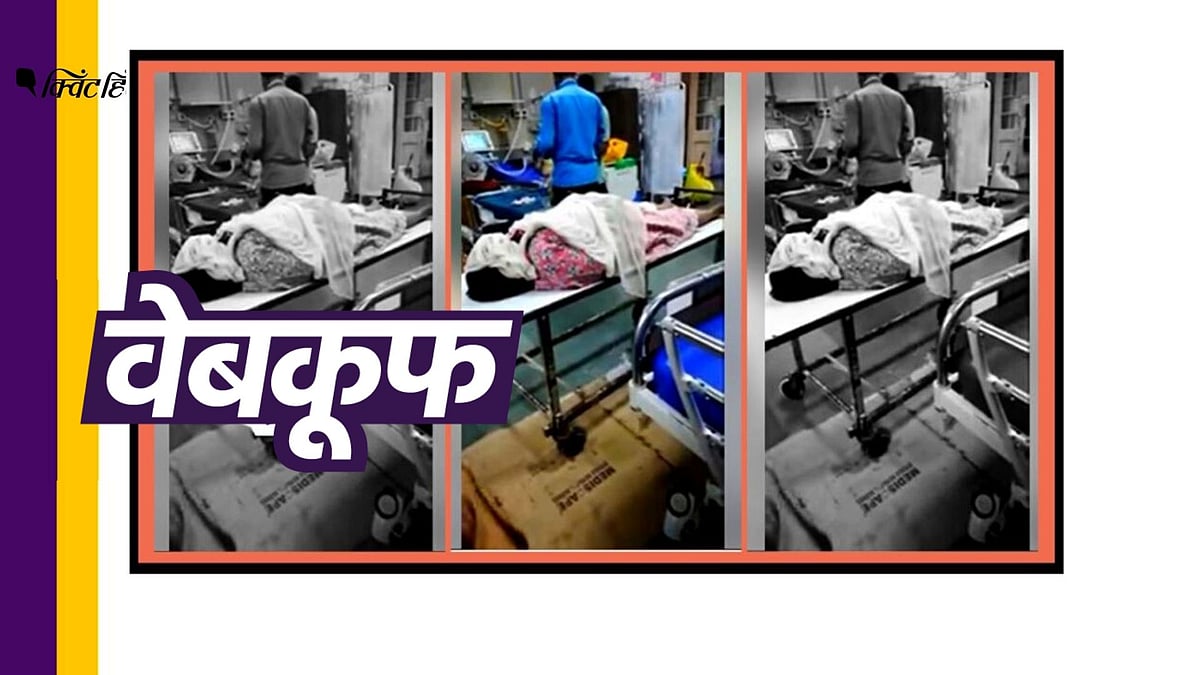
दिल्ली के अस्पताल में कोविड वॉर्ड में मरीजों के बगल में रखे गए शव
Publisher’s rating: FALSE