PeakMetrics / Fact Checks
Health & medicine fact checks
Explore claims publishers have checked about health & medicine. Read their original ratings and follow the evidence.
Search fact checks
Search by text or image13,676 published reviews in this topic


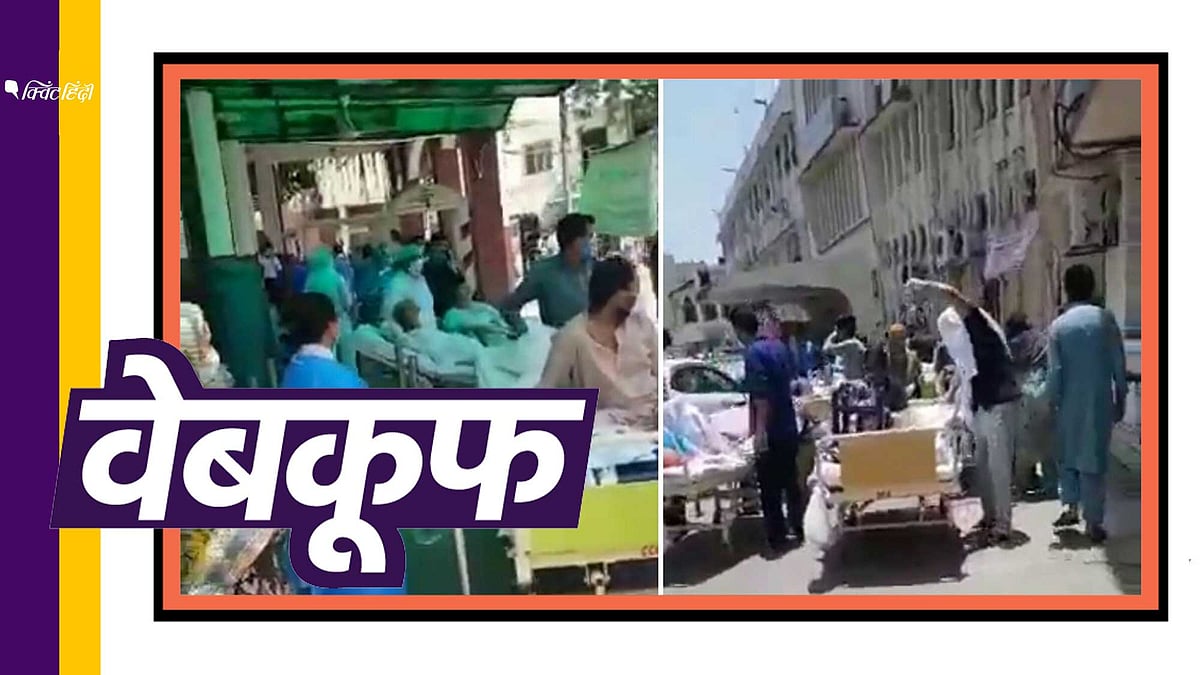
क्या मरीजों के अस्पताल से बाहर होने का वायरल वीडियो हैदराबाद का है?
Publisher’s rating: FALSE

Letter showing AYUSH Ministry approval for Patanjali’s COVID-19 medicine ‘Coronil’
Publisher’s rating: FALSE
The claim concerned an image of a letter to Patanjali MD Acharya Balakrishna that was circulating as evidence the AYUSH Ministry had approved Coronil as a COVID-19 cure. The review reports that Patanjali had launched Coronil and Swasari on 23 June 2020, presenting them as an Ayurvedic cure, and that the ministry asked the company to stop advertising them that way while seeking information about the products and studies. The letter’s subject was the documents Patanjali submitted in response to the ministry’s requests. The decisive point in the letter, as described in the review, is that it acknowledged receipt of those documents and said the ministry would evaluate the studies related to Coronil. It did not state that the ministry had approved Coronil as a COVID-19 cure. The review also notes that Balakrishna posted the letter on social media but did not say that approval had been granted. The evidence therefore supports distinguishing acknowledgment and planned evaluation from approval: the letter showed that documents had been received for review, not that the ministry had endorsed the medicine as a COVID-19 treatment. The review concludes that Patanjali had not received the claimed approval for Coronil and Swasari.

Bill Gates is behind a plan to plant microchips in humans along with a coronavirus vaccine
Publisher’s rating: There's no evidence to back up this theory
Op Facebook gaat een video rond van Nederlands ex-temptation verleider Jay Francis, beter bekend als "Tisjeboy Jay". Daarin roept hij op om kritisch te blijven tegenover het beleid dat de Nederlandse regering voert. Volgens Francis zou onder meer het Amerikaanse CDC (Centers for Disease Control and Prevention) beweren dat de IFR (Infection Fatality Rate) van het Sars-CoV2-virus op amper 0,02 procent ligt. Ook zouden de behandelingen tegen kanker stilliggen en het aantal zelfmoorden stijgen. Maar klopt dat allemaal wel?
Publisher’s rating: Het grootste deel van de beweringen in de video is fout. Het CDC heeft nooit beweerd dat de IFR op 0,02 procent ligt, de behandelingen tegen kanker liggen niet stil en het aantal suïciden ligt constant. De beweringen dat een goede ventilatie belangrijk is en dat het aantal meldingen van depressies stijgt, zijn wel juist.
The review concerns a Facebook video by Jay Francis, known as “Tisjeboy Jay,” which questioned the Dutch government’s pandemic policies and made several claims about COVID-19, cancer care and mental health. The investigation checked those claims against information from the CDC and WHO and comments from named experts and organizations, including virologist Steven Van Gucht and 113 Suicide Prevention. It found that the video mixed unsupported or incorrect claims with claims it considered accurate. [S1 evidence: video description and review methods.]
A little girl shown lying in a coffin died from COVID-19.
Publisher’s rating: False
Terwijl de zoektocht naar een vaccin tegen Covid-19 nog loopt, verschenen de voorbije weken steeds meer berichten die de doeltreffendheid van vaccinatie tegenspreken. Zo zou een ex-RIVM medewerkster onthullen dat vaccins eigenlijk niets bijdragen aan de gezondheid en eerder ziekmakend zijn. Ook zouden artsen geen gehoor geven aan de mogelijke neveneffecten van vaccinaties, omdat de doeltreffendheid onbetwistbaar is.
Publisher’s rating: De claims in de berichten worden niet gestaafd door wetenschappelijke evidentie. Ook zijn de meeste neveneffecten die worden opgesomd volgens experts geen gevolgen van vaccinaties. Bovendien bestaan er tal van onderzoeken naar de mogelijke bijwerkingen van een vaccin.
The review investigated a Facebook post that attributed claims about vaccination to Nelleke Bakker, described as a former RIVM employee. The post said she had discovered deception at the institute and that vaccines do not contribute to health and may cause illness. The review traced the account to a 2015 interview on Stichting Vaccinvrij’s website and a 2018 NineForNews article. It also notes that the Facebook post claimed Bakker had about 25 years’ experience at RIVM, but the institute could not confirm this for privacy reasons, and the review’s attempts to contact her went unanswered. The review therefore found no evidence establishing her claimed RIVM employment, while noting that it could not rule it out. On the alleged harms, the review reports that pediatrician Tine Boiy said the interview’s claims about “brain crying” and a connection to shaken baby syndrome lacked scientific evidence. Boiy said brain crying is not a known vaccine side effect and that shaken baby syndrome results from inflicted injury, not vaccination. The review also says Belgium’s Kind en Gezin agency does not describe the syndrome as a consequence of vaccination. These points address the specific adverse effects raised in the interview rather than establishing that vaccines can never cause side effects. The review preserves that distinction: it reports that fever and rashes can occur, usually resolving spontaneously, and quotes virologist Steven Van Gucht describing severe allergic reactions as rare. It also directly addresses the claim that vaccine side effects have not been researched: Boiy said there are thousands of studies, and the review points to research on vaccines against rubella, measles and polio. Thus, the investigation’s evidence challenges the post’s broad claims about vaccine harms and lack of research, while acknowledging possible side effects and the limits of what it could verify about Bakker’s employment.
தமிழ் நாட்டை சேர்ந்த அய்யா கிருஷ்ணமூர்த்தி கண்டு பிடித்த கொரானாவை ஓட ஓட விரட்டும் மருந்து
Publisher’s rating: Fake
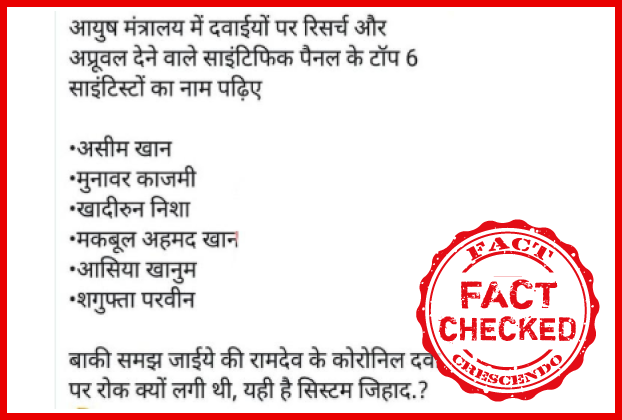
Six Muslim experts from scientific panel of the Ministry of AYUSH are prohibiting the acceptance of Ramdev's Coronil medicine
Publisher’s rating: FALSE
The claim says that six Muslim experts on a scientific panel at India’s Ministry of AYUSH prohibited acceptance of Ramdev’s Coronil medicine. Fact Crescendo’s investigation addresses that specific viral allegation and the list of six names circulated to support it. The review says the message was false and concludes that the purported list was not a genuine ministry panel. The review places the message in the context of Coronil’s announcement: it says Ramdev claimed the Ayurvedic medicine could cure COVID-19 in seven days, and that the Ministry sought details of its ingredients and directed that it not be advertised until it had been checked. It then reports that the Press Information Bureau’s fact-check unit rejected the alleged panel, stating that AYUSH had no such expert panel. This directly undercuts the claim that a six-member panel of Muslim experts issued the alleged prohibition. The review’s conclusion is specifically about the viral list and the existence of the panel—not a finding that Coronil had been approved as a treatment. Its account distinguishes the ministry’s request for ingredient details and restriction on advertising pending examination from the viral message’s assertion that named experts banned the medicine.

ఉస్మానియా ఆసుపత్రిలో కరోనా వైరస్ బారిన పడి ప్రాణాలు కోల్పోయిన వ్యక్తుల శవాలకు సంబంధించిన వీడియో
Publisher’s rating: FALSE

Condition of coronavirus patients in Hyderabad Old City
Publisher’s rating: FALSE

Tata Health has shared a ‘COVID medical kit’, which carries a list of medicines and equipments to be kept at home.
Publisher’s rating: FALSE

Claim: controversy on Trichy SRM Medical College Hospital
Publisher’s rating: Fact Crescendo Rating: Partly False

La OMS alerta, a junio de 2020, de un brote de Nipah en la India más mortal que el coronavirus
Publisher’s rating: Falso
The claim said the WHO was warning, as of June 2020, of a Nipah outbreak in India more deadly than coronavirus. Newtral reports that websites had circulated claims of a new outbreak and cited The New York Times, but says the WHO confirmed to the outlet that the current-outbreak claim was a hoax. The article distinguishes the danger posed by Nipah from evidence of an active outbreak: it describes the virus as serious, while stating there were no confirmed active cases at the time. The chronology undermines the claim of a new outbreak. Newtral says the WHO’s last report of a Nipah outbreak was on May 30, 2018, in Kerala, where 17 of 19 infected people died. It says the last confirmed Indian case was on June 4, 2019, and involved one person, so it was not considered an outbreak. The article also notes that the reported 2018 outbreak was the event covered by The New York Times, rather than evidence of a new event in 2020. The review’s account of checks includes the WHO’s confirmation to Newtral and a denial of a current outbreak posted by India’s embassy in Mexico. The article therefore does not dispute that Nipah can be dangerous; it addresses the specific claim that the WHO had issued a new outbreak alert in India by June 2020.

హైదరాబాద్ (తెలంగాణ) లోని ఉస్మానియా ఆసుపత్రిలో కరోనా రోగుల దుస్థితి వీడియో
Publisher’s rating: FALSE

Video showing piles of COVID-19 affected patient dead bodies at Osmania Hospital (Hyderabad)
Publisher’s rating: FALSE
The claim concerns footage presented as piles of bodies of people who died from COVID-19 at Osmania Hospital in Hyderabad. FACTLY reports that it traced the same video to a YouTube upload from December 2013, well before the pandemic, titled “Unclaimed bodies pile up at OGH mortuary | Hyderabad Osmania General Hospital.” That provenance indicates the footage shows an earlier mortuary situation, not COVID-19 deaths. The review describes two checks: listening to the audio in the circulated clip and searching for “Osmania dead bodies.” It reports that the audio does not mention COVID-19 and that the search led to the 2013 upload of the same video. On this evidence, the footage is old and the claim linking it to COVID-19 deaths is false. FACTLY also says that the same visuals appear in another video uploaded in 2013. In that video, Kishan Reddy—then an MLA and identified by the review as the current Union Minister of State for Home Affairs—is shown asking the State government to arrange proper cremation for bodies piled up at the Osmania Mortuary. This supports the review’s account of the earlier context, rather than the COVID-19 framing.

