PeakMetrics / Fact Checks
Health & medicine fact checks
Explore claims publishers have checked about health & medicine. Read their original ratings and follow the evidence.
Search fact checks
Search by text or image13,676 published reviews in this topic

"We have tested more people than any other country."
Publisher’s rating: This is incomplete.
Covid-19 deaths are down, including in Arizona, Florida and Texas.
Publisher’s rating: Wrong in several ways
Wegen seines Einsatzes für Impfungen ist der Microsoft-Gründer Bill Gates immer wieder das Ziel von Falschbehauptungen. Seit Jahren wird im Internet verbreitet, der Milliardär habe gesagt: «Impfen ist die beste Art der Bevölkerungsreduktion.» Die Aussage wird in verschiedenen Versionen verbreitet, mitunter ohne Quellenangabe.
Publisher’s rating: Es gibt keinen Beleg dafür, dass Bill Gates diesen Satz gesagt hat.
The claim concerns a sentence attributed to Bill Gates: “Impfen ist die beste Art der Bevölkerungsreduktion” (“Vaccination is the best way to reduce the population”). The review traces the attribution to videos using scenes from Gates’s 2010 TED talk. One video title, in translation, says that Gates wants a billion people dead and that vaccines and health care will do the job; the review says that title does not reflect what he argues in the talk. [S1] In the talk, Gates is discussing ways to reduce humanity’s carbon dioxide emissions. He notes that population size affects emissions and describes projected growth from 6.8 billion people in 2009 to about 9 billion. In that context, he says that new vaccines and good health care could help reduce the eventual population relative to that projection. The review distinguishes this discussion of reducing population growth from advocating that the population itself be reduced. [S1] The review also points to Gates’s 2009 open letter and to a 2011 Forbes article and CNN interview as places where he explained the connection between childhood vaccination and slower population growth. Its account is that when more children survive, parents need not have as many children to provide for them in old age, and lower child mortality is associated with women having fewer children. This is the context the review gives for the talk’s remarks, rather than the alleged quotation. [S1]
«Hör auf, dich testen zu lassen, wenn du nach 2021 leben möchtest», warnt ein Facebook-Post, der seit Tagen kursiert, vielfach geteilt und kommentiert wird. Gemeint ist der Corona-Test, dessen Grundlage zumeist ein Abstrich des Nasen-Rachen-Raumes ist. Die Einführung des Stäbchens sehr tief in die Nasenbahnen verursache nämlich nicht nur Schmerzen, sondern eine «hämato-enzephalische Barriereschädigung der Schädeltiefe», heisst es im Post weiter. So entstehe ein direkter Zugang zum Gehirn, durch den Bakterien ungehindert eindringen und lebensbedrohliche Entzündungen verursachen könnten. Eine mehrteilige Grafik, die veranschaulicht, wo der Abstrich entnommen wird und vermeintliche Verletzungen auftreten könnten, begleitet den Beitrag.
Publisher’s rating: Ein Nasenabstrich verursacht keine Schädigung der Blut-Hirn-Schranke. Das Hirngewebe ist zusätzlich von einer Knochenschicht umgeben, die ein Abstrichtupfer unmöglich durchbohren kann.
The Facebook post at issue warns people not to get tested if they want to live beyond 2021. It claims that inserting a swab deeply into the nose damages the blood-brain barrier, creating a route for bacteria to reach the brain. The post was accompanied by a graphic depicting the sampling location and alleged injuries. The review identifies the test as a swab of the nose and throat, with samples from the respiratory tract used to diagnose suspected SARS-CoV-2 infection. The review reports that Wolfgang Wagner, chief physician of the ear, nose and throat clinic at München Klinik Schwabing, rejected the claim that a swab can damage or disable the blood-brain barrier. It explains that the barrier is not a single structure between the throat and brain: it consists of specialized cells lining blood vessels around and supplying the brain, preventing harmful agents in the bloodstream from entering it. The review says the swab is taken from deeper parts of the nose because the nose is often an entry point for the virus and may contain a relatively high concentration of it. Wagner’s anatomical explanation addresses the post’s proposed route of injury: the review reports that bone separates the mucous membrane in the deep nasal passages and adjoining nasopharynx from brain tissue, and that a swab cannot pierce it. The review also says a swab is not invariably painful: Wagner describes discomfort as associated with narrowings in the nose and says careful sampling is not particularly uncomfortable otherwise. The excerpt does not describe independent tests performed by the publisher; it attributes the anatomical and comfort assessments to Wagner and cites RKI testing guidance and studies concerning the nose as a viral entry point.
Ein angeblicher Mitarbeiter des Westdeutschen Rundfunks (WDR) in Deutschland soll die Manipulation von Berichten über Corona-Neuinfektionen publik gemacht haben. «Hallo. Ich arbeite beim WDR. Am Mittwoch (08.07.) wird verkündet, dass der zweite Lockdown startet. Wir werden dazu gezwungen in den nächsten beiden Tagen exorbitant hohe neue Coronazahen [sic!] zu melden!», heisst es in Facebook-Posts, die einen Screenshot des angeblichen Whistleblower-Beitrags teilen. Angehängt ist ein Bild, das zwei Bildschirme in einem Büro zeigt. Auf einem der Bildschirme ist das Logo des deutschen Fernsehnetzwerks WDR zu sehen.
Publisher’s rating: Weder wurde am 8. Juli 2020 der «zweite Lockdown» verkündet, noch hat der WDR zu dieser Zeit Zahlen der Neuinfektionen mit dem Coronavirus vermeldet, die von den offiziellen Zahlen abweichen. «Die Aussagen sind völliger Unsinn», teilt der WDR auf Anfrage mit.
The posts alleged that someone working at the Westdeutscher Rundfunk (WDR) had been forced to report inflated coronavirus case numbers ahead of a second lockdown supposedly to be announced on 8 July 2020. They circulated a screenshot of the purported whistleblower post alongside a photo of two office monitors, one showing the WDR logo. The investigation checked both parts of the allegation: whether restrictions were announced on the stated date and whether WDR reporting showed unusually high case figures in the days the post referred to. The review reports that no new contact restrictions commonly described as a lockdown were imposed in Germany, any German state, or any district on 8 July. It points to the Robert Koch Institute’s situation report for that date: no district had exceeded the 50-infections-per-100,000-inhabitants threshold. The review also notes that the post was dated 6 July, making its reference to “the next two days” ambiguous: it could mean 7–8 July or, in relation to the alleged lockdown, 9–10 July. For those periods, the review examined WDR’s website, its 6 p.m. “WDR aktuell” broadcasts, and its coronavirus live tickers. It found no reports of unusually high new infections in those sources. It discusses one report of a sharp increase in Duisburg, but says the figures matched the city health department’s official data. The WDR also told the agency the circulating claim was false and said its coronavirus reporting used data including that of the Robert Koch Institute and North Rhine-Westphalia’s health ministry. The source does not establish where the circulated office photo was taken: WDR said it could not provide information about the image’s background, and the review says its provenance could not be conclusively determined.

వరంగల్ లోని MGM ఆసుపత్రి దుఃస్థితిని వివరిస్తున్న నర్స్ వీడియో
Publisher’s rating: FALSE

網傳:解放軍陸軍總醫院黃永成教授:你還不想喝酒嗎?看了這篇文章,不願喝酒的人都哭了後悔了,下決心今後逢酒必喝,逢酒必醉。只因固態發酵的白酒是癌症剋星!
Publisher’s rating: 不實
Une publication Facebook suisse, partagée également sur WhatsApp en plusieurs langues, laisse sous-entendre qu'un professeur japonais nommé Tasuku Honjo aurait affirmé devant les médias que le coronavirus ne serait pas d'origine naturelle. Plusieurs arguments sont énumérés pour étayer sa théorie. Selon le texte partagé sur les réseaux sociaux, le professeur sous-entendrait donc que l'origine du virus serait artificielle, et donc humaine. De plus, il accuserait directement « la Chine » d'avoir « fabriqué » le coronavirus.
Publisher’s rating: Le professeur Tasuku Honjo ne s'est pas exprimé dans ce sens aux médias.
The review examines a Swiss Facebook post, also shared on WhatsApp in several languages, which attributed to Japanese professor Tasuku Honjo statements that the coronavirus was not natural and that China had manufactured it. It says the post offered several arguments for that theory. The decisive evidence reported is Honjo’s explicit denial. The review says he stated officially on Kyoto University’s website that his name and the university’s had been used to spread false accusations and disinformation. He also objected to unsupported claims about the disease’s origins while efforts were needed to treat it. The excerpt does not describe independent testing of the virus’s origin or a detailed examination of the post’s arguments. Its conclusion addresses whether Honjo made the attributed statements, and the reported denial supports that conclusion.
Volgens een afbeelding op Facebook zouden enkele dosissen van het malariamedicijn hydroxychloroquine, azithromycin en zinksulfaat het geneesmiddel vormen tegen COVID-19. Om te genezen, moet je twee keer per dag 200 mg hydroxychloroquine nemen, aangevuld met één keer per dag 500 mg azithromycin en één keer per dag 220 mg zinksulfaat. Je zou de drie supplementen gedurende vijf dagen moeten innemen, maar helpen ze echt tegen het virus?
Publisher’s rating: Er is geen enkel bewijs dat een kuur met hydroxychloroquine, azithromycin of zinksulfaat je genezen van COVID-19. De WHO raadt het gebruik van de middelen dan ook ten zeerste af.
The review concerns a Facebook image promoting a five-day COVID-19 regimen: hydroxychloroquine 200 mg twice daily, azithromycin 500 mg once daily and zinc sulfate 220 mg once daily. It examines whether that combination was established as a cure, rather than merely whether the image listed those doses. The review says the proposed regimen may have originated at a 27 July press conference by the group America’s Frontline Doctors, where the same three medicines were promoted for the disease. To assess the medicines, the review reports findings from studies and other fact-checking. It cites University of Minnesota researchers who concluded that hydroxychloroquine had little benefit for COVID-19 patients, and a Brazilian study published in The New England Journal of Medicine that reached the same conclusion. It also points to a prior check by Gezondheid en Wetenschap: according to the review, no study had tested azithromycin alone in people with coronavirus infection, and the antibiotic could cause serious side effects such as heart-rhythm disorders. The review further says that zinc’s positive effect in treating COVID-19 had not been demonstrated. Taken together, the evidence it describes does not establish that the advertised combination cures COVID-19; the Facebook image’s specific doses and duration are not themselves evidence of effectiveness.

Klaim-klaim seputar Covid-19 dan pengobatannya yang dilontarkan oleh Hadi Pranoto dalam video milik Anji di YouTube
Publisher’s rating: Keliru
കോവിഡ് ബാധിച്ച് മരിച്ച ഡോക്ടർ ഐഷയുടെ ചിത്രവും അവസാന വാക്കുകളും
Publisher’s rating: FALSE
Auf Facebook kursieren Posts, in denen davon die Rede ist, dass Vitamin C gegen das Coronavirus helfe. Hoch dosiertes Vitamin C töte das neuartige Virus Sars-CoV-2 nämlich «höchst effektiv» ab. Ein angeblicher Beleg: «Die Chinesen» hätten «50 Tonnen Vitamin C unter der Bevölkerung verteilt», und die Zahl der Neuinfektionen sei daraufhin gesunken. Man solle deshalb zur Vorsorge gegen Covid-19 täglich drei Gramm Vitamin C zu sich nehmen.
Publisher’s rating: Es gibt keine Belege für eine virustötende Wirkung von Vitamin C. Eine hoch dosierte Aufnahme wird nicht empfohlen. Tatsächlich wurden 50 Tonnen Vitamin C Anfang Februar von einer Chemiefirma in die chinesische Provinz Hubei geliefert. Die Menge entspricht aber gerade einmal dem Normalbedarf der dort lebenden Menschen für acht Tage.
The Facebook posts made two linked claims: that high doses of vitamin C kill SARS-CoV-2 and that people should take three grams daily to prevent Covid-19. They cited an alleged distribution of 50 tonnes of vitamin C in China and a subsequent fall in new infections as evidence. The investigation checked the claimed antiviral effect with medical and scientific experts, and examined what the 50-tonne figure referred to and how much vitamin C it represented per resident. A spokesperson for Germany’s Federal Institute for Drugs and Medical Devices said she knew of no such virus-killing effect. Virologist Stephan Günther of the Bernhard-Nocht Institute for Tropical Medicine likewise said he had no evidence that vitamin C could kill the coronavirus. Jürgen Behr, a professor of pulmonology at Ludwig Maximilian University in Munich, said he would not recommend high-dose vitamin C for the general population; the report says a balanced diet provides sufficient vitamin C to support the immune system. The investigation traced the 50-tonne figure to a 3 February statement by chemical company DSM that it had shipped that quantity to Hubei province. With a population of around 60 million, the shipment amounted to less than one gram per resident. Compared with an approximately 100-milligram recommended daily intake, that quantity would cover only eight days at ordinary intake levels—not a high-dose supplement distributed to residents. The figure therefore does not establish the claimed distribution or show that it caused infections to fall.
Research into preventative treatment being blocked, despite research showing chloroquine effective
Publisher’s rating: This is misleading. The 2005 study was testing chloroquine to combat infection from the Sars virus long before the current coronavirus or Covid-19 was known to exist.
"6,000 doctors surveyed" say hydroxychloroquine is effective.
Publisher’s rating: "The claim is misleading. We believe it incorrectly reports the results of a survey of about 6,000 doctors in 30 countries published in April by a company called Sermo. We contacted the company and they provided data which showed that although 6,000 doctors were approached, only 2,171 responded to that particular question. Of those, just 37% chose hydroxychloroquine as the most effective treatment out of a list of 15 options. "
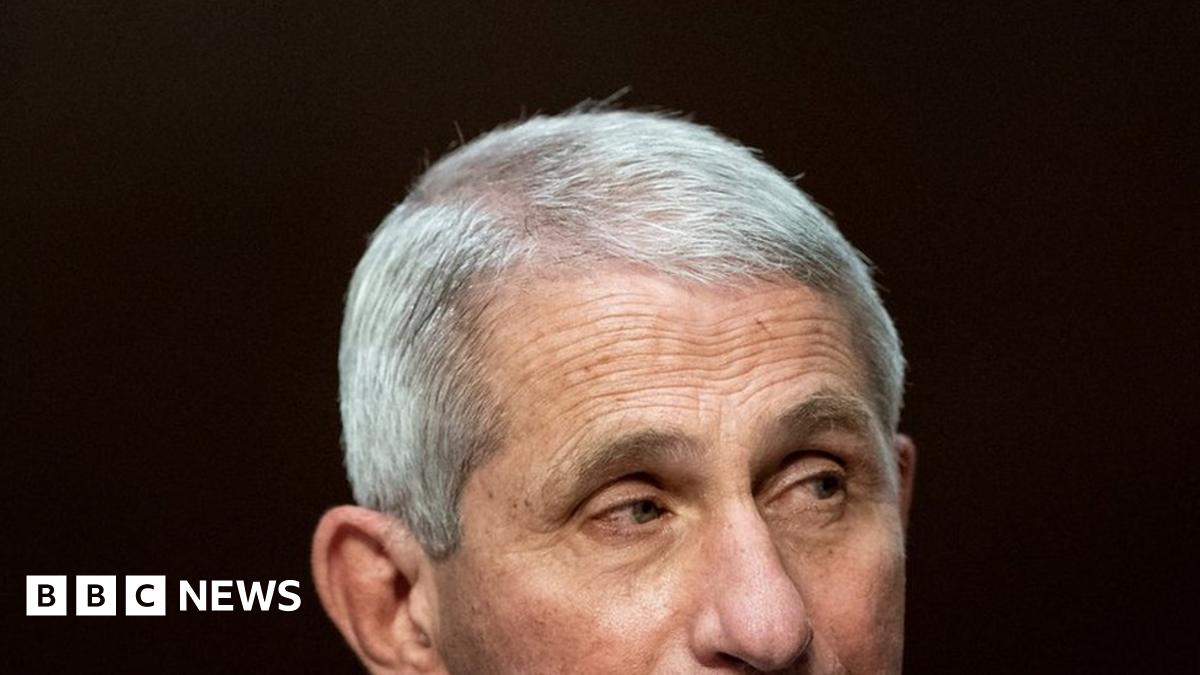
Dr Fauci says once manufactured, a Covid-19 vaccine should be rolled out before "proper studies" are done.
Publisher’s rating: The quote is false. When contacted by the BBC, the US National Institutes of Health (where Dr Fauci works) said the reference to vaccines "is completely made up, Dr Fauci has never said anything like that".
Big pharma' is blocking the rollout of hydroxychloroquine
Publisher’s rating: "There is no evidence to support this claim. ""There is not a shred of evidence that hydroxychloroquine was ""blocked"" by anyone,"" says Prof Stephen Evans of the London School of Hygiene and Tropical Medicine. He says the pharmaceutical industry does make money from hydroxychloroquine, which is approved for treating other illnesses such malaria."
In einem Facebook-Posting wird behauptet, dass man angeblich nur beim Betreten eines Geschäfts eine Maske aufsetzen müsse. Es sei wissenschaftlich nachgewiesen, dass Masken nichts nützten, heißt es weiter.
Publisher’s rating: Das ist falsch. Man muss auch während des Aufenthalts in bestimmten geschlossenen Räumen wie einem Supermarkt eine Maske tragen. Die Wirksamkeit der Maskenpflicht im Kampf gegen die Ausbreitung des Coronavirus wurde mittlerweile von mehreren wissenschaftlichen Studien bestätigt.
The Facebook post made two connected assertions: that a mask was required only when entering a shop, and that science had shown masks were ineffective. The review examined the rules then in force in Austria, where a mask requirement for some enclosed public spaces—including supermarkets, pharmacies, banks and post offices—was reintroduced on 24 July 2020. The relevant Covid-19 relaxation regulation required a face covering when entering the customer area. The review reports that a spokesperson for the Health Ministry clarified that the regulation treated remaining or staying in the premises as “entering”; the rule therefore applied during the visit, not merely at the doorway. The review also compared the post’s claim about ineffectiveness with research described in the article. A June 2020 study involving four universities compared infection trends in Jena with those in similar German cities that introduced mask requirements later. The article reports that Jena’s increase in infections was about one quarter of the increase in the comparison group, and quotes a study co-author describing a significant difference in case numbers. It also summarizes a June 2020 systematic review and meta-analysis published in The Lancet, which assessed mask effectiveness alongside distancing and eye protection, and a May 2020 study of household transmission in Beijing. The latter reported that mask use by the index patient and household contacts before symptom onset was associated with a 79 percent reduction in transmission risk. These findings address the post’s broad assertion that masks had been scientifically shown to do no good: the studies cited in the review reported evidence pointing in the opposite direction. The article also notes a qualification: the Beijing study relied on participants’ recollections in telephone interviews, a limitation acknowledged by its researchers. The excerpt does not establish that every mask or policy works equally well; it reports evidence supporting mask use and clarifies what the Austrian rule required.