PeakMetrics / Fact Checks
Health & medicine fact checks
Explore claims publishers have checked about health & medicine. Read their original ratings and follow the evidence.
Search fact checks
Search by text or image13,676 published reviews in this topic
Die Zahl der Corona-Toten ist immer wieder Gegenstand von Diskussionen in sozialen Netzwerken. Nun kursiert das Video eines Arztes, in dem er behauptet, Covid-19 sei nur noch eine «Laborpandemie». «Wo sind die ganzen Toten?» sei die wichtigste Frage, erklärt der Urologe in dem Video. Eine gefährliche Erkrankung werde nämlich «durch die Toten bestimmt, nicht durch die Infizierten». Laut den neuesten Daten der amerikanischen Seuchenbehörde CDC seien in den USA «nur etwa 6 Prozent überhaupt ursächlich an Sars-CoV-2 gestorben».
Publisher’s rating: Diese Behauptung ist falsch. Nach Angaben der CDC sind bisher weit mehr als 100 000 Menschen in den USA als direkte Folge von Covid-19 gestorben. In 92 Prozent aller Fälle mit Covid-19 auf dem Totenschein war laut CDC die Krankheit die zugrundliegende Todesursache.
The claim misreads a CDC statistic about Covid-19 deaths in the United States. The video’s doctor treats the figure that Covid-19 was the only cause mentioned on 6% of death certificates as evidence that only 6% of people died because of the disease. But the CDC statistic concerns whether other conditions or causes were also listed; it does not mean Covid-19 was not a cause in the remaining cases. The review reports that the CDC’s analysis covered deaths where Covid-19 was listed on the death certificate and that the agency said Covid-19 was the underlying cause in 92% of those cases. To check the interpretation, the review describes consulting the CDC’s published analysis and asking the CDC’s National Center for Health Statistics (NCHS) about the figures. The NCHS response confirmed the 92% figure. The CDC’s “Comorbidities” section said Covid-19 was the only cause mentioned in 6% of deaths; where other conditions or causes were listed alongside Covid-19, each case had an average of 2.6 additional entries. Thus, the 6% figure distinguishes deaths with no other listed cause from deaths with additional entries—it is not a count of deaths attributed to Covid-19. The review also reports that, at the time, more than 100,000 people in the United States had died as a direct consequence of Covid-19. As a separate illustration, it compares Hamburg figures as of 1 September 2020: the city listed 236 deaths determined to have been caused by Covid-19, while the Robert Koch Institute listed 266 deaths following laboratory confirmation. The review calculates that the city figure represented 89% of the RKI total. These examples reinforce the distinction between Covid-19 being listed alongside other conditions and the disease being the underlying cause of death.

Cientistas afirmaram que sol do meio-dia é extremamente eficaz na erradicação do vírus. Segundo o estudo, o sol mata o coronavírus em 34 minutos.
Publisher’s rating: Enganoso: Tuíte faz referência a estimativas de um estudo que se baseia em modelos antigos, criados para outros vírus. Especialistas ouvidos pelo Comprova dizem que estudo não tem nenhuma conclusão nova
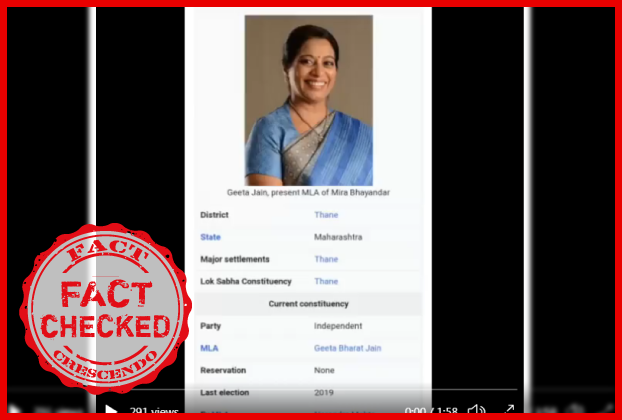
गीता जैन द्वारा लोगों को कोरोना टेस्ट हेतु अस्पताल न जाने की सलाह दी गई है
Publisher’s rating: False

Los Angeles County canceled trick or treating because of the coronavirus
Publisher’s rating: False
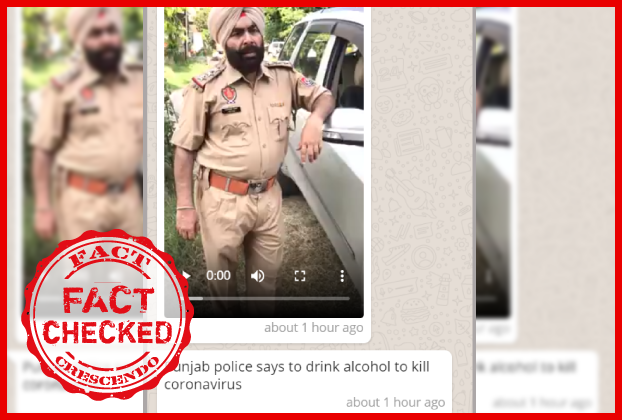
वीडियो में दिख रहा व्यक्ति पंजाब पुलिस से है जो कोरोनावायरस को नष्ट करने के लिये लोगों को शराब का सेवन करने की सलाह दे रहा है
Publisher’s rating: False

Tanto en contagios como en detener las muertes EEUU lo ha hecho mejor que Europa.
Publisher’s rating: Falso

In den geplanten Grippe-Impfungen, die bei Kindern über die Nase verabreicht werden, befindet sich auch H1N1. Bei H1N1 handelt es sich um ein Coronavirus. Bei durch Nebenwirkungen hervorgerufenen Symptomen ist bei einer PCR-Testung auf Covid-19 ein positiver Befund zu erwarten.
Publisher’s rating: Die Informationen sind falsch. Zwar beinhaltet der Grippe-Impfstoff heuer unter anderem den Influenza A‑Stamm H1N1, dabei handelt es sich jedoch nicht um ein Coronavirus, sondern um einen Influenza-Stamm.

"Covid-19 test kits waren al in 2018 besteld en geëxporteerd!" deelt een facebookgebruiker samen met een screenshot van de website van de World Integrated Trade Solution (WITS), een onderdeel van de Wereldbank. Die screenshot circuleert volop op sociale media. Het toont een overzichtspagina van hoeveel verschillende landen, waaronder Nederland, in 2018 uitgaven aan de import van zogeheten "COVID-19 test kits". Maar was er inderdaad 2 jaar geleden al weet van de ziekte COVID-19, en dus van test kits?
Publisher’s rating: De beweringen zijn fout. De data die wordt getoond in de screenshot afkomstig van de website van WITS toont informatie over reeds bestaande goederen die nu worden gebruikt bij de bestrijding van de coronapandemie.
The claim arose from a WITS table showing 2018 imports under the label “COVID-19 test kits.” The DPA review says that label made the historical trade data appear to show that countries had bought kits for a disease not yet known. It examined the screenshot’s product designation and the code associated with it, rather than treating the label alone as proof of what the goods were called or used for at the time. The review identifies code 300215 as the code shown in the screenshot and says WITS linked the newer name to that code from 2017, when the underlying codes were last revised. The review explains that the listed goods were pre-existing medical supplies later grouped and relabeled for use in responding to COVID-19. It reports that the World Bank confirmed this in a statement dated 8 September 2020, and that the supplies included items such as ventilators, gloves and hand sanitizer. The list was assembled that spring by the World Health Organization and the World Customs Organization; WITS then displayed the historical trade figures under the updated label. Thus, the table’s 2018 figures refer to trade in goods subsequently classified as relevant to the pandemic, not evidence that COVID-19 test kits existed or were ordered in 2018. The review says the products were later renamed “medical test kits” to better reflect what they were, and that the WITS page added a notice explaining the classification. It concludes that the social-media interpretation was mistaken: the historical figures reflected existing products and a later naming change, not advance knowledge of COVID-19. The review’s supplied text does not describe independent laboratory testing or examination of physical shipments; its account rests on the WITS data and the World Bank’s explanation of the product-code and naming history.
Ein in einem Video verwendetes Gerät misst die CO2-Konzentration unter einer Maske korrekt. Der dabei gemessene hohe Wert lässt darauf schließen, dass das Tragen einer chirurgischen Maske gesundheitsgefährdend ist.
Publisher’s rating: Das CO2-Gerät ist nicht für eine Messung dieser Art geeignet, wodurch das Ergebnis verfälscht wird. Das Tragen von Masken ist grundsätzlich unbedenklich. Bei professionellen Masken kann der Partialdruck des Kohlendioxids (pCO2) zwischenzeitlich ansteigen, bei chirurgischen Masken ist das unwahrscheinlich.
The video circulated on Facebook and purported to measure the air beneath a surgical mask. It showed a reading rising from about 400 ppm to 10,000 ppm in roughly a minute, and used that result to suggest that wearing a mask could be harmful. The review examined both whether the device could measure conditions under a mask accurately and whether that reading represented the wearer’s health risk. Its investigation consulted the Institute for Bioprocess and Analytical Measurement Technology in Thuringia, which responded with reference to prior information given to the German Press Agency. The institute explained that simple infrared CO2 meters are calibrated for ordinary room conditions, not the changing environment beneath a mask. Exhaled air has a high CO2 level, and the increased pressure can also raise the displayed value by 10–20 percent. The review further notes that air beneath a mask is not equivalent to the air a person breathes overall, because the wearer inhales more air than is contained under the mask. The instrument’s manufacturer also warned against placing it where people breathe directly onto its sensor. Thus, the video’s reading does not establish that the wearer was exposed to a comparable CO2 concentration or that the measurement was valid for assessing mask safety. The review describes the health implications with a qualification: the German Respiratory League said a rise in partial pressure of CO2 is unlikely for healthy people wearing a surgical mask, which is not fully sealed. It noted that professional masks such as FFP2 and FFP3 can create substantial breathing resistance and may allow CO2 partial pressure to rise temporarily, but that a dangerous increase was considered unlikely. The video’s extreme reading, produced with a room-air device used outside its intended conditions, therefore does not support its conclusion about surgical masks.
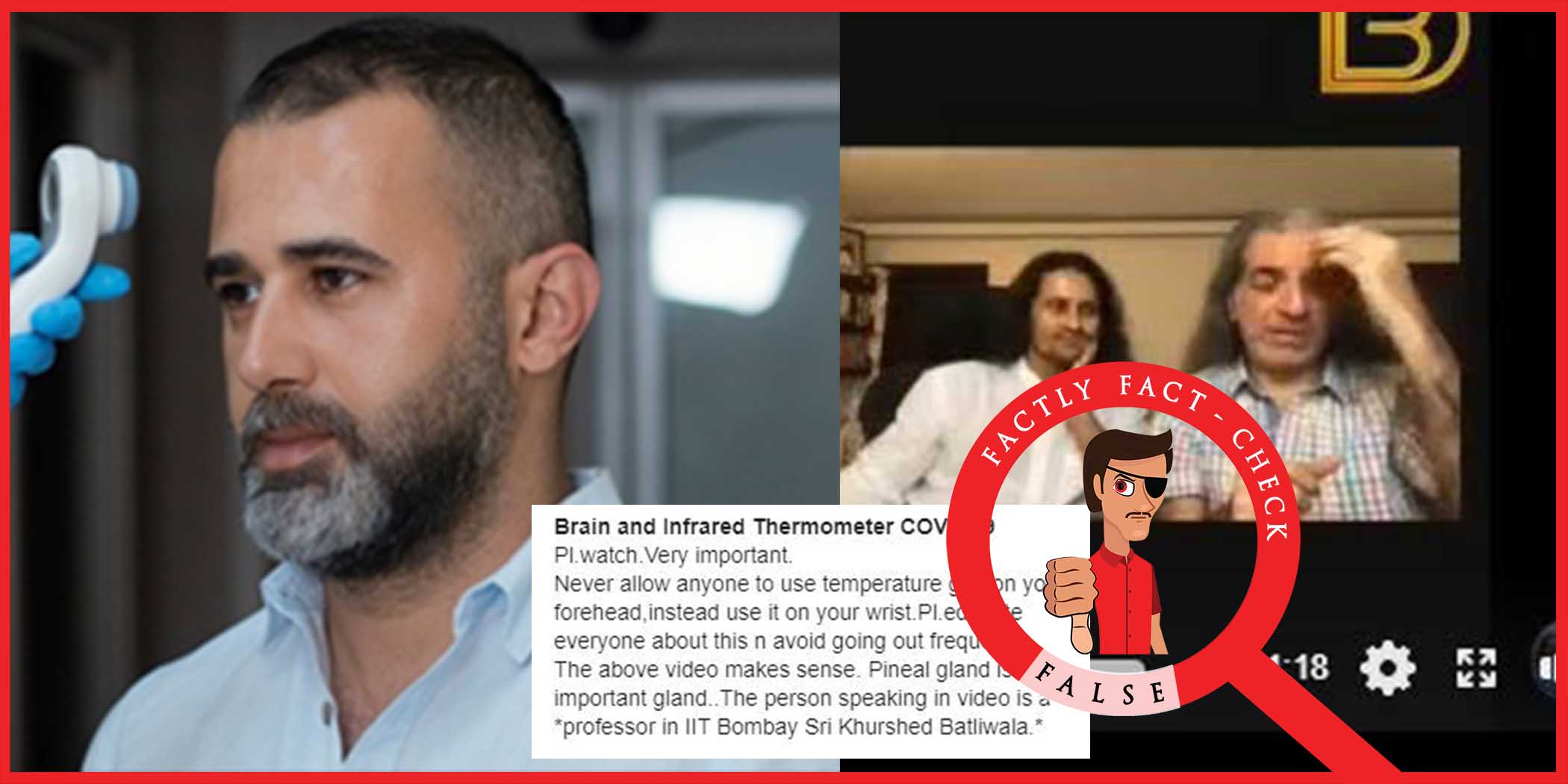
Video of Khurshed Batliwala claiming that using the infrared thermometer on the forehead can harm the organs in the head
Publisher’s rating: FALSE
FACTLY examined a social-media video of Khurshed Batliwala claiming that using an infrared thermometer on the forehead to check body temperature could harm organs in the head. The review states that the claim is false: these thermometers detect infrared energy radiated by the body rather than sending energy into it. It explains that the measurement works through “the absorption and detection of infrared energy radiated by the human body; not vice versa.” To support that explanation, the review cites a CGTN article describing how infrared thermometers sense energy emitted by the person being measured. It also quotes Feng Luzhao, identified as a researcher at the Chinese Center for Disease Control and Prevention, saying the devices receive thermal radiation emitted by humans and are not harmful to the eyes and body. The review further reports that Malaysia’s government issued a statement against the same viral message and that the US FDA website did not mention such side effects. It does not describe a direct test of the thermometer or provide specific test measurements. The review also addresses Batliwala’s credentials: it says his official Facebook account described him as holding an M.Sc. in Mathematics from IIT Bombay and being an Art of Living faculty member for over 20 years, but not as an IIT Bombay professor. That biographical point does not establish the thermometer’s safety; the review’s stated basis for rejecting the claim is how the device measures temperature and the cited expert and institutional information.

Images of protests against COVID-19 vaccine trails from London, Berlin and other places
Publisher’s rating: FALSE
The claim concerns a set of social-media images presented as protests against COVID-19 vaccine trials in London, Berlin and other places, alongside a warning to Indians about the trials. FACTLY’s review says it checked the images’ origins and found that the pictures showed other events, not protests against vaccine trials. It identifies demonstrations against pandemic restrictions in the UK and Germany, and a protest about Belarus’s presidential-election result. The review concludes that the images were falsely represented as anti-vaccine-trial protests. [S1: “A social media post with a few images of protests allegedly from London, Berlin and other places is being widely circulated with the claim that these protests are being held against the COVID-19 vaccine trails.”; “Images of protests against lockdown restrictions in UK & Germany and also an image of protest against the result of Presidential election in Belarus are being falsely shared as images of protests against COVID-19 vaccine trials in different parts of the world.”] The review describes using reverse-image searches, searches with event-related keywords, and comparison with news articles, stock imagery and video. For the Berlin image, it says the matching photograph was taken near the Brandenburg Gate on 1 August 2020 at a protest against government restrictions during the pandemic. The source article it located did not describe the event as being about vaccine trials. [S1: “According to the news article, the image was clicked during a protest near Brandenburg Gate in Berlin on 01 August 2020.”; “The protest was held against the government restrictions amid corona pandemic.”; “In the article, it is nowhere mentioned that the protests were held against the COVID-19 vaccine trials.”] The review also traces images associated with Minsk and Hamburg to events with different stated subjects. It reports that a similar image to the one labelled London showed a Minsk protest against the result of Belarus’s presidential election, while Hamburg footage described a demonstration against the government and anti-corona measures. Its account of a Birmingham gathering says the speaker discussed lockdown restrictions, not vaccine trials. Taken together, these identifications support the review’s conclusion that the images’ captions misrepresented what the pictured events were about. [S1: “According to the description, the image was clicked on 16 August 2020 during a protest which is held in Minsk, Belarus against the results of the latest Presidential election.”; “The description below the video reads ‘Demonstration against the government and anti-corona measures in Hamburg’.”; “In this particular video, the speaker talks about the COVID-19 lockdown restrictions but not about the corona vaccine experimental trials.”]
Ein Dokument der Weltbank soll angeblich zeigen, dass Quarantäne-Maßnahmen erst in viereinhalb Jahren enden. «Die "Quarantäne" und die Quaräntene-Massnahmen (sic!) enden am 25 März 2025», heißt es in einem Facebook-Beitrag, sowie: «Ganz offiziell. The World Bank.» Dazu wird ein Ausschnitt aus einem Dokument gezeigt, das mit dem Logo der Weltbank versehen ist. Rot eingekreist ist darauf das Datum 31. März 2025, was als erwartetes Ende eines Programms bezeichnet wird. Ebenfalls rot eingekreist ist der Titel dieses Projekts namens «Covid-19 strategisches Vorsorge- und Reaktionsprogramm» (COVID-19 Strategic Preparedness and Response Programm).
Publisher’s rating: Das gezeigte Dokument befasst sich nicht mit Quarantäne-Maßnahmen, sondern mit einem Hilfsprogramm der Weltbank. Es soll ärmere Länder in der Coronavirus-Pandemie unterstützen und ist bis Ende März 2025 geplant.
The Facebook post presents the World Bank document’s date of 31 March 2025 as evidence that quarantine measures would continue until then. The review identifies the document as a genuine World Bank project description, but says the post misrepresents what it describes: it is a COVID-19 support program, not a schedule for quarantine restrictions. The review quotes the document’s stated development objective as preventing, detecting and responding to the threat of COVID-19 while strengthening national public-health preparedness systems. To explain the date, the review reports that the World Bank said its projects are usually implemented over three to five years. The document’s end date is therefore the planned end of the project; the bank said it had no connection to possible quarantine measures. The review also examined how the document uses the word “quarantine”: its references concern help for households under quarantine and mitigating economic or social harms, not specific quarantine requirements or how long they should last. The document was dated 2 April 2020, the same day the World Bank issued a press release about its COVID-19 emergency assistance. The review reports that the program was planned for 25 countries with weaker infrastructure and health systems, with funding through loans and grants. Taken together, the document’s stated purpose, the bank’s explanation of its project timeline, and the context of its quarantine references do not support the post’s interpretation of the 2025 date.
Eine angebliche Sprachnachricht erhitzt derzeit die Gemüter auf Facebook. In entsprechenden Postings auf Facebook ist davon die Rede, dass der Grippeimpfstoff für Kinder das Virus H1N1 enthalte - und dies sei ein Coronavirus. Die Grippeimpfung werde via Spray in die Nase gegeben, und da PCR-Tests mittels Nasenabstrichen vorgenommen würden, schlagen die Postings Alarm: «WAS WERDEN SIE DORT FINDEN!!!!! Nun können wir eins und eins zusammenrechnen, wie sie ihre zweite Welle rechtfertigen werden.»
Publisher’s rating: H1N1 ist kein Coronavirus, sondern ein Influenzavirus. Der Corona-Test reagiert nicht auf Grippeviren. Grippeimpfungen, bei denen das Virus in abgeschwächter Form verabreicht wird, sind zudem gut verträglich und führen selten zu Symptomen.
The posts described in the review allege that a children’s nasal flu vaccine contains H1N1, call H1N1 a coronavirus, and suggest that PCR tests using nasal swabs would detect the vaccine and enable authorities to justify a second wave. The review examined that specific allegation and distinguishes the influenza virus from the coronavirus responsible for COVID-19: the article quotes Matthias Stoll, an internal-medicine specialist at Hannover Medical School, saying H1N1 is an influenza virus and that a coronavirus test does not react to flu pathogens. The review also addresses the suggested link between nasal vaccination and testing. It reports that children could receive either an injected inactivated vaccine or a live vaccine administered as a nasal spray. It says that, even if a coronavirus test were performed after vaccination, it would not react to influenza pathogens such as H1N1. Stoll is quoted rejecting the claim, and the review notes that the vaccine-related symptoms described by a pediatrician were mild, such as a runny nose; he said that alone would not prompt a doctor to order a coronavirus test, particularly if the doctor knew about the prior vaccination. The article places the vaccination recommendation in context: German pediatricians had called on parents to vaccinate children against flu, while the StiKo recommendation cited in the review applied to children with underlying or pre-existing conditions. The review says vaccination was available from six months of age. Its account therefore does not support the posts’ asserted chain from nasal flu vaccination, to a positive coronavirus test, to justification for a second wave.

Four times as many people die from suicide compared with Covid-19 in Ireland
Publisher’s rating: False

El presidente dijo falsamente que si la cifra de muertes por COVID-19 en Nueva York se restara del total de Estados Unidos, entonces el país tendría "las mejores cifras del mundo".
Publisher’s rating: Falso
Mund-Nasen-Bedeckungen zur Eindämmung der Corona-Pandemie sollen angeblich der Gesundheit schaden, behaupten manche in den sozialen Netzwerken. Der Grund: Unter den Masken sammle sich zu viel Kohlendioxid (CO2). Als Beleg wird ein Video verbreitet, in dem die Luft unter einer chirurgischen Maske beim Atmen mit einem «CO2-Sensor» analysiert wird. «Bereits nach wenigen Atemzügen wird die maximale Arbeitsplatzkonzentration von 1000 ppm um das 10-fache überschritten», wird in dem Facebook-Posting behauptet. Bei stundenlangem Arbeiten mit der Maske habe man eine CO2-Konzentration von mehr als 10 000 ppm – «ob das gesund ist, sei dahingestellt», heißt es am Ende des Videos.
Publisher’s rating: Die Messung in dem Video ist irreführend, denn das Gerät ist nicht für diesen Zweck konzipiert. Das Tragen einer Mund-Nasen-Bedeckung ist für gesunde Menschen grundsätzlich unbedenklich und führt nicht dazu, dass sie eine gesundheitsgefährdende Menge an Kohlendioxid einatmen.
The post’s video uses a device to measure air beneath a surgical mask and claims that the reading quickly exceeds the 1,000 ppm workplace limit tenfold. The review explains that the device is intended to analyze room air, not the air under a mask. According to Professor Uwe Pliquett, simple room-air instruments are calibrated for ordinary environmental conditions, so using one in the mask environment produces distorted results. The review also reports that exhaled air has a high CO2 level and that higher pressure under the mask can raise the displayed reading by 10–20 percent; a reading from this setup therefore does not establish the amount of CO2 a wearer inhales. The review distinguishes the sensor’s reading from the wearer’s breathing: air under a mask is not equivalent to the air inhaled, since a person breathes in more than just the air trapped beneath the face covering. It reports that the German Respiratory League considers a harmful CO2 buildup unlikely with a simple surgical mask or homemade face covering because these are not fully airtight. The review notes qualifications for people with chronic respiratory weakness and for professional FFP2 or FFP3 masks, which have greater breathing resistance, while reporting that a dangerous rise in blood CO2 from professional masks is unlikely.

පිළිකාව සම්පුර්ණයෙන්ම සුව කිරීමට, අඩු වියදමකින් ජීවිතයක් නැවත ජීවත් කිරීමට, සාර්ථක ක්රමයක් සොයාගත් අපේ රටේ ගෝමිකට සුභ පැතුම්
Publisher’s rating: Misleading