PeakMetrics / Fact Checks
Health & medicine fact checks
Explore claims publishers have checked about health & medicine. Read their original ratings and follow the evidence.
Search fact checks
Search by text or image13,676 published reviews in this topic
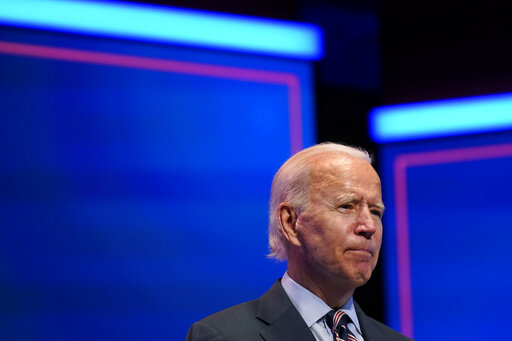
"One thing that hasn’t happened yet….There have been no tests yet on children. Children ironically may be the last people to get the vaccine."
Publisher’s rating: Children may be last
Some of the vaccines "have to be shipped at 70 degrees below zero"
Publisher’s rating: Accurate
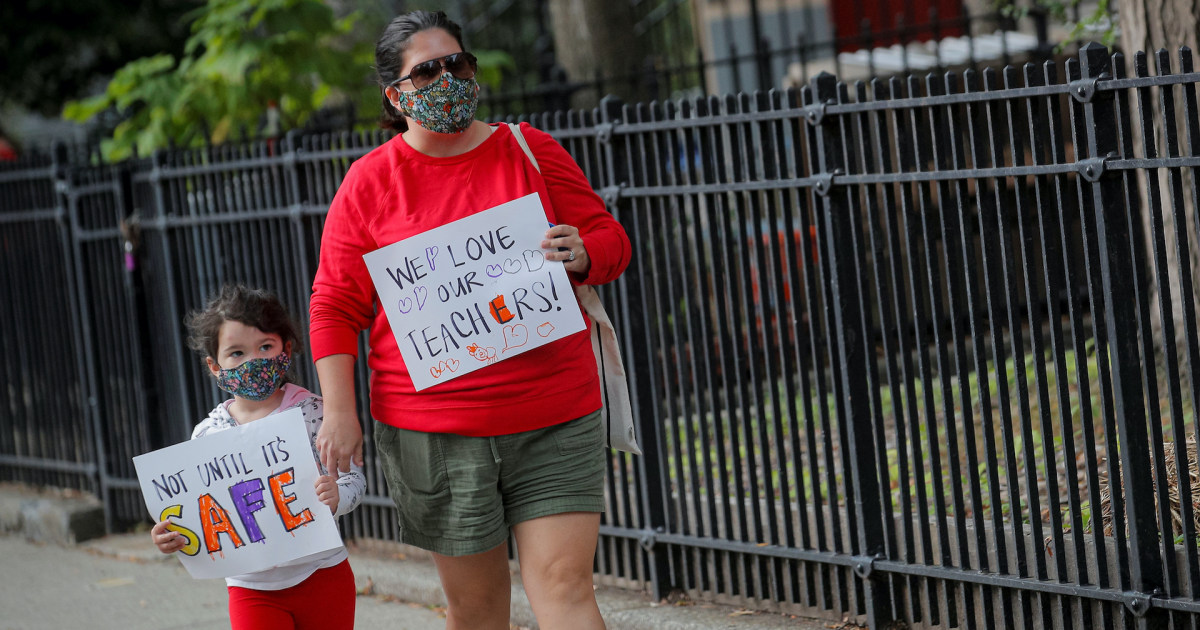
"Toda la evidencia apunta al hecho de que nuestros niños son 17 veces más propensos a sufrir efectos nocivos de la influenza estacional que del coronavirus”
Publisher’s rating: Engañoso

Família brasileira tomou uma vacina contra a covid para poder viajar para o exterior e pessoas morreram depois disso
Publisher’s rating: FALSO: Mulher fez acusação, sem apresentar qualquer prova, em vídeo que viralizou nas redes sociais, mas a Anvisa informa que só maiores de idade podem receber os testes das vacinas e que não houve nenhum relato de mortes ou reações adversas graves relacionadas aos testes feitos no Brasil
Im Internet kursiert das Foto von einem Aushang in einem Fitnessstudio auf Usedom, wonach das Tragen von Corona-Schutzmasken dort untersagt ist (hier archiviert). Dies gehe auf die Anordnung einer Koordinierungsstelle des Landkreises zurück, heißt es dazu auf der Facebookseite des Studios. Als Grund für das Verbot werden die angeblich «gesundheitsschädigenden Auswirkungen des Tragens einer Mund-Nasen-Maske» angeführt. Daher gelte in der Einrichtung ein «striktes Maskenverbot».
Publisher’s rating: Es gibt keine solche Anordnung für ein Maskenverbot in Fitnessstudios, wie die Pressestelle des Landkreises Vorpommern-Greifswald auf Anfrage bestätigt hat. In Mecklenburg-Vorpommern gilt vielmehr für Mitarbeiter in Fitnessstudios eine Maskenpflicht.
The claim concerned a photographed notice at a fitness studio on Usedom that said masks were prohibited, allegedly by order of a county coordination office because face coverings were harmful. The review examined both the alleged county directive and the rules that applied to fitness studios in Mecklenburg-Western Pomerania. It reports that the county press office denied that any such ban order existed and that the state’s rules required employees with customer contact to wear a mask unless another protective measure or sufficient distance applied. Customers, by contrast, were not required to wear masks under those state rules. [S1: “In Mecklenburg-Vorpommern besteht dabei für Kunden keine Maskenpflicht - für Mitarbeiter aber schon.”] The review also checked the notice’s asserted health rationale against the county’s account. The county said its coordination office had never warned of health risks from wearing a face covering; the office had been established at the start of the pandemic in March. The review describes the notice as suggesting that the ban was based on such a risk, but the reported county response contradicts the attribution of that warning to the county office. [S1: “Zu keiner Zeit habe es eine Warnung der genannten Koordinierungsstelle vor Gesundheitsgefahren durch das Tragen einer Mund-Nasen-Bedeckung gegeben.”] The article places the Mecklenburg-Western Pomerania rules in a broader comparison, noting that requirements differed by state: in Bavaria, for example, customers had to cover their faces in entrances, changing rooms and toilets, but could remove masks while exercising. That comparison does not establish the Usedom notice’s authenticity; the decisive evidence reported for the claimed county order is the county press office’s denial, alongside the state rules imposing a staff requirement rather than the alleged blanket studio ban. [S1: “In Bayern etwa müssen Kunden zum Beispiel im Eingangsbereich, in den Umkleiden und Toiletten eine Mund-Nasen-Bedeckung tragen. Erst beim Training dürfen sie die Masken ablegen.”]
Angesichts der Corona-Pandemie sucht die Welt fieberhaft nach einem Heilmittel. Im Netz wird derzeit das pflanzliche Arzneimittel Echinaforce als Heilmittel gegen Covid-19 (hier archiviert) angepriesen. Eine Studie des Schweizer Labors Spiez habe die virentötende Wirkung von Echinaforce bewiesen.
Publisher’s rating: Für die Wirkung von Echinaforce gegen Sars-CoV-2 beim Menschen gibt es bislang keine wissenschaftlichen Belege. In der Studie wurde die Wirkung des Mittels lediglich in der Petrischale nachgewiesen - also nur außerhalb des Körpers. Das Labor hat klargestellt, dass es bisher keinen Beweis für die Wirksamkeit beim Menschen gibt.
The claim concerns online promotion of Echinaforce as a Covid-19 remedy and the assertion that a Labor Spiez study proved the product kills viruses. The review distinguishes a laboratory finding from evidence that a treatment works in people: the study tested Echinaforce against coronaviruses in vitro, meaning outside a living organism. Its researchers reported that the preparation could inactivate SARS-CoV-2 under those laboratory conditions, but that result does not establish prevention or treatment of Covid-19 in humans. [S1] Labor Spiez said further research in a living organism would be needed to determine whether concentrated Echinacea purpurea could prevent infection in people. The review also reports that the laboratory stated that in-vitro data are not proof of efficacy in humans. Virologist Isabella Eckerle likewise cautioned that animal and human studies would be needed to establish whether the laboratory result had clinical relevance. [S1] The article describes an important limitation in interpreting the study: the observed virus-inactivating effect required direct contact between Echinaforce and the virus. The study authors’ findings therefore pointed to activity outside cells, before viral entry or during release of new virus, rather than evidence that Echinaforce could cure cells already infected. The evidence supports a laboratory effect, but not the broader claim that the study proved Echinaforce to be a human Covid-19 remedy. [S1]

Mass testing of Sturgis workers, residents result in no more positive results % than the rest of the state average.
Publisher’s rating: False

¿Existe un nuevo plan de salud TrumpCare?
Publisher’s rating: falso
Menkes Terawan menyebut kematian dokter jangan dibesar-besarkan, masih banyak tenaga cadangan dokter capai 3 ribuan
Publisher’s rating: Keliru

"Dr. (Anthony) Fauci said that we were, we’ve done a really good job, and we didn’t mislead anybody."
Publisher’s rating: Mixed
"We have 20% of the cases because of the fact that we do much more testing."
Publisher’s rating: Wrong
Democrats "will get rid of preexisting conditions" protections.
Publisher’s rating: Pants on Fire
CDC and Fauci first said "don’t wear masks. Then all of a sudden they went to wear masks."
Publisher’s rating: Needs context
"We were short on ventilators because the cupboards were bare when we took it over."
Publisher’s rating: Wrong
“We are not going to hurt anything having to do with preexisting conditions. We’re not going to hurt preexisting conditions.”
Publisher’s rating: Four Pinocchios
“We’re very close to having the vaccine."
Publisher’s rating: Doubtful
“We were short on ventilators because the cupboards were bare when we took it over.”
Publisher’s rating: Four Pinocchios
Lockdown und Maskenzwang hatten keine Auswirkung auf die Covid-19-Entwicklung - zu diesem Schluss soll eine renommierte US-amerikanische Forschungseinrichtung in einer Studie gekommen sein, heißt es in Beiträgen in sozialen Medien (hier archiviert). Dabei wird auf ein Papier des National Bureau of Economic Research (NBER) verwiesen, das angeblich «besagt, dass weder Lockdowns noch Maskengebot einen Einfluss auf den Verlauf von Covid-19 hatten.»
Publisher’s rating: Es wird an keiner Stelle der Arbeit behauptet, dass staatliche Maßnahmen keinen Einfluss auf die Corona-Pandemie gehabt hätten. Die Studienautoren warnen lediglich davor, die Wirksamkeit dieser Maßnahmen überzubewerten. Bei der zitierten Studie handelt es sich zudem um keine offizielle NBER-Position.
The social-media posts attribute a strong conclusion to “Four Stylized Facts About Covid-19”: that lockdowns and mask requirements had no influence on the pandemic’s course. The paper, by Andrew Atkeson, Karen Kopecky and Tao Zha, instead presents observations intended as groundwork for researchers studying the effects of government measures. Its stated focus was facts about the pandemic relevant to research on non-pharmaceutical interventions and transmission. The review describes the paper’s analysis of daily death growth rates 20 to 30 days after a region recorded its first 25 cumulative deaths. In the authors’ models, those rates fell from high initial levels toward zero across the observed countries and regions, then remained roughly around that level. The authors use this pattern to question earlier findings about interventions and to caution that failing to account for the patterns could lead researchers to overstate the importance of government-mandated measures. That is a warning about how to interpret estimates, not a finding that the measures had no effect. The review also distinguishes the paper’s status from an official NBER publication. It says the paper appeared as an NBER Working Paper in late August 2020, alongside other working papers, and that such papers are not subject to the same review as official NBER publications or submitted to the NBER board for approval. The review therefore says the paper should not be treated as an official position of the institution.