PeakMetrics / Fact Checks
Health & medicine fact checks
Explore claims publishers have checked about health & medicine. Read their original ratings and follow the evidence.
Search fact checks
Search by text or image13,673 published reviews in this topic
Ang mga doktor sa Pilipinas ay maaaring magreseta ng ivermectin sa mga pasyente ng COVID-19.
Publisher’s rating: Kailangan ng Konteksto


આજે આખા દેશમાં લોકો ઓક્સિજન વિના મરી રહ્યા છે અને આ કોંગ્રેસ શાસિત રાજસ્થાને મોદી સરકાર પાસે વધુ ઓક્સિજનની માંગ કરી હતી, પરંતુ તેમની પાસે તેને સંગ્રહિત કરવાની જગ્યા નહોતી, તેથી તેઓએ ટેન્કર ખાલી કરવાની નવી પદ્ધતિનો આશરો લીધો, આ વીડિયો જયપુરનો છે @HMOIndia પગલાં લો
Publisher’s rating: False
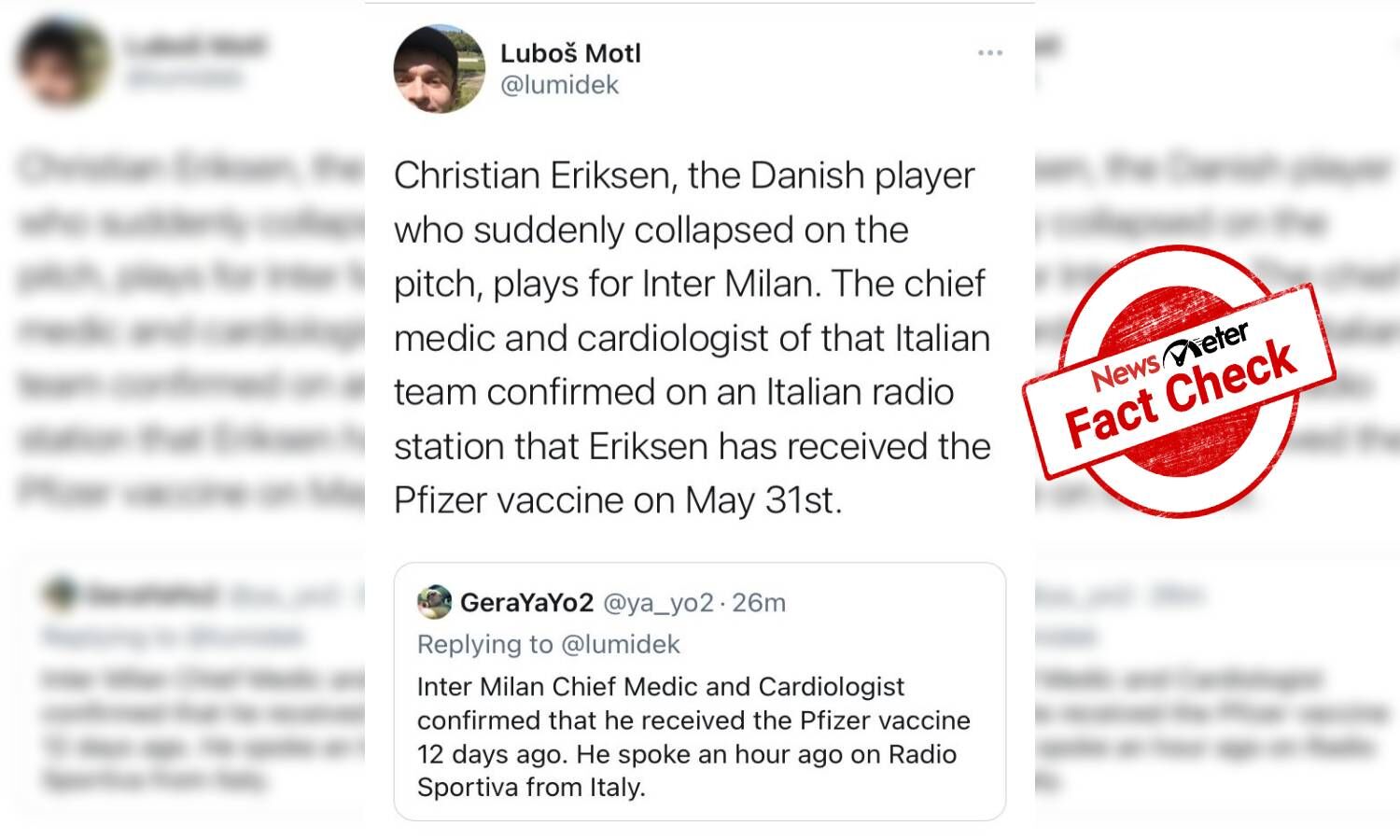
Danish soccer player collapsed during the match due to cardiac arrest caused by Pfizer vaccine
Publisher’s rating: FALSE


Pessoas Vacinadas Tem Três Vezes Mais Probabilidade De Morrer De Variante Delta Do Que As Não Vacinadas
Publisher’s rating: Falso


網傳「要檢查長輩的藥物內是否有這三種」的照片文宣,描述施打疫苗前要暫停使用抗血小板藥物以及口服抗凝劑的訊息。
Publisher’s rating: 不實


List of countries that imposed new lockdown restrictions to contain the third wave of COVID-19 virus
Publisher’s rating: FALSE
The post said Canada, Saudi Arabia, “Columbia,” Spain and other countries had recently imposed lockdowns to contain a third wave of COVID-19. It also warned of a major impact on Indians and advised precautions. FACTLY’s review concluded that the list revived an older message: it found a similar message circulating since at least December 2020, rather than evidence that the listed countries had all newly imposed lockdowns as claimed. To assess restrictions, the review consulted the Oxford COVID-19 Government Response Tracker and described comparing its COVID-19 Government Response Stringency Index using a Financial Times visualization. The review says most listed countries had eased lockdown restrictions and characterizes their measures as lockdowns with only a few restrictions. The index scores it reports are not, by themselves, proof that a new lockdown was imposed; the country details provide the relevant chronology and qualifications. Those details include Canada extending restrictions on non-essential international and U.S. travel until 21 July 2021, while easing quarantine for fully vaccinated nationals and residents returning from abroad. Spain had lifted its state of emergency on 9 May 2021, and France had lifted its nationwide night curfew on 20 June. The review also reports that Colombia eased lockdown measures from 2 June despite a peak rise in its third wave. These examples distinguish continuing or eased measures from the post’s broad claim of newly imposed lockdowns across countries.
Pesan berantai yang berjudul “Tiga Kejanggalan dan Ketidak Wajaran terhadap Isu Corona yang Terjadi di Negeri +62”
Publisher’s rating: Keliru



Explainer: නවලෝක රෝහලේ කොරෝනා මාෆියාව?
Publisher’s rating: Explainer
The image shows Kawempe North hospital in Kampala.
Publisher’s rating: FALSE
Die Delta-Variante wird vor allem junge Bevölkerungsschichten treffen.
Publisher’s rating: Tatsächlich berichten Studien von vergleichsweise vielen Infektionen unter Jugendlichen gegenüber Älteren. Dazu tragen aber vor allem auch die wirksamen Impfungen bei, die die bereits geimpften älteren Bevölkerungsgruppen schützen.
The review examined social-media claims that Delta was infecting young people in particular, including a viral post alleging that people wanted to target children. It distinguished between the observation that infections were comparatively common among younger people and the stronger claim that this was a distinctive feature of the variant. The review’s assessment was that vaccination among older groups helped explain the age pattern: younger people were less widely vaccinated, while vaccination protected many older people from infection. The review cites studies and UK reporting as evidence of higher infection levels among younger groups. A preprint study from England found that people aged five to 49 had 2.5 times as many infections as people over 50 during 20 May–7 June. It also reports that UK health officials observed the rise particularly among younger groups, and that Delta spread in schools with clusters. These findings support an age difference in observed infections, but do not by themselves show that Delta preferentially targeted young people. The review emphasizes vaccination status as the key qualification: it says most Delta infections in younger groups occurred among unvaccinated people, and that the sources it cited also found this. It further notes that, by mid-June, 84 of 806 people hospitalized with Delta in the UK had received both vaccine doses, while more than 45% of the UK population was fully vaccinated. The review also describes a US county-level comparison in which Delta spread faster where vaccination rates were lower. Taken together, the cited evidence supports higher observed infection levels among younger people, while pointing to differences in vaccination coverage—not a demonstrated age-specific property of Delta—as an important explanation.
Des documents confidentiels montrent que Moderna a envoyé un candidat vaccin contre le Covid-19 aux chercheurs d'une université quelques semaines avant l'émergence de la maladie, et que le vaccin Moderna était donc prêt dès fin 2019.
Publisher’s rating: Ces affirmations sont fausses. Les documents en question, transférés en décembre 2019 par l'Institut national des allergies et maladies infectieuses américain (NIAID) à l'Université de Caroline du Nord à Chapel Hill, concernent des candidats vaccins développés avec Moderna contre un autre coronavirus, le MERS-CoV. Il ne s’agit donc pas d’un vaccin contre le SARS-CoV-2, le virus qui cause la maladie Covid-19, a déclaré le NIAID à la dpa.
COVID-19 testing is part of a Bar Code for Life initiative that will put chips in people's brains
Publisher’s rating: False
COVID-19 vaccines come in the form of quantum dots
Publisher’s rating: False

“La Universidad Católica está haciendo un estudio con Interferón y la Universidad de Concepción lo produce”
Publisher’s rating: Impreciso