PeakMetrics / Fact Checks
Health & medicine fact checks
Explore claims publishers have checked about health & medicine. Read their original ratings and follow the evidence.
Search fact checks
Search by text or image13,673 published reviews in this topic

“Dr. Franc Zalewski: Testou vários frascos da #Pfizer e encontrou um organismo parasita apelidado de "a coisa"
Publisher’s rating: Falso
Es hatten deutlich mehr Kinder eine Impfreaktion als dass sie mit COVID-19-Diagnose im Krankenhaus lagen.
Publisher’s rating: Die Behauptung ist falsch. Es wird eine falsche Anzahl für Kinder genannt, die mit Covid-19-Diagnose im Krankenhaus lagen. Es waren für den angegebenen Zeitraum rund 5851 und nicht 1225 Fälle. Zudem ist der Vergleich irreführend, der zwischen den 1228 Verdachtsmeldungen von Nebenwirkungen und den Krankenhauseinweisungen gezogen wird. Einerseits ist der ursächliche Zusammenhang bei den möglichen Nebenwirkungen nicht bestätigt, andererseits geht es meist um eher harmlose gemeldete Impfreaktionen wie Schmerzen an der Injektionsstelle, Kopfschmerzen, Müdigkeit und Fieber.
In Russland sterben keine 1000 Menschen pro Tag an oder mit Corona, und es hat in der Russischen Föderation 2020 auch keine Übersterblichkeit wegen Covid-19 gegeben.
Publisher’s rating: Die Behauptung ist falsch. Es hat in Russland eine erhebliche Übersterblichkeit gegeben. Das belegen offizielle Zahlen, und die Regierung in Moskau bestreitet das auch nicht.

¿La vacuna contra el covid-19 no evita el contagio como dice el jugador de la NBA, Bradley Beal?
Publisher’s rating: Falta contexto
Staatsmedien berichten nicht über neue Impfempfehlungen in Skandinavien.
Publisher’s rating: Die Behauptung ist falsch. Schweizer Medien berichteten sehr wohl darüber, dass skandinavische Länder die Abgabe des Covid-19-Vakzins von Moderna an Minderjährige und teilweise auch an unter 30-jährige Männer einschränken. In der Schweiz gibt es keine Staatsmedien – die Schweizer Medien sind privatwirtschaftlich oder öffentlich-rechtlich organisiert.

Mit diesem Patent will Pfizer über den mit einer Spritze verabreichten Stoff Graphenoxid überwachen
Publisher’s rating: In dem Patent geht es um die Entwicklung eines Systems, mit dem Menschen im Pandemiefall anhand diverser Daten anonym für eine Impfung priorisiert werden sollen. Mit einer Verfolgung bereits geimpfter Menschen hat es nichts zu tun. Es ist außerdem von zwei Anwälten angemeldet worden, die Pfizer zwar bereits vertreten haben, hier aber in eigenem Namen handeln.
The claim alleges that Pfizer intends to use a substance injected by syringe—graphene oxide—to monitor vaccinated people, and presents a patent as evidence. The review identifies the document as US patent 11,107,588, confirms that it exists in the US Patent and Trademark Office database, and says the circulated PDF is the document linked from Facebook. But the patent is not registered to Pfizer: its named applicants are Gal Ehrlich and Maier Fenster, founders of the Israeli law firm Ehrlich & Fenster. Although Pfizer was among the firm’s clients, the review found nothing indicating that Pfizer owned or authored this patent. The patent’s abstract describes a different purpose: using data from electronic devices during a pandemic to identify people who should be prioritized for vaccination, with an anonymous user ID. Later sections describe using data about people’s contacts and time spent with others indoors to identify potential “superspreaders,” who could then be contacted for vaccination through that ID. This is a proposed prioritization system, not a method for tracking people after they have been vaccinated. The review also checked the patent’s text for the specific substance and mechanisms alleged in the post. It reports that graphene oxide, microwaves and a quantum connection do not appear in the document in either English or German, nor does the value “2.4.” The patent’s single mention of Pfizer is in a list of developers of COVID-19 vaccines. The document therefore does not support the claim that Pfizer patented a way to monitor vaccinated people through graphene oxide injected by syringe.

«In Italia la campagna vaccinale procede più spedita della media europea»
Publisher’s rating: Vero
Mario Draghi made the claim during his address to the Senate ahead of the European Council meeting on October 21–22, 2021. The review checks whether Italy’s vaccination coverage was ahead of the European average, comparing figures reported for October 20. It says it used vaccination statistics from the European Centre for Disease Prevention and Control, covering the 27 EU countries plus Norway, Liechtenstein and Iceland. On the review’s figures, 70.1 percent of Italy’s total population was fully vaccinated, compared with 63.4 percent across those 30 countries. Italy was also ahead on other measures: 77.1 percent of its total population had received at least one dose, versus a European average of 68.1 percent; among adults, the corresponding figures were 79.3 and 74.4 percent fully vaccinated, and 87.1 and 79.6 percent with at least one dose. The review therefore finds that the comparison supports Draghi’s claim. The result is specifically about vaccination coverage, not a claim that Italy led Europe: the review places Italy eighth among the countries compared for the share of the total population fully vaccinated. It also reports that Italy had fully vaccinated 93.4 percent of people over 80, compared with an 87.4 percent European average.

“Cientistas da Pfizer: ‘Seus anticorpos contra a Covid-19 são melhores que os gerados pela vacina da Pfizer’”
Publisher’s rating: Insustentável
Bientôt une troisième dose de quelque chose qui n'a pas fonctionné à deux reprises.
Publisher’s rating: Le fait qu’une troisième dose de vaccin contre le Covid-19 soit envisagée ou conseillée, selon les cas, ne signifie pas que les deux premières doses ne se sont pas montrées efficaces. La protection offerte par les vaccins pouvant diminuer après quelques mois, une dose supplémentaire est proposée notamment aux personnes âgées et/ou immunodéprimées.
The claim came from a Belgian Facebook post that treated the prospect of a third Covid-19 vaccine dose as proof that the first two had failed. The review explains that the additional doses being discussed at the time were aimed at particular groups, not evidence that the earlier doses had been ineffective. It reports that Belgium invited people aged 65 and older, and people with reduced immunity, to receive an additional dose. The review cites the public-health conference’s September 29 statement that the decision for older people reflected a sometimes weaker immune response after several months, and that older people consequently faced greater risk of losing protection against severe Covid-19. For other fully vaccinated people, including those under 65, it says a booster was not considered necessary at that time; the conference said available studies showed protection against hospitalization and severe illness remained sufficiently high. The review also distinguishes an additional dose for people with weakened immune systems from a booster for people with normal immune systems. It reports that on October 4 the European Medicines Agency concluded that an additional Pfizer/BioNTech or Moderna dose could be given to severely immunocompromised people at least 28 days after dose two. Separately, it said a Pfizer/BioNTech booster could be considered for adults at least six months after dose two. The review’s evidence therefore describes recommendations for different groups and purposes, not a general finding that the first two doses had failed.
Deze foto laat zien dat de pandemie gewoon in scène is gezet
Publisher’s rating: Op de foto is de Poolse minister voor Gezondheid, Adam Niedzielski, te zien. Hij bezocht een nieuw simulatiecentrum waar geneeskundestudenten kunnen oefenen. Het ligt hier vol met poppen in alle soorten en maten. Het gaat hier dus niet om een echte ziekenhuisafdeling. De foto’s laten dus niet zien dat de coronapandemie nep is.
The claim concerns a photo shared as supposed evidence that the COVID-19 pandemic was staged: it shows a suited man giving a thumbs-up beside a mannequin in a hospital bed. The review identifies the man as Poland’s health minister, Adam Niedzielski, and says the image was taken during a visit to a medical simulation centre—not on a functioning hospital ward. The centre was designed for medical students to practise their skills using mannequins and simulators. [S1: “Een foto van een man in pak die zijn duim opsteekt richting een pop in een ziekenhuisbed wordt veel gedeeld op Facebook.”; “Op de foto is de Poolse minister voor Gezondheid, Adam Niedzielski, te zien. Hij bezocht een nieuw simulatiecentrum waar geneeskundestudenten kunnen oefenen.”] The review places the visit on 21 September 2021 at the Jan Grodek State University in Sanok, where the university’s Medical Simulation Centre officially opened that day. It reports that video from Telewizja Obiektyw showed the minister at the opening, and that photographer Wojtek Zatwarnicki’s gallery from the event showed the centre filled with mannequins representing people from babies to older adults. That setting explains why a mannequin appears in the photo; it does not establish that real patients were absent from hospitals or that the pandemic was staged. [S1: “De foto werd op 21 september 2021 gemaakt bij een bezoek van de minister voor Gezondheid, Adam Niedzielski, aan de Jan Grodek staatsuniversiteit in de stad Sanok. Op die dag werd het Medisch Simulatiecentrum van de universiteit officieel geopend.”; “Op een video van Telewizja Obiektyw is te zien dat de minister hier aanwezig was.”; “In deze fotogallerij is te zien dat het hele simulatiecentrum vol ligt met poppen, van baby’s tot ouderen.”] The particular image circulating in the Netherlands was not in Zatwarnicki’s gallery. The review says it appeared with a 23 September article on Polish health-news site Rynek Zdrowia, whose caption attributed it to the opening of the Sanok training centre and a photographer for the Polish Press Agency (PAP). The review therefore connects the image to the same opening through its published caption, while distinguishing it from the separately documented gallery. [S1: “De foto die in Nederland wordt gedeeld staat niet in deze gallerij. Hij staat wel bij een artikel van de Poolse gezondheidsnieuwssite Rynek Zdrowia van 23 september. Bij de foto staat aangegeven dat hij is gemaakt bij de opening van het trainingscentrum in Sanok, door een fotograaf van het Poolse persbureau PAP.”]
Oostenrijks parlementslid doet meerdere uitspraken over coronavaccins. Ze veroorzaakten in Europa al 14.161 doden, ze beschermen niet tegen een besmetting, ernstige ziekte of de dood en verhinderen besmettelijkheid niet.
Publisher’s rating: Hausers claims zijn veelal ongenuanceerd en fout. Er zijn in Europa helemaal niet zo veel vermoedelijke bijwerkingen gemeld als hij zegt. De vaccins beschermen ook tegen ernstige ziekte - en dus overlijden -, hoewel ze niet volledig voorkomen dat je besmet kan raken. Iemand met een doorbraakinfectie is wel besmettelijk, maar doorgaans minder dan iemand die niet gevaccineerd is.
The claims came from a video in which Austrian parliamentarian Gerald Hauser of the Freedom Party of Austria criticized COVID-19 vaccinations and what he described as pressure to get vaccinated. He made the speech during a parliamentary sitting on 22 September. The review says he cited 14,161 deaths and more than 900,000 vaccine complications, but did not explain where those figures came from. To compare those figures with European reporting, the review used figures from the European Medicines Agency’s monthly safety reporting based on suspected adverse effects reported to EudraVigilance. Through 30 September 2021, those reports recorded 665,707 suspected adverse reactions across Europe, including 6,990 with a reported fatal outcome, against nearly 563 million vaccine doses. The review cautions that these reports are not proof that a vaccine caused the reported event: a causal link is usually unproven, and other factors, including a person’s medical history, matter. Thus, the reported fatal outcomes should not be presented as confirmed vaccine-caused deaths. On effectiveness, the review distinguishes between reducing the chance of infection and preventing every infection: it says vaccination lowers that chance but does not eliminate it. It also says vaccines provide protection against severe illness, reducing the likelihood of hospitalization and death. A vaccinated person who becomes infected can still be contagious, but the review reports lower viral load and generally lower contagiousness; it notes that the degree of reduction was not fully clear, particularly in light of the Delta variant.
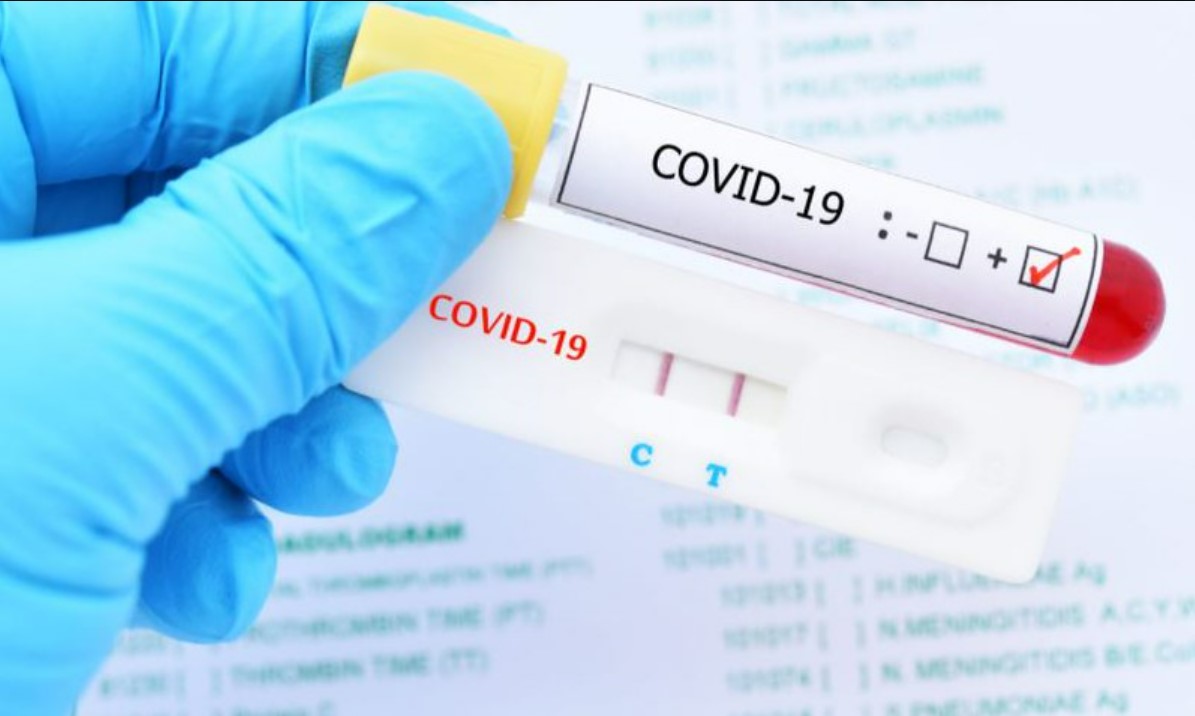
Die amerikanische Seuchenschutzbehörde CDC hat eingeräumt, dass die Existenz des Corona-Virus nicht bewiesen ist.
Publisher’s rating: Falsch. Sars-CoV-2 ist wissenschaftlich belegt. Das CDC-Papier wird irreführend interpretiert.
The claim concerns a Facebook post alleging that the CDC admitted the coronavirus’s existence was “not scientifically proven.” The dpa review traces the claim to a passage in a CDC paper about PCR-test performance, not to a statement denying that the virus exists. The disputed passage said that, at the time of testing, the CDC had no “quantified virus isolate” available. The review explains that this means the agency lacked virus material whose amount had been measured precisely—a type of material needed to assess PCR-test accuracy. For that test work, the CDC used artificially produced genetic material rather than material obtained from isolated viruses. The review reports that a University of Sheffield physician described this as a standard process. The review also points to evidence of virus isolation beyond the disputed test paper: it says the CDC reported isolating and cultivating the virus in early 2020, and notes that researchers in laboratories elsewhere had isolated and analyzed its genetic material. Thus, the passage about the specific material available for PCR-test evaluation does not establish that the virus itself had not been isolated or was unproven.
Veel gevaccineerde patiënten met spijt van vaccinatie. Uit d-dimeren in het bloed blijkt namelijk dat hun immuunsysteem is aangetast.
Publisher’s rating: De beweringen die deze man doet kloppen niet. Aan de hand van d-dimeren kan niets worden gezegd over het immuunsysteem. Deze waarde heeft te maken met bloedstolling. Er is geen gegrond bewijs dat het immuunsysteem wordt beschadigd door het coronavaccin of enig ander vaccin.
A caller who introduced himself as Maarten and said he was a coronary-care nurse claimed that his hospital was seeing more vaccinated patients who regretted vaccination. He argued that their elevated D-dimer blood readings showed that the vaccine was damaging their immune systems. The review traces the claim to a clip from the NPO Radio 1 programme *Gaan!* on 13 October; the caller did not identify his hospital. The review says the programme’s host challenged the assertion that immune-system damage had been proven. The review explains that D-dimer readings concern blood clotting, not immune-system function. It describes D-dimer testing as used to rule out thrombosis and says elevated values indicate likely increased clotting activity. Immunologist Marjolein van Egmond likewise told dpa that an increase in D-dimers says nothing about the immune system because the measurement concerns clotting. Thus, even if the caller’s account of patients or their blood results were accurate, the measurement he cited would not establish his conclusion about immune damage. The review also says there was no evidence for the broader assertion that vaccinated patients had permanently damaged immune systems, quoting van Egmond that there was no evidence that coronavirus vaccines—or other vaccines—damage the immune system. It notes a qualification: Guillain-Barré syndrome is listed as a rare adverse effect for the Janssen vaccine, and a warning appears in the AstraZeneca leaflet, but reported cases do not by themselves prove that vaccination caused an individual case. That qualification does not support the caller’s D-dimer argument or establish widespread immune damage.
¿Las personas no vacunadas contra el covid-19 ponen en riesgo a las vacunadas?
Publisher’s rating: Verdad
Pfizer a recommandé de ne pas faire en même temps le vaccin contre la grippe et celui du COVID19
Publisher’s rating: FAUX

FACT CHECK: අත් අල්ලාගෙන හදිසි සිසේරියන් සැත්කමකින් මෙලොව එලිය දුටු සහෝදරයා සහ සහෝදරිය?
Publisher’s rating: Partly False
The review investigated a social-media post claiming that a mother who had planned a natural birth needed an emergency Caesarean because her unborn daughter was holding her brother’s hand. It traced the image using a reverse-image search and identified the birth as that of Jenna and Jillian, twin girls born at Akron General Hospital in Akron, Ohio, on May 9, 2014—not a recent birth of a boy and a girl. The review says the twins were “mono-mono” twins, sharing one amniotic sac and placenta, and that the photograph of them holding hands after birth was genuine. The review distinguishes the real hand-holding from the post’s claim about why the Caesarean happened. It reports that doctors had planned the delivery in advance because mono-mono pregnancies carry risks, and that the girls were delivered at 33 weeks. It also cites reporting that the hospital did not know the twins had been holding hands before birth. Thus, the image documents the girls holding hands when they were born, but the review finds no support for the claim that this prompted an emergency operation. The key corrections are therefore the babies’ identities and the circumstances of delivery: they were two girls, and their Caesarean had been planned rather than triggered by their hands being joined. The review’s conclusion preserves the accurate element—the twins were photographed holding hands—while rejecting the post’s account of their sex and the reason for the operation.
