PeakMetrics / Fact Checks
Health & medicine fact checks
Explore claims publishers have checked about health & medicine. Read their original ratings and follow the evidence.
Search fact checks
Search by text or image13,673 published reviews in this topic

“If the vaccine is so great, then how come people are still getting COVID and spreading COVID and, unfortunately, dying from COVID?”
Publisher’s rating: Misleading
“I’m gonna have the best immunity possible now," because of COVID-19 infection.
Publisher’s rating: Misleading
"Pfizer’s coming out with a pill that’s going to help. You know, it’s basically the expensive versions of ivermectin.
Publisher’s rating: False
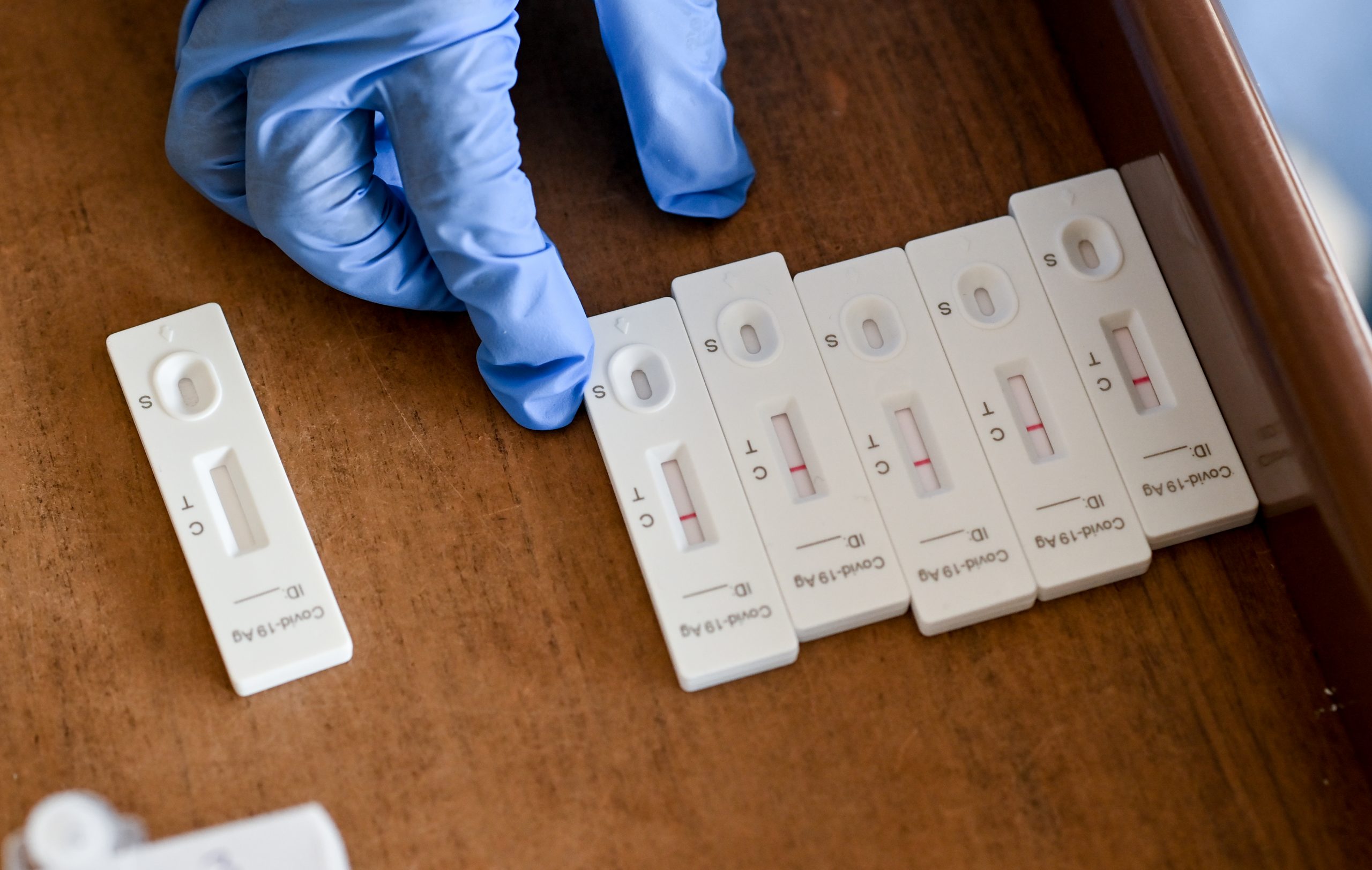
Ungeimpfte können „Strafanzeige wegen fahrlässiger Körperverletzung” stellen, wenn ein „nachweislich ungetesteter Geimpfter” einen Ungeimpften anstecken würde.
Publisher’s rating: Prinzipiell kann jeder eine Strafanzeige wegen gerichtlich strafbarer Handlungen stellen. Aus juristischer Sicht ist es allerdings sehr unwahrscheinlich, dass eine Anzeige wegen fahrlässiger Körperverletzung aufgrund der im Posting beschriebenen Situation von Erfolg gekrönt ist. Die Wirksamkeit der Corona-Impfung ist belegt.


¿Aumentó con Biden la cantidad de gente que rechaza la vacuna, como dicen Donald Trump y su hijo Eric?
Publisher’s rating: Falso
Australische premier geeft ongevaccineerden laatste kans om zich te laten inenten, anders moeten ze naar een isolatiekamp.
Publisher’s rating: Het bericht klopt niet. Het gaat om uitspraken van de premier van Queensland, een deelstaat, die door creatief knip- en plakwerk een misleidend beeld geven. De quarantainecentra zijn bedoeld voor onder meer reizigers en internationale studenten. Ongevaccineerden zouden hooguit veertien dagen in een dergelijke faciliteit verblijven vanwege inreisbeperkingen in de deelstaat.
The viral claim presented Annastacia Palaszczuk as Australia’s national prime minister and said she was giving unvaccinated people a final chance to get vaccinated before sending them to isolation camps. The review establishes that Palaszczuk was instead premier of Queensland, an Australian state, and says she did not have authority over the whole country. It describes the claim as built from separate remarks presented misleadingly as though they came from the same interview. The review explains that Palaszczuk made the “last chance” remark at a press conference, in the context of coming changes to restrictions. Her comments about quarantine facilities came separately, during a television interview. In that interview, she described facilities as serving people returning from overseas, international students, and people entering Queensland from high-risk areas within Australia. The review says unvaccinated entrants were mentioned because different entry rules applied to them. The distinction matters: according to the review, unvaccinated people entering Queensland could still face 14 days of quarantine even when other measures were relaxed at a certain vaccination rate. The facilities could be used for that quarantine; the review does not describe them as a destination for unvaccinated people generally. It concludes that the two remarks were unrelated in the way the viral presentation implied, and that there was no evidence of a nationwide policy giving unvaccinated Australians a final ultimatum or sending them to isolation camps.


పేషెంట్ ఛాతి ఎక్స్-రేలో బతికున్న బొద్దింక కనిపించిన దృశ్యాలు
Publisher’s rating: FALSE
هنری کیسینجر در سال ۲۰۰۹ گفته با واکسیناسیون اجباری میتوان انسانها را کنترل کرد.
Publisher’s rating: شاخدار


Es falso que las píldoras de Pfizer y de Merck contra el covid-19 contienen ivermectina
Publisher’s rating: Falso

COVID-19 warning message from Dr. Leong Hoe Nam.
Publisher’s rating: FALSE
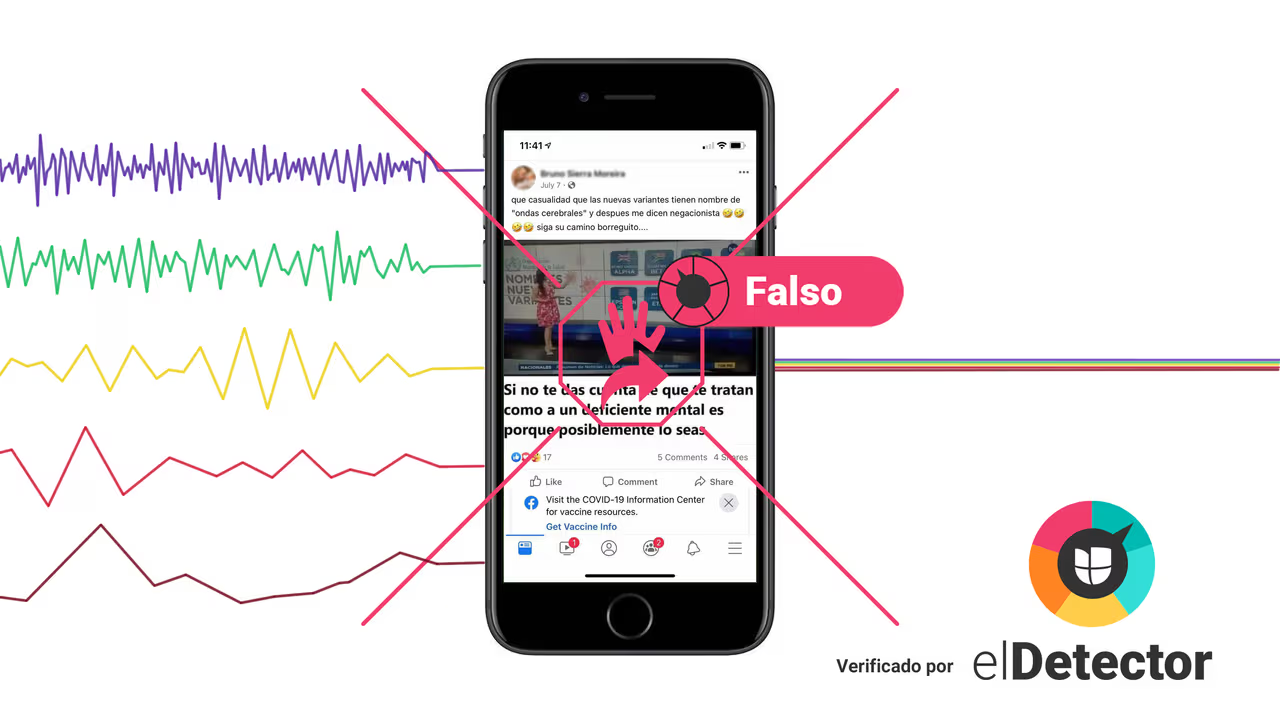
Hay un “plan sospechoso” detrás de los nombres de las variantes del coronavirus y las ondas cerebrales
Publisher’s rating: Falso
The claim under review was that the use of some of the same Greek-letter names for coronavirus variants and brain waves pointed to a suspicious connection or hidden plan. The investigation distinguishes the shared naming convention from any relationship between the things named: it reports that both fields use Greek letters, but says that this does not establish a link. For brain waves, the review cites the Spanish Society of Neurology, which explained that the letters are a practical labeling choice and that the five types are not named in Greek-alphabet order: gamma, beta, alpha, theta, and delta. The review contrasts this with the first coronavirus variants assigned Greek labels—alpha, beta, gamma, and delta—which did follow the alphabet’s early sequence. For the virus labels, the review says the World Health Organization announced its naming approach on May 31 to make key variants easier to say and remember and to avoid stigmatizing countries where they were first detected. It also notes that Greek letters are used in other scientific disciplines, including astronomy and mathematics, for sequences and other designations. Taken together, the material supports the review’s conclusion that overlapping labels alone do not show a suspicious relationship or plan.
Leni Robredo said most victims of teenage pregnancy are the youth
Publisher’s rating: Fake
Das Krankenhaus Kirchdorf erhöht künstlich die Auslastungszahlen auf der Intensivstation.
Publisher’s rating: Nach Informationen des Betreibers des Krankenhauses handelt es sich um eine Falschbehauptung.
The allegation concerned the Pyhrn-Eisenwurzen Klinikum Kirchdorf in Upper Austria. A viral sharepic claimed that staff had been instructed to admit all unvaccinated people who tested positive to intensive care, regardless of their condition. The review identified this facility by checking which hospital in Austria’s Kirchdorf was being discussed; it found that the relevant hospital was the Pyhrn-Eisenwurzen Klinikum. The hospital’s governing organization, the Upper Austrian Health Holding (OÖG), rejected the allegation through a spokesperson, who said it was invented and that the hospital did not have enough intensive-care beds for the described practice. The review also reported patient counts supplied by the OÖG spokesperson. At the beginning of November, the hospital had 54 Covid-positive patients, eight of whom were in intensive care. At the end of October, six of 36 were in intensive care; in mid-October, five of 22; and at the beginning of October, four of 19. The review said these figures did not show an exceptional transfer of ordinary-care patients into intensive care. They are a snapshot of reported counts, rather than independent records of individual admissions. The review described the hospital’s stated counting rule: a Covid patient in intensive care had to have typical symptoms as well as a positive test. It gave the example of a heart-attack patient who happened to test positive, saying that person would not be counted as a Covid intensive-care patient on that basis alone. The hospital also posted that intensive-care patients were treated there because of serious illness, not economic factors. Together, the reported figures, counting criteria, and responses from the hospital organization address the specific allegation of artificially inflating intensive-care numbers.

A study published in The Lancet Infectious Diseases shows that vaccinated people are as likely to transmit Covid-19 as non-vaccinated people
Publisher’s rating: Mostly false. The claim contained an element of truth – vaccinated and unvaccinated people in the study did show a similar viral load at their peak - but unvaccinated people spend more time at that peak than the vaccinated, making them potentially infectious for a longer amount of time.

COVID-19 warning message by Dr. Leong Hoe Nam, taken from his interview in Mandarin
Publisher’s rating: FALSE
The claim concerned a COVID-19 warning circulating online that was attributed to Singapore infectious-disease specialist Dr. Leong Hoe Nam and described as information from an interview he gave in Mandarin. FACTLY examined that specific attribution, not merely a general claim about COVID-19.
In Taiwan zijn al meer mensen overleden door de coronavaccins dan door COVID-19.
Publisher’s rating: De beweringen zijn fout. De cijfers die als bron gebruikt worden zijn afkomstig van het Taiwanese equivalent van VAERS, een bijwerkingenrapportagesysteem voor vaccins. Het gaat dus niet om bevestigde overlijdens ten gevolge van vaccinatie tegen COVID-19. Burgers kunnen hier zelf melding doen van nevenwerkingen, zonder een causaal verband te moeten aantonen.
De PCR-test werd ontwikkeld zonder geïsoleerde monsters waardoor het niet kan testen op coronavirus.
Publisher’s rating: De beweringen zijn onjuist. Het FDA-document dat aan de tekst gelinkt is, wordt verkeerd geïnterpreteerd. De specifieke RT-PCRT test uit dit document is wel degelijk ontwikkeld op basis van de genetische samenstelling van SARS-CoV-2, het virus dat COVID-19 veroorzaakt. Het test mensen niet op griep.