PeakMetrics / Fact Checks
Health & medicine fact checks
Explore claims publishers have checked about health & medicine. Read their original ratings and follow the evidence.
Search fact checks
Search by text or image13,672 published reviews in this topic
“A gente tem um dos piores investimentos em saúde mental do mundo.”
Publisher’s rating: Verdadeiro
unvaccinated people not dying from Covid-19
Publisher’s rating: Mostly False

VACINA UNIVERSAL FOI ANULADA Uma grande vitória para a liberdade, a Suprema Corte dos EUA anulou a vacinação universal.
Publisher’s rating: Falso

Fluoride in tandpasta is giftig.
Publisher’s rating: Fluoride is een effectief middel tegen gaatjes en is goed voor de mondhygiëne. Het is enkel schadelijk in zeer grote hoeveelheden, maar dat is voor elke stof waar. Met tandenpoetsen is het quasi onmogelijk om zo'n schadelijke hoeveelheden binnen te krijgen.
The review addresses a social-media video whose message was that toothpaste is toxic because it contains fluoride and carries a poison warning. It says the video’s statements were oversimplified, and distinguishes the warning’s existence from what it means: the US Food and Drug Administration required the warning in 1997 to inform consumers that fluoride is a medicine with possible side effects, not because the agency had established that fluoride in toothpaste was dangerous when used for brushing. “Deze werd in 1997 opgelegd door de Amerikaanse Food and Drug Administration (FDA). De vereiste waarschuwing kwam er echter niet omdat bleek dat fluoride in tandpasta werkelijk gevaarlijk zou zijn.” The review distinguishes fluorine from fluoride, noting that the former is highly toxic while fluoride is a compound with another element. It also explains that harm depends on dose: excessive fluoride intake can cause short-term stomach problems and vomiting, and longer-term fluorosis affecting teeth and bones. But the review says ordinary brushing is unlikely to approach harmful amounts. Its estimates put intake from a normal brushing at about 0.3 mg for children and 0.1 mg for adults, compared with stated daily upper limits of 2.2 mg for children and 10 mg for adults. “Geschat wordt dat van een gewone tandenpoetsbeurt kinderen ongeveer 0,3 mg en volwassenen 0,1 mg binnenkrijgen, ver onder de bovengrens.” The review also explains why fluoride is included in toothpaste: it strengthens tooth enamel and slows acid-related breakdown, helping prevent cavities. Its conclusion is not that fluoride can never be harmful, but that the amounts involved in brushing make a harmful overdose from brushing alone practically impossible. “Fluoride mengt zich met het tandglazuur, maakt het sterker en vertraagd de afbraak door de zuren.”


And mental health advocates have warned against using mental illness as a scapegoat when it comes to gun violence. “A vast majority of firearm violence is not attributed to mental illness,” the American Psychiatric Association said in a statement after the Uvalde shooting. “Rhetoric that argues otherwise will further stigmatize and interfere with people accessing needed treatment without addressing the root causes of firearm violence.”
Publisher’s rating: Outside of selfharm, the claim is accurate - the vast majority of violent gun crime is unrelated to mental illness.

Die aktuellen Fälle von Affenpocken sind eigentlich verstecke Impfnebenwirkungen. Der Test zur Erkennung der Affenpocken ist nutzlos.
Publisher’s rating: Die für den Nachweis von Affenpocken entwickelten Tests sind zuverlässig und weisen das Virus mit hoher Wahrscheinlichkeit nach.
The claim combines two allegations: that monkeypox cases are actually concealed side effects of COVID-19 vaccination, and that tests used to identify monkeypox are useless. The review addresses both, describing the allegations as claims circulated by former public-health official Wolfgang Wodarg in an interview. It distinguishes the possible overlap between some early symptoms and vaccine reactions from the rash characteristic of monkeypox, and says the two conditions do not thereby have the same cause. On testing, the review explains that monkeypox is identified with PCR, a method that examines viral genetic material. It reports that the tests had been in use for years and that studies found high specificity and sensitivity. This directly bears on the assertion that the tests are ineffective: the evidence described in the review supports their use for detecting the virus, rather than the claim that they cannot do so. On the alleged vaccine connection, the review notes that monkeypox outbreaks had occurred for decades, particularly in Central and West Africa, and that the disease’s symptoms were already known. It also argues that if COVID-19 vaccination caused the disease, an increase in such cases would have been expected soon after the vaccination campaign began in early 2021. The supplied text offers these points as reasons the claimed link is unfounded; it does not describe monkeypox cases as vaccine side effects.
Eating yoghurt, honey and lemon cure gallstones
Publisher’s rating: Mostly False
Eating herbs during pregnancy cause miscarriage
Publisher’s rating: Half True

Man kann mit Kräutern und Pflanzen sicher abtreiben.
Publisher’s rating: irreführend
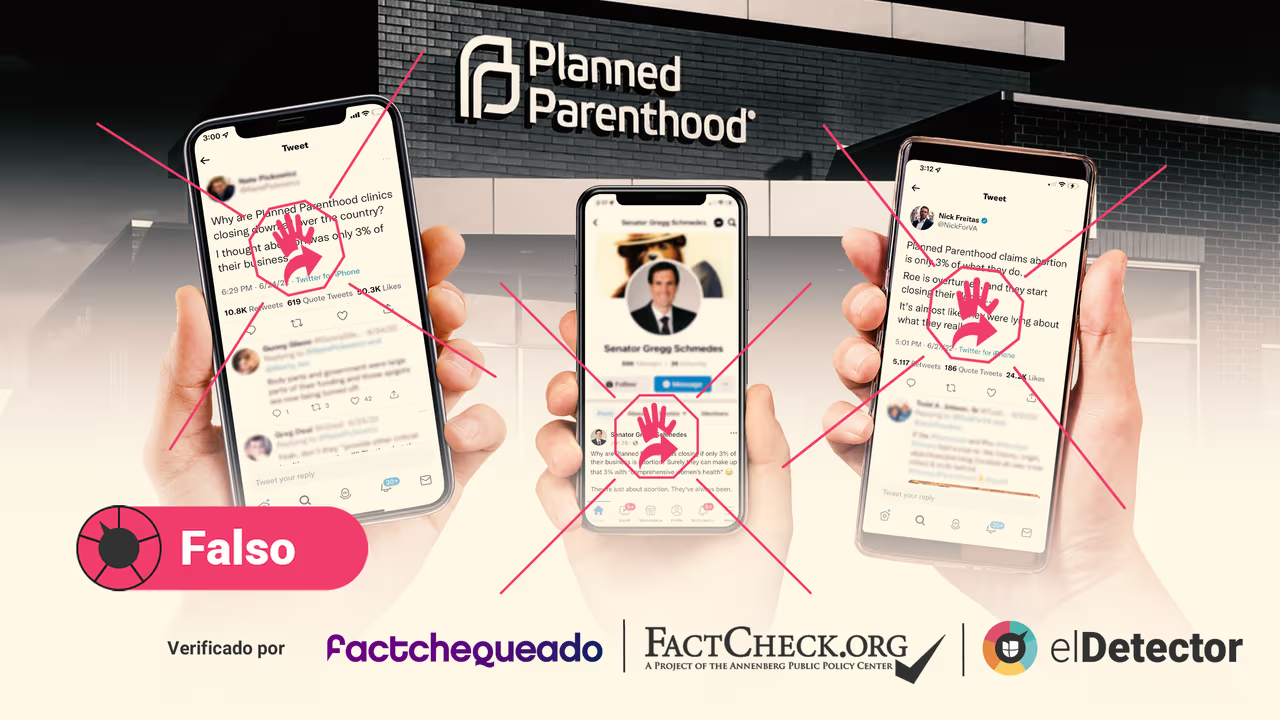
Las clínicas de Planned Parenthood están cerrando en todo el país tras la anulación de la sentencia Roe vs. Wade
Publisher’s rating: Falso
You can abort safely with herbs and plants.
Publisher’s rating: misleading
The claim concerns social-media advice that herbs or plants can induce abortion safely. DW examined examples including a TikTok post recommending mugwort, parsley and lycopodium, alongside claims about other plants and fruits. The investigation says evidence on whether plants induce abortion is sparse, but warns that using them is not a safe way to end a pregnancy. A pharmacologist quoted by DW cautioned that plant-based products have unpredictable effects; a researcher on herbal abortifacients said they can be ineffective or dangerous depending on the dose. [S1: “There are very few studies examining the efficacy of herbs and other plants for inducing abortions.”; “I must warn all women against using plant-based products to induce abortions because their effects are unpredictable,”] The review describes a University of Uruguay study of 86 cases of self-induced abortions using herbs. It reports that some women experienced multiple-organ failure, and that others had liver or blood disorders. The study found that herbs sometimes induced abortion, but associated that outcome with a risk of severe illness or death. DW also cites a 1980s US study warning that people may take larger amounts when an herbal remedy fails, increasing poisoning risk. These findings distinguish the possibility of an abortion from the claim that one can be induced safely. [S1: “The above-mentioned study from Uruguay examined 86 cases of self-induced abortions using herbs.”; “It found some of the women suffered multiple organ failures leading to death. Others sustained liver and blood disorders.”; “individuals attempting an abortion using herbal remedies may consume more such products if the desired effect is not achieved, thereby increasing the risk of poisoning.”] The examples in the review do not establish a safe herbal method. Parsley contains oils DW describes as toxic, and applying it vaginally may cause bleeding or allow chemicals to enter the bloodstream through tears. Pennyroyal is associated with poisoning and death; the review says the dose that might cause abortion could also kill the mother or cause lasting organ damage. For black cohosh, it says evidence that it acts as an abortifacient is lacking. The overall conclusion is that plant-based remedies are unsafe and potentially lethal—not a reliable, safe way to abort. [S1: “There can be no safe abortion using plant-based products,”; “Cases of pennyroyal poisoning and death have been documented.”; “Whether it actually acts as a abortifacient remains unclear, as no evidence points in this direction.”]
Do not drink medicine for the first 24 hours of fever because fever is a means to flush infection in the body.
Publisher’s rating: False
COVID-19 infection caused by the Omicron variant is "like having the flu."
Publisher’s rating: Needs context
One should take amoxicillin to help the body fight off infections during a fever.
Publisher’s rating: False
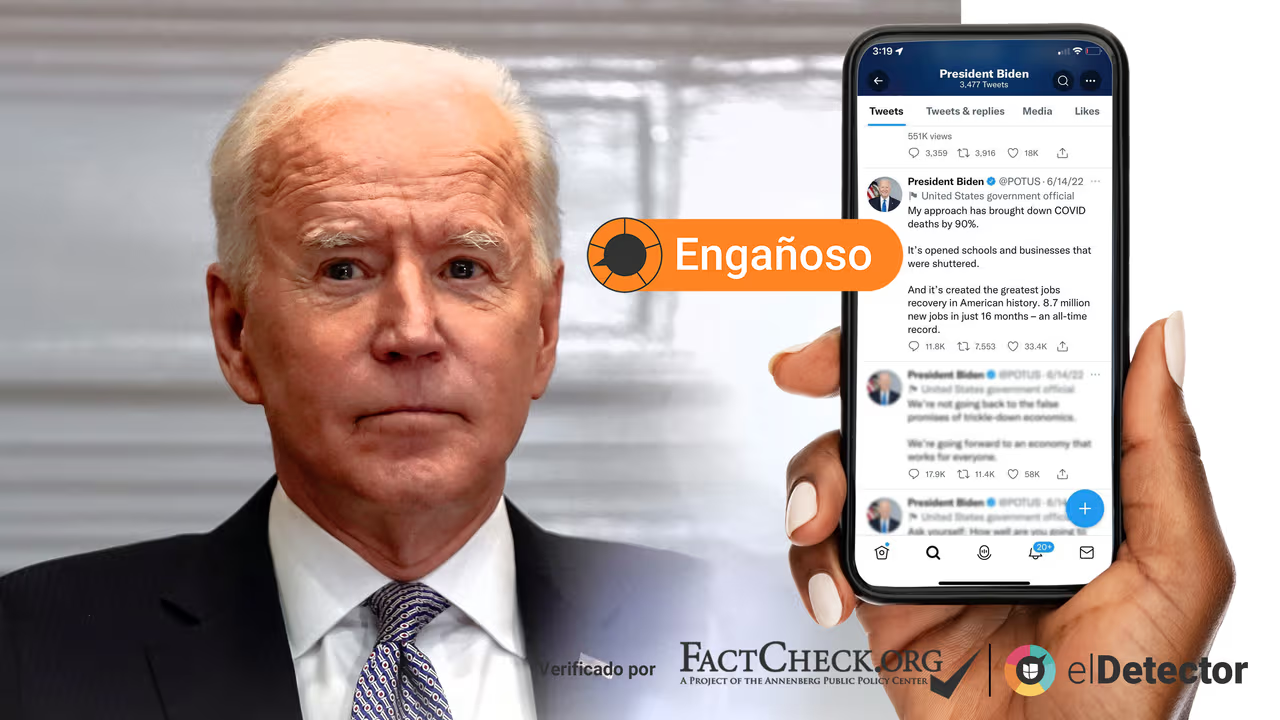
"Mi estrategia ha reducido las muertes por covid en un 90%"
Publisher’s rating: Engañoso
Abortions are never medically necessary
Publisher’s rating: False
Related reporting examined deaths after ectopic pregnancies and the risks of delayed treatment, rather than evaluating THIP Media’s fact-check or every circumstance in which abortion may be medically necessary. ProPublica’s analysis, described in the supplied excerpt, found that nearly 200 women with ectopic pregnancies died from 2020 to 2025, compared with about 100 in the preceding six years. The excerpt says experts considered such deaths preventable with prompt care: “With prompt and appropriate medical care, maternal health experts say, women should not die.” [S6] The reporting also describes how abortion restrictions can affect treatment. A Texas law passed in 2025 explicitly added ectopic pregnancies to the list of abortions allowed under state law, but the excerpt says subsequent medical-board guidance left questions about early cases where an ultrasound cannot yet establish where a pregnancy implanted. It reports that a patient’s fallopian tube ruptured and had to be removed, and quotes a hospital spokesperson saying clinicians provide “medically indicated treatment” for serious or life-threatening conditions during pregnancy. [S6] This evidence contradicts the absolute wording “never medically necessary”: it documents life-threatening pregnancy complications for which prompt medical care is critical, alongside reporting about legal uncertainty around treatment. The excerpts do not establish that every abortion is medically necessary, nor do they provide the full clinical records or a comprehensive review of medical indications. They do, however, give concrete evidence relevant to the claim’s categorical denial. [S6]
onions can be used as a medicinal agent in curing asthma
Publisher’s rating: mostly false

Sağlık çalışanlarının iş bırakma eylemi sebebiyle acil servislerin çalışmadığı iddiası
Publisher’s rating: Yanlış