PeakMetrics / Fact Checks
Health & medicine fact checks
Explore claims publishers have checked about health & medicine. Read their original ratings and follow the evidence.
Search fact checks
Search by text or image13,672 published reviews in this topic
Paragis can treat cancer, cysts, and irregular menstruation
Publisher’s rating: Needs context

Zweedse studie toont aan dat mRNA het DNA verandert.
Publisher’s rating: De studie is echt, maar toont niet aan wat online wordt beweerd. De wetenschappers bevestigden zelf dat dit niet de conclusie van de studie was. Er is geen bewijs dat mRNA het menselijk DNA kan binnendringen, laat staan veranderen.
The claim rests on a real Swedish study, but the study did not demonstrate that mRNA changes human DNA. The researchers examined the effect of the Pfizer-BioNTech COVID-19 vaccine on human liver cells in a laboratory setting outside the body. The review explains that the study’s results cannot by themselves establish what happens to DNA in a living person: “Resultaten in een gecontroleerde omgeving voorspellen niet automatisch hoe de situatie in een levend wezen in zijn werk gaat.” The researchers added the vaccine at different doses to a cell line originally derived from a human liver tumor, then studied how genes responded. One gene produces LINE-1, a protein that can convert RNA into DNA. The finding was that vaccine mRNA was converted into DNA in that cell line. But that finding does not show that the newly made DNA integrated into human DNA; the review reports that two study authors said this was not established, and that they did not know whether it could happen even in a laboratory setting. The review also notes that the study used a cell line rather than cells in a living organism, and quotes a study author explaining that the liver cells were more genetically unstable than ordinary liver cells. Thus, the reported laboratory finding does not support the broader claim that vaccination changes a person’s DNA.

醫學期刊《刺針》一篇研究顯示接種疫苗後8個月有效率會跌至負數,代表疫苗者免疫力下降。
Publisher’s rating: 錯誤
The claim concerns a Swedish study published in The Lancet that tracked COVID-19 outcomes after vaccination. The review says the study estimated protection over time by comparing more than 840,000 people who received two doses with an unvaccinated comparison group, and examined infection and severe outcomes during successive periods after dose two. It found that estimated protection against infection declined, but the overall estimate after 210 days was still 23%, not a finding that protection had definitively become negative: the estimate’s uncertainty interval ranged from -2% to 41%. That interval is central to why the circulating interpretation is not supported. The review explains that the study’s estimates became less precise with longer follow-up, and that the interval for the estimate after 210 days included both negative and positive values. It also reports that the researchers’ conclusion was waning protection against infection, while protection against hospitalization and death was better maintained. A broad uncertainty interval crossing zero does not establish that vaccinated people had higher infection risk or weaker immunity than unvaccinated people. The review further notes that the analysis divided results into 67 groups based on factors including vaccine type, age, sex, and health characteristics. Only one adjusted estimate was negative, and its uncertainty range was wide; the review says the results could not support an inference that vaccination after a certain period increased infection risk. It also quotes the study’s lead author, who said the paper did not support the claims made about it because they were not statistically significant. The review’s conclusion is that the online claim misread uncertain estimates as evidence of immune decline.


වයස අවු 17ක ස්වාමීන් වහන්සේ නමකට ඇට මිදුළු බද්ධ කිරීමේ සැත්කමක් සඳහා මේ දිනවල මුදල් ආධාර එකතු කරනවාද?
Publisher’s rating: Misleading
Eine Auswertung von Pfizer-Dokumenten belegt, dass 44 Prozent aller Schwangeren in der Zulassungsstudie des Corona-Impfstoffs eine Fehlgeburt hatten.
Publisher’s rating: Die Zahl beruht auf einem Rechenfehler, die Dokumente wurden fehlinterpretiert. Wissenschaftliche Studien finden keine Hinweise darauf, dass die Impfung für Schwangere unsicher ist.
The claim originated in an article asserting that Pfizer’s vaccine-trial documents showed miscarriages in 44 percent of pregnant women. The review traces that assertion to a calculation that counted mentions of “miscarriage” or “spontaneous abortion” across the document and compared the total with a list of 50 women who became pregnant after their first dose. The document did not report 22 distinct miscarriages: the same cases appeared in both a list of adverse events and a list of serious adverse events, leaving 11 cases, not 22. That correction does not make the 50-person list a valid denominator. The review says only three of the 11 women who had miscarriages appear on that list, which did not include all pregnant trial participants. It also reports that the document provides neither the total number of pregnant participants nor a percentage of them who miscarried. Thus, the claimed 44 percent is not supported by the document; the review says the only calculation possible from that particular list is three of 50, or six percent, and cautions that the group is too small for general conclusions. The records also do not establish that vaccination caused the reported miscarriages: the review says no causal link is given for any of them. It places that limitation alongside its account of studies in medical journals, which it says found no significant increase in miscarriage risk among pregnant people receiving an authorized Covid-19 vaccine.
“Meio milhão de anjos da guarda no Brasil. São os assistentes sociais e agentes comunitários de saúde”
Publisher’s rating: Verdadeiro

El virus de la polio fue detectado en el agua del grifo de Nueva York
Publisher’s rating: Falso
“Meio milhão de anjos da guarda no Brasil. São os assistentes sociais e agentes comunitários de saúde”
Publisher’s rating: Verdadeiro
“[Estamos falando] de mais de 680 mil brasileiros que morreram com a Covid-19”.
Publisher’s rating: Verdadeiro
Zahlen der Kassenärztlichen Bundesvereinigung (KBV) belegen: Es gab bisher 2,5 Millionen Geschädigte nach Impfnebenwirkungen der Covid-19-Impfstoffe.
Publisher’s rating: missing context
Ha An Duong is the solution to diabetes, it can replace insulin with no side effects
Publisher’s rating: Fake
Lung Cleaner Tritydo is an FDA-approved product that treats asthma, pneumonia, and bronchitis within seven days.
Publisher’s rating: Fake
Lishou is a doctor-recommended supplement that can effectively remove fat within one week.
Publisher’s rating: False
“O Brasil tem 3% da população do mundo e no Brasil morreram 11 de cada 100 pessoas que morreram no mundo na pandemia.”
Publisher’s rating: Verdadeiro
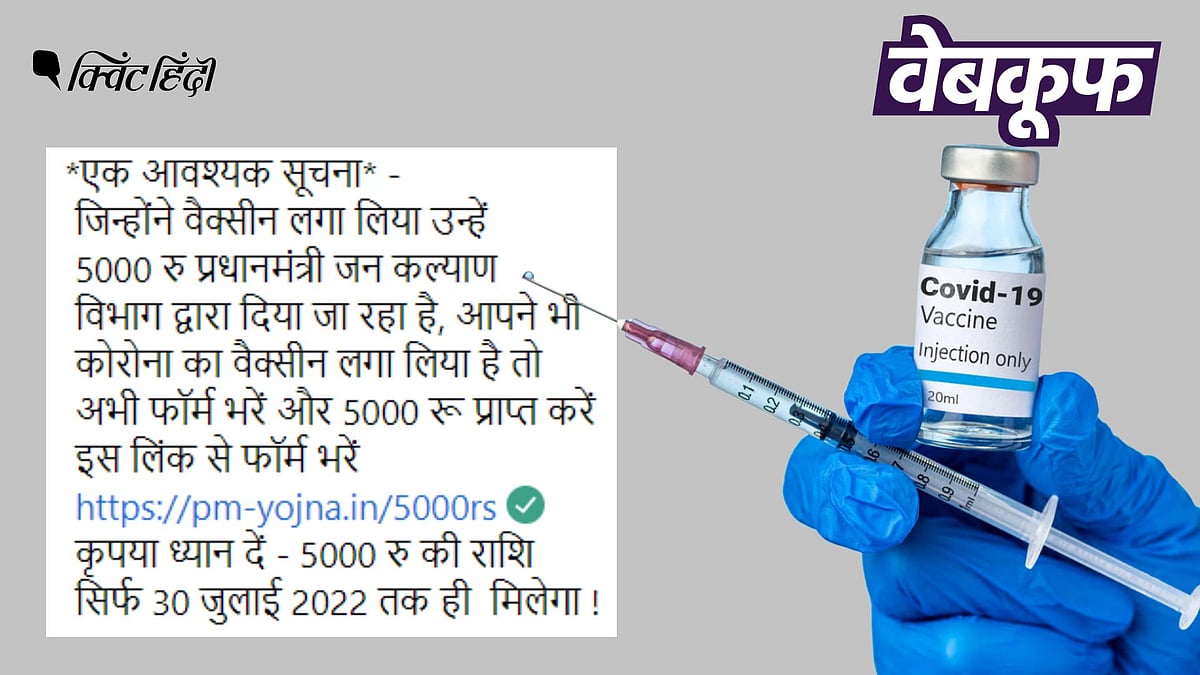
कोरोना वैक्सीन लगवा चुके लोगों को सरकार 5000 रुपये दे रही है
Publisher’s rating: FALSE