PeakMetrics / Fact Checks
Health & medicine fact checks
Explore claims publishers have checked about health & medicine. Read their original ratings and follow the evidence.
Search fact checks
Search by text or image13,672 published reviews in this topic

Summary of the International Medical Conference on Malignant Diseases held in Berlin on 03 August 2022
Publisher’s rating: FALSE
The claim concerns a social-media post presenting a list of health tips as the summary of an “International Medical Conference on Malignant Diseases” said to have taken place in Berlin on 03 August 2022. FACTLY reports that the same post had circulated since 2017, attached to claims about different international conferences, rather than originating as a documented summary of the Berlin event. FACTLY describes searching the web for relevant keywords and checking whether cancer conferences had been held in Berlin under the name given in the post. It also reports comparing the alleged tips with material on the World Cancer Conference and German Cancer Congress websites, and with summary reports from previous World Cancer Congresses. The review says it found no matching summary or list of “Dos and Don’ts” in those sources. The event chronology reported by FACTLY also conflicts with the post’s attribution: the German Cancer Congress had been held in Berlin on 19–22 February 2020, with its next congress scheduled for 13–16 November 2022. The review says the World Cancer Congress had not held an event in Berlin; it identifies Malaysia as the location of its 01–04 October 2018 congress and Geneva as the location planned for 18–22 October 2022. Based on those searches and comparisons, FACTLY concludes that there is no evidence the tips summarize the claimed Berlin conference.

In de Indiase deelstaat Gujarat zijn tienduizenden runderen dood neergevallen, nadat ze door de Indiase overheid met een vaccin waren geïnjecteerd.
Publisher’s rating: De claim dat in de Indiase deelstaat Gujarat tienduizenden runderen dood zijn neergevallen, nadat ze van de Indiase overheid een vaccin toegediend hadden gekregen klopt niet. De koeien zijn gestorven aan het ‘Lumpy Skin Disease’, waarvan momenteel een grote virusuitbraak heerst in het noordwesten van India. Vaccinatie tegen het virus biedt juist goede bescherming, zoals blijkt uit Europees voorbeeld.
The claim concerned a video of a cattle carcass dump in Gujarat, presented on Facebook as proof that thousands of cattle had died after receiving a government vaccine. The review says the animals had not been vaccinated against Lumpy Skin Disease (LSD), a viral disease affecting cattle, and attributes the deaths to the outbreak instead. It reports that Rajasthan and Gujarat were among the northwestern Indian states particularly affected. The review places the outbreak in a wider chronology: India had been experiencing a rapidly spreading LSD outbreak since April 2022. It cites a report by the Indian Express stating that, by August 31, nearly 50,000 animals had died from the disease and 1.121 million cattle had been infected; it cautions that the actual count could be higher because farmers might not always report cases. These figures concern disease deaths and infections, not vaccine-caused deaths. For the video, the review says it could not locate the original Facebook upload, but found a higher-quality version on Twitter. It compared the footage with photographs of the same carcass dump in an article on the Indian news site Mangalorean, which used the location to illustrate the LSD outbreak in Gujarat. The review also notes that India was using an existing goat-pox vaccine against LSD, while a vaccine specifically developed by India’s agricultural research council was announced in early September 2022 and was still awaiting a commercial producer. This evidence and context support the review’s conclusion that the video depicts outbreak-related cattle deaths, not proof of deaths caused by the alleged government vaccination.
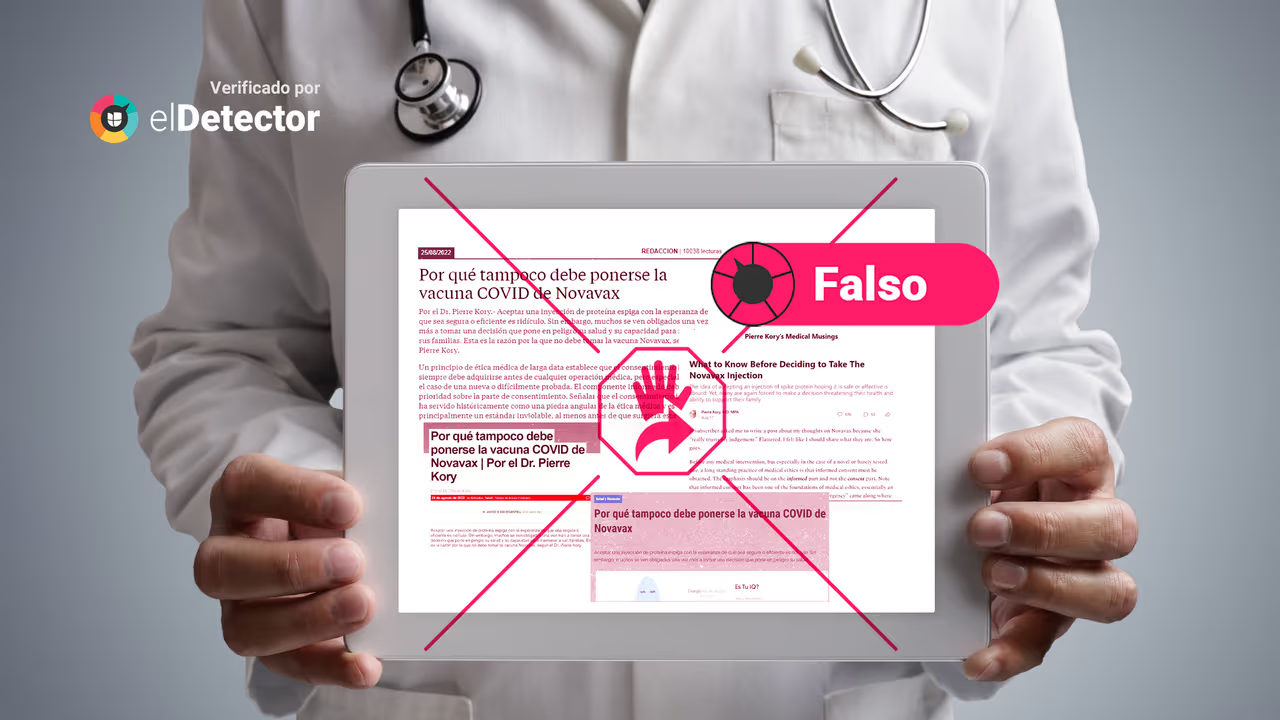
La vacuna de Novavax no es segura y eficaz
Publisher’s rating: Falso

Une entreprise australienne développe un traitement pour empêcher les gens de mourir des vaccins anti-Covid.
Publisher’s rating: Le médicament – non homologué - qui est évoqué dans ce reportage d’avril 2021 a pour ambition d’aider les patients atteints du Covid-19 et souffrant de détresse respiratoire. Il ne s’agit absolument pas d’un traitement censé répondre aux effets secondaires possibles de la vaccination. La présentatrice s’est elle-même corrigée, mais cette partie a été supprimée des extraits partagés en ligne.
The claim comes from an edited excerpt of a 7NEWS Australia broadcast about an experimental treatment being developed by an Australian company. The review says the report aired on April 16, 2021, and that the circulated clip begins at 20:38 in the broadcast. It identifies the speaker as presenter Tina Altieri and says the clip was presented online as evidence of a treatment intended to stop deaths caused by Covid-19 vaccines. The review reports that it consulted an archived version of the complete broadcast, rather than relying only on the excerpt. In the full report, Altieri initially misspoke, saying “Covid vaccine” where she meant “Covid-19”; the review says she corrected herself immediately. The correction was cut from versions shared online, making the statement appear to refer to vaccine deaths. The review says the remainder of the report describes the drug as a possible treatment for people infected with Covid-19, including to prevent death or long-term consequences—not as a remedy for vaccination side effects. The drug was a monoclonal antibody developed by Implicit Bioscience, which the review describes as based in Australia and the United States. It was unapproved at the time and under clinical study by the U.S. National Institutes of Health. The review cites an NIH announcement issued shortly before the broadcast: it describes the product as intended for people hospitalized with respiratory illness and low blood oxygen following SARS-CoV-2 infection. That stated purpose matches treatment of Covid-19 illness, not prevention of deaths caused by vaccination.
Fentanyl is the no. 1 cause of death amongst young Americans
Publisher’s rating: Mostly False

Selon une étude publiée dans le NEJM, l'immunité naturelle offre plus de protection contre le Covid-19 que trois doses de vaccin.
Publisher’s rating: Ce constat omet plusieurs observations importantes de l’étude en question, et en déforme d’autres. L’avis des chercheurs est que l’immunité, qu’elle soit apportée par une infection ou par la vaccination, diminue avec le temps et qu’une dose supplémentaire de vaccin permet dans les deux cas de rehausser le niveau de protection contre la maladie. Ainsi, une dose de vaccin après une infection offre aussi une protection renforcée.
The claim presents the NEJM study as showing that natural immunity provided more protection against COVID-19 than three vaccine doses. The review says the study used Israeli Ministry of Health data and compared people who had recovered from infection, people who had both been infected and vaccinated, and vaccinated people with no prior infection. The vaccine in the comparison was Pfizer-BioNTech’s. The data covered August and September 2021, when Delta predominated; the study did not examine Omicron. The review describes a narrower finding: protection against infection declined over time in all the groups studied. Over the same elapsed period, people who had recovered from COVID-19—whether unvaccinated or partially vaccinated—had greater protection than people who had received two vaccine doses but had never been infected. That comparison does not establish the claim’s comparison with three doses: the review explicitly says the relevant vaccine-only comparison was with two doses, not three. The review also notes that the researchers saw a benefit from further vaccination. It quotes their finding that one vaccine dose after infection, or a booster after two doses for someone not previously infected, restored protection to the level seen in the first months after recovery or vaccination. Thus, the study’s reported results include waning protection after both infection and vaccination, and a benefit from an additional dose in both circumstances.

Ivermectine wordt nu door de NIH opeens wel gezien als serieus geneesmiddel tegen COVID-19.
Publisher’s rating: Ivermectine is door de Amerikaanse gezondheidsdienst niet erkend als behandeling tegen COVID-19. Op de website staat alleen dat er onderzoek naar wordt gedaan. Die vermelding staat er al meer dan een jaar op. Hier is dus niets nieuws aan.

කෙසෙල් කොළ වලින් බත් එතීම ගැන පළවන නොමග යවන සුලු සටහන් පෙළක්!
Publisher’s rating: Misleading
The review examines social-media posts claiming that wrapping rice in banana leaves causes wax from the leaves to melt into the rice, adding a distinctive smell and taste, and transfers nutrients from the leaves into the food. It distinguishes the established use of banana leaves for wrapping food from those specific claims: the leaf does have a natural wax coating, but the review says the wax does not melt into food at ordinary temperatures.
U.K. has revoked covid vaccine for pregnant women
Publisher’s rating: False
Using ginger can regrow your hair in 21 days
Publisher’s rating: Mostly false
Cola is recommended to babies for a better start in life
Publisher’s rating: False

De nummer #1 doodsoorzaak in Alberta in 2021 was SADS.
Publisher’s rating: De bewering in de video is onjuist. De meestvoorkomende doodsoorzaak in Alberta was "andere slecht gedefinieerde en onbekende oorzaken". Dat is niet hetzelfde als SADS. Deze oorzaken kunnen nog van alles zijn. Er wordt bovendien nog steeds onderzoek gedaan naar de doodsoorzaken en deze worden bijgewerkt wanneer ze bekend zijn. Deze overlijdens worden ook door sommigen onterecht gekoppeld aan het coronavaccin.
The claim came from a video in which Dr. Roger Hodkinson, a pathologist working in Alberta, said SADS was then the province’s most common cause of death. The review checked the provincial figures he referred to: it says Alberta’s website offered a downloadable spreadsheet listing the 30 most common causes of death from 2001 through 2021. In that table, the top 2021 category was “other ill-defined and unknown causes of death,” not SADS. The review reports 3,362 deaths in that category; dementia and COVID-19 were listed second and third. That distinction matters because the category does not identify a single diagnosis. The review explains that it can include a range of unknown conditions, whereas SADS is a more specific term associated with sudden cardiac death when its cause cannot be found. The provincial category therefore does not establish that those deaths were SADS, let alone that SADS was the leading cause. The figures also were provisional. The review reports that Alberta’s minister’s office said causes of death were still being established and that, by July 6, 2022, the 2021 total in the “other ill-defined or unknown” category had already fallen by about 35% from the previously published dataset. Some cases could be reassigned once investigations were complete. The review says there is no evidence linking COVID-19 vaccines to SADS; the category’s provisional count should not be treated as evidence of such a link.


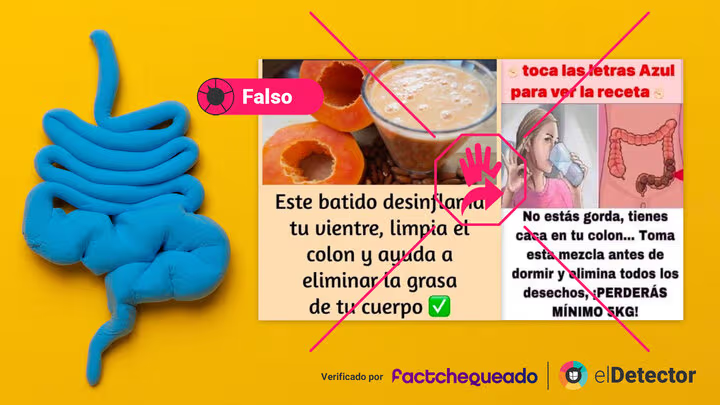
Se pueden perder entre 5 y 7 kilos eliminando desechos acumulados en el intestino y/o colon
Publisher’s rating: Falso
The review addresses posts claiming that natural-ingredient mixtures can remove accumulated intestinal or colon waste and make someone lose 5–7 kilograms. It concludes that this is false: the amount of fecal matter cannot account for such a rapid loss, and a change on the scale after using the bathroom is not equivalent to losing body fat. The review also warns that colon cleansing has no established clinical benefit and may be risky. (S1: “Circulan en Facebook diferentes mensajes que aseguran que se pueden perder entre 5 y 7 kilos eliminando ‘desechos’ acumulados en el intestino y/o colon.”; “Sin embargo, esto es falso. No se puede acumular ni perder esa cantidad de peso en materia fecal de un día para el otro ni eso puede considerarse una estrategia para bajar de peso.”; “Además, no hay evidencias de que la limpieza o depuración del colon tenga beneficios clínicos y hasta puede ser riesgoso para la salud.”) The review distinguishes scale changes from meaningful weight loss. It reports that body weight can vary from day to day, mainly because of changes in fluid, and notes that severe dehydration can cause a loss of several kilos but is dangerous. It quotes nutrition specialist Susana Gutt saying that losing 5 or more kilos of fecal matter in a day is not possible; if that quantity were present, it would indicate a much more serious condition. (S1: “Es normal que el peso corporal total tenga variaciones de un día para otro. Esto se debe principalmente a ganancia o pérdida de líquido”; “Por una deshidratación severa se pueden llegar a perder varios kilos, pero eso es riesgoso para la salud.”; “No hay manera de perder 5 o más kilos de materia fecal de un día para el otro. Si llegara a haber esa cantidad, se trataría de un cuadro mucho más grave que tener exceso de peso corporal”) To put the claim in context, the review cites an analysis of 38 studies of healthy populations across five continents. That analysis found an average adult bowel movement of 128 grams per day, with a wide range; another nutrition expert quoted in the review says that, for a Western diet, fecal matter does not exceed 250 grams by weight. The review further says that proposed ingredients such as lemon, ginger, cinnamon, or quinoa do not establish the claimed laxative effect: their fiber content may facilitate bowel movements, but the cited evidence is heterogeneous and the interventions are short. (S1: “Un análisis de 38 estudios publicados sobre población sana de 5 continentes determinó que en promedio una persona adulta depone 128 gramos/día de materia fecal, aunque el rango varía desde 15 gramos hasta 1 kilo y medio.”; “Para nuestra dieta occidental, el máximo de materia fecal en cuanto a peso no supera los 250 gramos.”; “ninguno de ellos tiene propiedades laxantes, más allá del contenido variable de fibras (que puede facilitar las deposiciones) o que beber infusiones puede aumentar la ingestión de líquidos.”)

スタバと二郎系ラーメン「ほぼ同じカロリー」と拡散したツイート
Publisher’s rating: 誤り
The claim concerned a tweet presenting a Starbucks drink and Jiro-style ramen as having nearly the same calories. The review identified the pictured drink as apparently being the Chocolate Crunch Frappuccino, a limited-time product sold in 2015, and noted that it is no longer sold. This identification was based on Starbucks Japan’s past press releases and the product image used in the tweet; the review does not present it as certain. For the drink’s calories, the review consulted Starbucks Japan’s former calorie and allergen information. It reported 581 calories for a Tall and 1,044 for the largest, Venti size. For the ramen, it asked dietitian Madoka Mishiro of the Japan Association of Personal Dietitians to estimate calories from nutritional information for a Jiro-style ramen sold online. The estimate was about 2,000 calories per serving, including the large noodle portion, fatty ingredients in the soup, chashu pork, and vegetables. On those figures, the ramen estimate was about 3.4 times the Tall drink and 1.9 times the Venti drink—not nearly the same. The comparison therefore contradicts the tweet’s calorie claim. The review also pointed out a context problem: the tweet used an image of a past product without making that explicit.
paralysis treatment in KEM hospital is 100% curable
Publisher’s rating: False