PeakMetrics / Fact Checks
Health & medicine fact checks
Explore claims publishers have checked about health & medicine. Read their original ratings and follow the evidence.
Search fact checks
Search by text or image13,668 published reviews in this topic
activated charcoal can whiten teeth effectively
Publisher’s rating: Mostly False
Research from related reporting gives a qualified answer: charcoal may remove some surface stains mechanically, but the supplied evidence does not establish it as a reliably effective or safe whitening method. One article says charcoal acts abrasively, removing plaque and the top layer of enamel, and answers that charcoal toothpaste does not whiten better or chemically alter enamel color (S1). Another says charcoal particles may be too rough for regular use and that excessive abrasion can wear down enamel (S4). These reports describe potential harm as well as a limitation on what “whitening” means. The evidence is not wholly one-sided. A product-testing article describes an Arm & Hammer charcoal toothpaste as lifting coffee and red-wine stains, but identifies baking soda and calcium peroxide alongside activated charcoal as whitening components. It also quotes a dentist saying that baking soda can help remove surface stains (S2). That account supports stain removal by a product containing charcoal, not a demonstration that charcoal itself caused the effect or that charcoal alone effectively whitens teeth. Other supplied articles make broader claims without presenting test methods or results that would establish charcoal’s effectiveness. One warns that charcoal is abrasive and says dentists recommend avoiding charcoal-based products; another says charcoal powder can remove stains but cautions that it can be abrasive (S3, S5). Overall, the excerpts support a distinction between possible surface-stain removal and dependable whitening, while raising concerns about abrasion. They do not provide controlled comparative measurements or enough product-specific evidence to establish the effectiveness of activated charcoal on its own.

Görüntülerin İngiltere’de yaygınlaşan ‘domuz terapisini’ gösterdiği iddiası
Publisher’s rating: Yanlış
a mixture of sugar and lemon juice can whiten the skin
Publisher’s rating: Missing Context

Klaus Schwab nahm aus gesundheitlichen Gründen/Bleimangel nicht an der WEF-Konferenzeröffnung teil.
Publisher’s rating: Klaus Schwab nahm am Montag, 16. Januar, um 18:00 Uhr an der Eröffnungsfeier des jährlichen WEF-Treffens in Davos teil.
The claim was that WEF founder Klaus Schwab would miss the 2023 conference opening in Davos for health reasons. The review says this rumor circulated before the forum began, without a cited source. It concludes that Schwab did take part in the opening, so the specific absence claim is contradicted by the event chronology it reports. The review also notes that rumors about Schwab being ill circulated without evidence. The key context is that the official program did not begin with a morning opening. According to the review, the WEF’s official start was Monday, January 16, and the program began at 6 p.m. with the Crystal Awards. Schwab was the first person on stage and welcomed attendees. This explains why an expectation of an earlier opening—or a claim that he had missed one—would give a misleading account of his participation. The review points to the archived WEF agenda and an archived video of the opening speech and Crystal Awards as documentation. It also reports that Lead Stories asked the WEF about Schwab’s health and was told he was in “best health.” Taken together, the reported event schedule and Schwab’s appearance address the alleged absence directly; the health-related rumor, the review says, had been circulated without supporting sources.
Hoje são 105 milhões de pessoas com algum problema de insegurança alimentar”
Publisher’s rating: Subestimado
The “daily rate of vaccine deaths is now higher than Covid deaths”, with figures showing 1,227 deaths from the two main vaccines, alongside 149 miscarriages.
Publisher’s rating: False: The number of deaths from Covid-19 vaccines is significantly lower than deaths from the virus itself, and the latest evidence shows the vaccine does not increase the chance of suffering a miscarriage.

Biopsien führen dazu, dass der Krebs streut, weil durch den Nadelstich Zellen aus dem Tumor austreten und sich verteilen.
Publisher’s rating: Zwar gibt es wie bei jedem medizinischen Eingriff Risiken, Studien belegen aber, dass der Nutzen von Biopsien die Risiken bei weitem überwiegt. Eine Gewebeprobe führt zu einer genaueren Diagnose und somit auch zu einer präziseren Krebstherapie.
The claim concerns whether a needle biopsy can make cancer spread by dislodging cells from a tumour. The dpa review addresses that specific risk, distinguishing a rare possible complication from the broader claim that biopsies routinely spread cancer. It describes the circulating video as an excerpt from a lecture questioning cancer research, but the supplied text does not identify the speaker or give further details about the video’s provenance. The review says that tumour seeding—cancer cells being dislodged by a needle inserted into a tumour and then spreading—can occur, but is rare. It reports that one study estimated needle seeding at under 1 percent, and that other studies supported the same general impression. The review therefore does not say the risk is impossible; rather, it presents the risk as uncommon and dependent in part on the cancer and biopsy circumstances. The review also explains why biopsy remains important: imaging such as ultrasound or MRI can identify suspicious areas, but in most cases a biopsy is the only way to establish a definitive cancer diagnosis. A sample may show that an area is benign, or help determine how aggressive and extensive a cancer is, information used to select treatment. The evidence in the supplied review thus supports a qualified account: needle-related spread is possible, but the review describes it as very rare and weighs that risk against the diagnostic and treatment-planning value of biopsy.
the founder of WEF suffering from a severe reaction to the Covid vaccine
Publisher’s rating: False

පිරිමින්ව සම්බාහනයට කාන්තාවන් යොදා ගැනීම තහනම් කළේ නැහැ- ආයුර්වේද කොමසාරිස්
Publisher’s rating: False
Vitiligo can be cured by applying roasted walnuts with camellia oil
Publisher’s rating: Mostly False

కోవిడ్ వ్యాక్సిన్ల వలన ఎన్నో దుష్ప్రభావాలు ఉన్నాయి అని ఒక RTI పిటిషన్కు ఇచ్చిన సమాధానంలో కేంద్ర ప్రభుత్వం అంగీకరించింది
Publisher’s rating: MISLEADING

Door gezondheidsproblemen mist Klaus Schwab de opening van het WEF in Davos.
Publisher’s rating: Klaus Schwab verkeert in goede gezondheid en was op maandag 16 januari gewoon aanwezig bij de openingsceremonie van de jaarlijkse WEF-bijeenkomst in Davos, die om 18.00 uur plaatsvond.
you should consume hydrogen peroxide to treat AIDS and herpes
Publisher’s rating: False
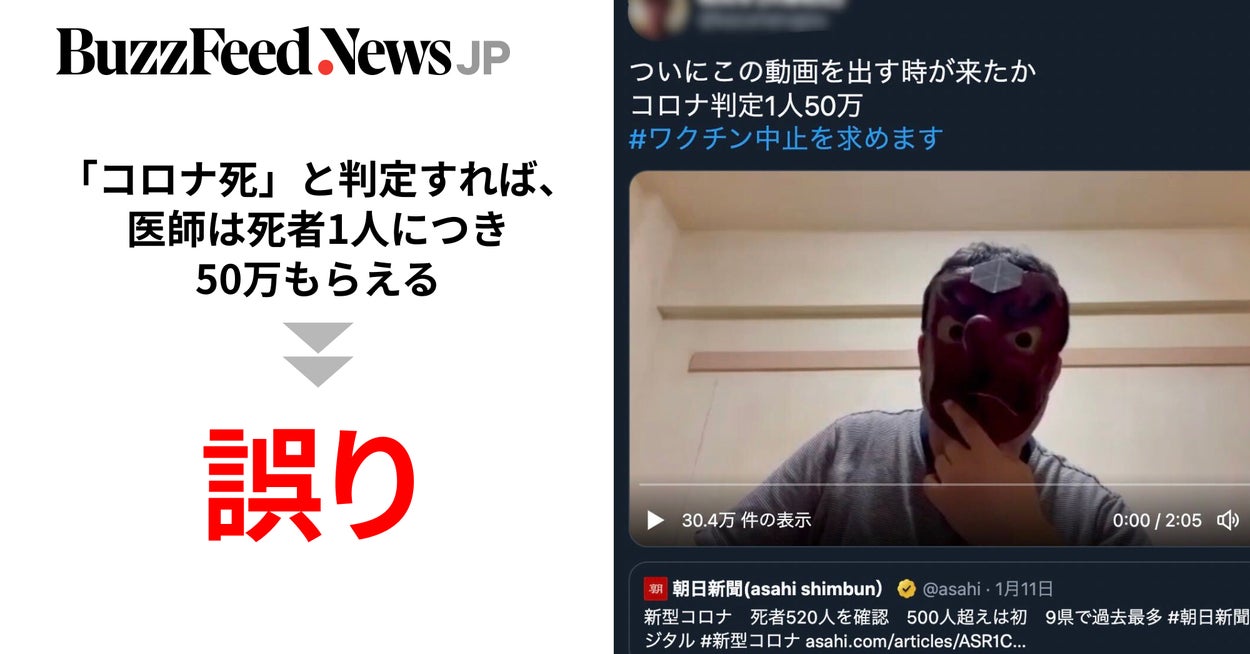
「医者が“コロナ死“と認定すれば、死者1人につき50万円が支給される」
Publisher’s rating: 誤り
The review investigates a circulating claim that a doctor receives about ¥500,000 for each death classified as caused by COVID-19. It describes a video in which a masked speaker alleged that doctors could receive roughly ¥450,000 to ¥500,000 for such a classification, and a blog post that amplified the allegation. The review says the video was posted on January 11 and had been widely viewed and shared by the time the article checked its spread. [Source evidence: “動画では、お面で顔を隠した人物が「患者がコロナによって死亡したと判定すると、医者に45万円前後の金額が支払われる」という趣旨の内容を発信。” and “17日12時現在、約2000リツイート、約4700いいねと広く拡散し、添付された動画も30.7万回再生されている。”] To test the central allegation, BuzzFeed News says it contacted the Ministry of Health, Labour and Welfare’s COVID-19 response headquarters. The ministry denied that a system paid doctors per COVID-19 death. The review therefore presents direct confirmation from the government body it consulted, rather than evidence that a payment was made to any particular doctor. [Source evidence: “BuzzFeed Newsが取材をしたところ、厚生労働省・新型コロナウイルス感染症対策本部は「新型コロナによる死亡と判定すると、医者に死者一人当たり約50万円が支払われる」という情報に関して、「そうした制度は存在しない」と否定した。”] The article distinguishes that alleged per-death payment from actual COVID-related support for medical institutions. It says the government provided grants through prefectures for measures such as reserving hospital beds for COVID-19 patients and preparing equipment to receive them; it does not describe these grants as payments to doctors for certifying deaths. [Source evidence: “コロナ患者のために病床を確保した場合に支払われる病床確保料や、コロナ患者受け入れのための設備整備の支援などが含まれる。”]

Bill Gates belooft mRNA in de voedselvoorziening te pompen om de niet-gevaccineerden te 'forceren'
Publisher’s rating: Dit bericht is nep en komt van een videokanaal dat vaker neptweets de wereld in helpt en verhalen verzint. Bill Gates is betrokken bij de financiering van onderzoek naar een langere en gezondere levensduur van vee, vooral op het Afrikaanse continent. Hij heeft nooit publiekelijk iets gezegd over het gebruik van vaccins in de voedselvoorziening om zo ‘vaccintwijfel’ te omzeilen.
The claim is tied to an image of an alleged Bill Gates tweet saying that vaccines in the food supply would solve vaccine hesitancy. The review traces the image’s design to thumbnails used by The People’s Voice, an online talk show. It notes that these thumbnails commonly pair a prominent person with a purported tweet, while the tweets often cannot be found; the video about Gates itself does not refer back to the supposed tweet. The review reports that the alleged post was not found on Gates’s Twitter account or in archived versions, and that it found no indication the tweet had existed. The video’s separate argument concerned farm animals: its presenter said Gates was targeting livestock vaccination and claimed that a video of Gates proved a plan to vaccinate farm animals with mRNA to improve their genes. The review identifies the footage as a Gates video from January 2018, before the COVID-19 pandemic, about a project at the University of Edinburgh that received funding from his foundation. In the footage, Gates discusses helping animals survive through vaccines or better genes, but, according to the review, does not connect those ideas or mention mRNA or gene modification. The review also says it found no other media appearance in which Gates specifically discussed mRNA vaccines for livestock. The review distinguishes Gates’s documented funding for research into livestock health and longevity from the allegation that he proposed using vaccines in food to overcome vaccine reluctance. It also notes that the Dutch social-media wording about the “food supply” was a generalised version of The People’s Voice video title, whose specific subject was farm animals. Its account of the alleged tweet, video provenance and the video’s actual content therefore does not support the claim that Gates made the stated promise.
antibiotic Amoxicillin capsules contain graphene oxide
Publisher’s rating: Mostly False

A Genius Philippine Student Has Invented A Treatment For Diabetes!
Publisher’s rating: False
The review investigated social-media posts claiming that a Philippine student had invented a diabetes treatment and received the country’s highest medical award, with the posts also attributing coverage to CNN Philippines. It checked the link promoted alongside the claim and found that it concerned Philippine eco-tourism rather than a diabetes treatment. The investigators also searched for coverage by CNN Philippines and reported finding no such article. They cite a Rappler fact-check that had likewise found the social-media claims based on supposed CNN articles false and misleading. The review also addressed posts linking the purported drug to Dra. Minguita Padilla. It reports that Padilla, an endocrinologist, rejected any association with or endorsement of the project in December 2022 and said her name and photograph had been misused. This directly undermines the posts’ use of her identity as apparent support for the supposed treatment. The review concludes that the posts about the student, award, and treatment were false. It also states that no cure for diabetes had been found, while noting that diabetes can be treated and controlled. The excerpt does not identify a verifiable student, invention, award record, or published clinical evidence for the claimed treatment.