PeakMetrics / Fact Checks
Health & medicine fact checks
Explore claims publishers have checked about health & medicine. Read their original ratings and follow the evidence.
Search fact checks
Search by text or image13,668 published reviews in this topic
fluoride in drinking water ineffective in preventing tooth decay
Publisher’s rating: Mostly False
Related reporting contains conflicting statements about whether fluoridated water prevents tooth decay. One excerpt asserts that water fluoridation is ineffective and refers to a New Zealand study that it says found no difference in decay rates between fluoridated and non-fluoridated areas. But it gives no study name, methods, measurements, or results beyond that description, so the excerpt alone does not allow the study’s evidence to be evaluated. Another excerpt states that fluoride’s effectiveness is well documented and that water fluoridation is an effective public-health measure. It also describes the practice as controlled addition of fluoride to public water to reduce tooth decay. However, this excerpt provides no underlying studies or comparative data either. These excerpts therefore show that the broad claim is disputed, but do not themselves supply enough study detail to independently establish its accuracy.

Insecten worden al tot bepaalde producten toegevoegd, terwijl ze giftig zijn.
Publisher’s rating: Huiskrekels mogen verhandeld worden als voedingsmiddel in de EU. Dat is veilig voor menselijke consumptie. Chitine is een stof in insecten, maar het is niet giftig voor de mens. De aanwezigheid van insecten in voeding moet ook steeds duidelijk op de verpakking zijn aangegeven.
The review addresses whether insects may be used in food in the EU and whether eating them is poisonous. It describes two European Commission implementing regulations adopted in early January: one authorizes the use of defatted cricket powder as food, and the other permits the marketing of lesser mealworms. It also notes that the house cricket had already been permitted for sale as food in an EU implementing regulation in February 2022. These facts support the narrower point that some insect ingredients are authorized for food use; they do not establish that every product contains insects. On toxicity, the review says insects contain chitin, a major component of their exoskeleton, and notes that chitin also occurs in fungi such as mushrooms and in crustaceans such as shrimp. It rejects the claim that chitin is poisonous to humans, explaining that although humans do not produce it, they have the enzyme chitinase, which can digest it. The excerpt does not describe new laboratory testing; it refers to an earlier dpa fact-check on chitin and presents the enzyme as the basis for its conclusion. The review also addresses the suggestion that insect ingredients are being hidden. It says European labeling rules require both the Latin and Dutch names of the insects on product labels. It separately reports that an image showing an Albert Heijn wholemeal loaf and Quaker products with warning stickers was fake: according to the review, neither contained insects, and the bread was no longer sold. Thus, the review distinguishes authorized use from secret inclusion and says insect-containing products must identify the ingredient on the label.

Cochrane-Studie vom Januar 2023 beweist, dass Masken nicht vor einer Ansteckung mit dem Coronavirus schützen.
Publisher’s rating: Die Metastudie fasst Arbeiten zu mehreren Atemwegsviren zusammen, das Infektionsgeschehen mit Sars-CoV-2 war nur ein kleiner Teil davon. Sichere Rückschlüsse auf die Wirksamkeit von Masken gegen das Corona-Infektionsgeschehen lässt die Metastudie nur im sehr begrenzten Umfang zu. Die Deutung, dass die Studie die Nutzlosigkeit von Masken beweise, ist falsch.
The claim concerns a Cochrane review of non-pharmaceutical measures, including mask-wearing, and treats its findings as proof that masks do not protect against coronavirus infection. The dpa review says the Cochrane paper brought together 78 studies of several respiratory viruses, including influenza and SARS-CoV-2. Most of the studies concerned earlier respiratory-virus seasons, extending to 2016, rather than the COVID-19 pandemic. Thus, the evidence base was not primarily a set of studies of mask protection against COVID-19. The review reports that the Cochrane authors found mask-wearing in the community probably had little or no effect on the occurrence of illnesses such as influenza and COVID-19. But it also reports their stated limits: risk of bias, differences in outcome measurement, and relatively low adherence made firm conclusions difficult. Cochrane Germany further cautioned that many studies tested interventions such as providing masks, without establishing whether or how consistently people wore them. The reported result therefore does not establish that masks are useless or prove that they cannot protect against coronavirus infection. The review also describes evidence pointing in the other direction, while distinguishing it from the Cochrane analysis. It cites a 2020 overview in The Lancet that found masks could substantially reduce infection risk, and a 2021 PNAS study reporting that, when an infected and an uninfected person wore well-fitting FFP2 masks, the maximum risk after 20 minutes at very close range was scarcely more than one per mille. These cited findings do not erase the Cochrane review’s limitations; they show why the broad claim of proof of ineffectiveness is not supported by that review alone.
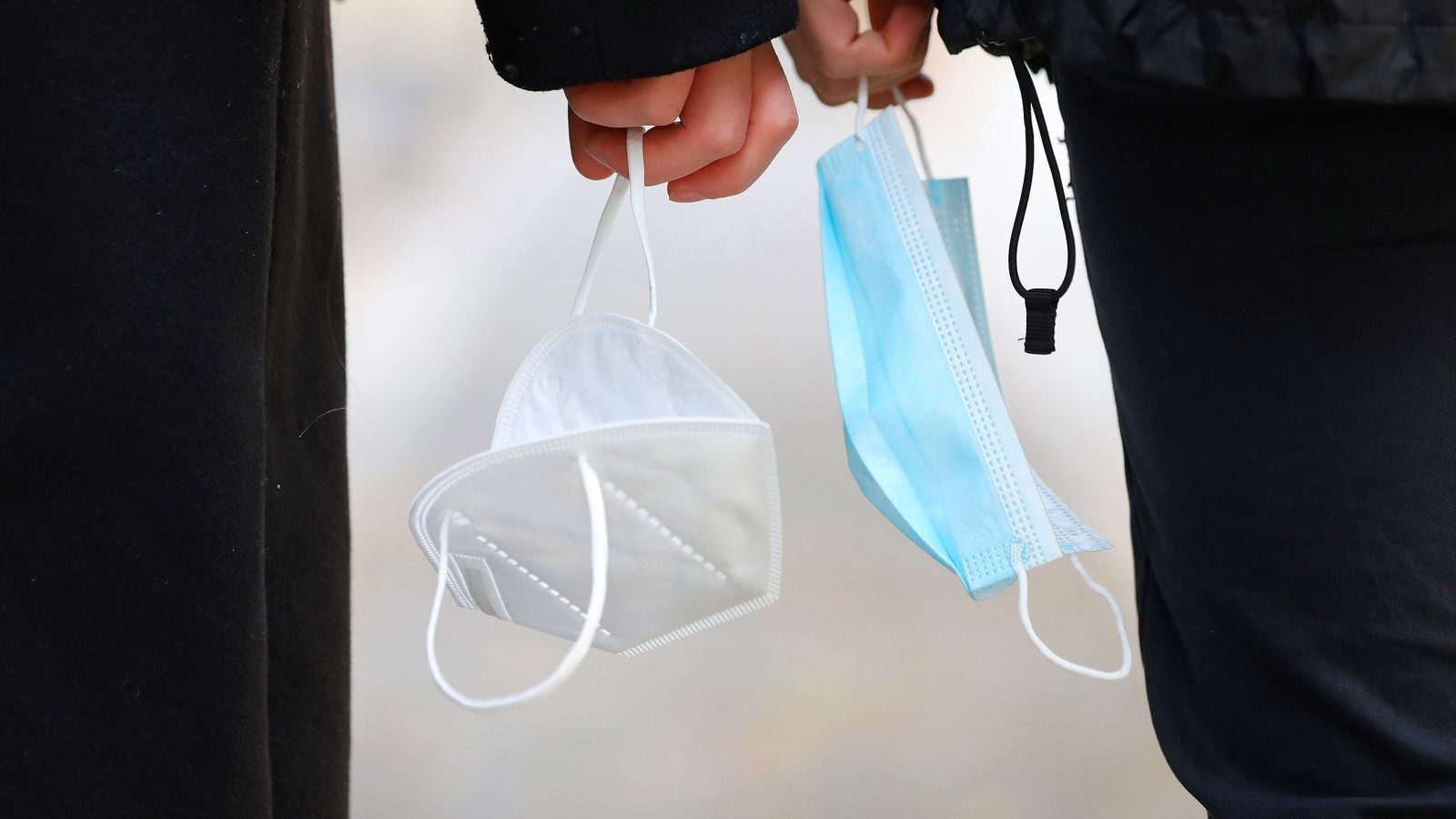
"Metastudie der renommierten Cochrane Library beweist: Masken sind gegen #Corona wirkungslos!"; "Masken schützen nicht!"
Publisher’s rating: Irreführend. Der Review taugt nicht als Beweis, dass Masken wirkungslos wären. Masken können vor der Übertragung von Krankheitserregern über die Atemluft schützen, dafür ist aber eine korrekte und konsequente Anwendung wichtig.

Forscher fanden heraus, dass Eier Blutgerinnsel verursachen - damit soll von Problemen mit Impfstoffen abgelenkt werden.
Publisher’s rating: Es ist kein Zusammenhang zwischen einem erhöhten Risiko für Blutgerinnsel und dem Verzehr von Eiern nachgewiesen worden, wohl aber ein Zusammenhang mit der Einnahme von Cholin-Ergänzungsmitteln (ein Stoff, der unter anderem auch in Eiern enthalten ist). Das Ergebnis der Studie von 2017 wird in der Überschrift verzerrt.

Die klinischen Versuche mit dem Covid->Impfstoff in den USA waren nicht echt und Teil einer US-Militäroperation.
Publisher’s rating: Sowohl in den USA als auch in anderen Ländern haben klinische Studien stattgefunden. In den USA wurde den am häufigsten verwendeten Impfstoffen von Pfizer und Moderna zunächst eine Notfallzulassung erteilt, später wurden diese Vakzine dann gänzlich zugelassen. Für die Behauptung, es handele sich bei der Pandemie um eine Militäroperation, gibt es keine Belege.
The claim combines two allegations: that US clinical trials of Covid vaccines were fabricated, and that the pandemic was a military operation planned by the US Department of Defense. The review traces these claims to a blog post drawing on an interview with Sasha Latypova. It says the interview alleged that trials had not taken place and that the process was staged by the US government, media and pharmaceutical companies. The review counters the claim about trials with evidence from US regulatory requirements and trial records. It reports that although emergency-use rules do not make clinical trials an absolute prerequisite, the FDA’s stated requirements for Covid-vaccine emergency-use applications called for safety data from Phase 1 and Phase 2 studies and a Phase 3 safety database covering more than 3,000 recipients. The review also points to published scientific papers, trial data and reporting, and describes large US trials: about 44,000 participants for the BioNTech/Pfizer vaccine and about 30,000 for Moderna. On the military-operation allegation, the review says the referenced “Pandemic Enterprise” could not be clearly identified. It notes a possible confusion with the Public Health Emergency Medical Countermeasures Enterprise, which it says had existed since 2006 and coordinated preparation for health threats. The review describes its remit as preparedness and coordination, not evidence that the pandemic was a military operation. It reports that the cited material provides no evidence for the military-operation claim.
“Notícia bombástica do governo alemão: ‘Número alarmante de vacinados está desenvolvendo AIDS’”
Publisher’s rating: Falso
cranberry juice is effective for treating stomach ulcers
Publisher’s rating: Mostly False

Wetenschappers hebben weer wat nieuws gevonden en claimen dat eieren de reden zijn voor bloedstollingen en de "plotselinge dood" van mensen.
Publisher’s rating: Wetenschappers bewezen geen link tussen het eten van eieren en een vergrote kans op bloedstolsels. Wel bewezen ze een link tussen het nemen van choline-supplementen (een stof die onder andere ook in eieren te vinden is) en een grotere kans op bloedstolsels. De uitkomst van het onderzoek uit 2017 is dus door Newspunch verdraaid.
The claim arose from a Newspunch article about eggs, blood clots and “sudden death.” The dpa review says Newspunch presented eggs as the cause of clots and used the story to suggest that an alleged vaccine-related cause was being concealed. But the study behind the story did not test whether eating eggs causes blood clots: Cleveland Clinic researchers gave participants choline supplements for two months and measured the effect on the body. Choline is present in eggs, but also in meat, fish and whole-grain products, and it can be taken as a supplement. The distinction matters: evidence about taking choline supplements is not evidence that eating eggs increases clot risk. The review reports a link between choline supplements and a greater chance of blood clots, while stating that the researchers made no direct link between eating eggs and clots. The review also explains how the claim was amplified. Newspunch copied an Express article about the 2017 Cleveland Clinic study. Express’s original headline suggested a link between blood clots and a popular breakfast food; Newspunch put greater emphasis on eggs. The review says Express changed its headline on 26 January 2023 to specify that a compound found in eggs—not eggs themselves—was linked to increased clotting risk. It concludes that Newspunch distorted the study’s findings.
Bill Gates “vows to pump mRNA into food supply to ‘force-jab’ the unvaccinated”.
Publisher’s rating: False. There is no evidence to support these claims. Screenshots can easily be faked, and there is no evidence Mr Gates ever posted this tweet.
Bomba: O diretor da Força-Tarefa do CDC, admitiu que as vacinas C-19 causam doenças debilitantes
Publisher’s rating: Falso

Eating sugar doesn’t cause diabetes
Publisher’s rating: Scientific evidence shows that the link between sugar and diabetes is through obesity and resultant insulin resistance.

Volkerenbrood van de AH en Cruesli van Quaker bevatten insecten.
Publisher’s rating: Geen enkele volkoren broodsoort van Albert Heijn bevat insecten, noch de producten van Quaker. De gele waarschuwingsstickers zijn erop gefotoshopt. De supermarktbranche heeft aangegeven dat in de nabije toekomst niet van plan is krekelmeel of iets dergelijks aan producten toe te voegen. Zal een productent dit wel doen, dan moet dit duidelijk op de verpakking worden aangegeven.

Selon la FAA, les pilotes américains souffrent de troubles cardiaques suivant la vaccination anti-Covid.
Publisher’s rating: La FAA a effectué un léger changement de catégorisation pour un seul type d’arythmie cardiaque légère, sur la recommandation de cardiologues. Ces modifications ont été annoncées publiquement ; il n’y a donc rien de secret ou de dissimulé. En outre, il n’existe aucune preuve que ce changement soit lié à des problèmes de santé des pilotes de la FAA, ni que la vaccination anti-Covid ait eu un quelconque effet indésirable sur ces derniers.

Zurückgegangene Krebstumore von Patienten würden «seit der Impfung leider wieder aufflammen, aufgrund der Schädigung ihres Immunsystems durch die COVID-Impfung». Tumore seien so groß wie nie, daher würden sie als «Turbokrebs» bezeichnet.
Publisher’s rating: Für die Behauptung gibt es keine Belege. «Turbokrebs» ist keine medizinische Diagnose oder Bezeichnung. Onkologen empfehlen Krebspatienten ausdrücklich eine Impfung, weil Erkrankte «ein besonders hohes Risiko für einen schweren Verlauf von Covid-19 haben».
The claim is that COVID vaccination damages the immune system, causing previously shrinking tumors to return and grow unusually large—a supposed phenomenon called “Turbokrebs.” The review examined that claim and reports that the term is a lay expression, not a recognized medical designation. It also says the German Society for Hematology and Medical Oncology (DGHO) had no entries for the term on its website, and that the person who coined it acknowledged it was not medically established: “Turbokrebs” was, in his words, his own invention rather than a medically correct term. The review reports that the DGHO knew of no increase in tumor findings following vaccination. Marie von Lilienfeld-Toal, a Jena professor and DGHO working-group board member, said the society had found no increased rate of cancer relapse; when asked again in January 2023, she said its assessment had not changed. The review also says medical institutions and researchers in Canada, the United States, and France told AFP and Reuters fact-checkers they had not observed a link between vaccination and an apparent increase in aggressive cancers. The review notes a different possible explanation for some later diagnoses: pandemic-related strain on healthcare may have delayed cancer detection or treatment. It reports that some patients may consequently have sought care with more advanced disease, but quotes von Lilienfeld-Toal saying such cases were not caused by vaccination. The review says the DGHO recommends vaccination for cancer patients because they face a particularly high risk of severe COVID-19, and reports that it identifies no cancer-specific contraindications.
the Simpson show claim contrails cause respiratory illnesses
Publisher’s rating: Mostly False

Deze foto toont de administratielast in de Nederlandse zorg
Publisher’s rating: De foto toont niet de Nederlandse situatie in de zorg, maar de Britse. Arts Gordon Caldwell plaatste de foto voor het eerst op Twitter in juli 2022. De bestuursvoorzitter van het Nederlandse ziekenhuis OLVG gebruikte het beeld in januari 2023 op LinkedIn, maar vermeldde daarbij wel dat het om een foto uit het Verenigd Koninkrijk ging. Ook in Nederland moeten zorgmedewerkers veel administratie bijhouden, maar deze foto laat die niet zien.
Boiled Coca-Cola can cure fever, common cold
Publisher’s rating: In case of fever and cold, it’s best to avoid sugary drinks, alcohol, and other products that further dehydrate the body.