PeakMetrics / Fact Checks
Health & medicine fact checks
Explore claims publishers have checked about health & medicine. Read their original ratings and follow the evidence.
Search fact checks
Search by text or image13,667 published reviews in this topic

De GGD heeft alvast de Brabanthallen afgehuurd voor deze herfst; de pandemie wordt weer gepland.
Publisher’s rating: Het gedeelde bericht is van vorig jaar, en zegt dus niets over de situatie van komende herfst. Voor deze herfst staan al veel evenementen op de agenda. In de herfst van 2022 gebruikte de GGD de Brabanthallen inderdaad als priklocatie, maar vonden tegelijkertijd gewoon evenementen plaats.
The Pfizer vaccine is getting deposited in brain and ovaries
Publisher’s rating: False
The supplied evidence is two October 2026 reposts of a Judy Byington compilation, not an account of an investigation into the vaccine claim. Both repeat a Telegram post asserting that mRNA vaccine lipid nanoparticles spread beyond the injection site, including to the brain, and accumulate in women’s ovaries. The excerpts do not identify the documents, studies, or measurements behind that assertion, or describe any independent checking of it. The excerpts themselves caution against treating the compilation as verified evidence: one says the author reports material from social media that “may or may not be true” and is shared “not as fact.” The other reproduces the same vaccine allegation in the same compilation. Thus, these sources establish that the allegation was circulated in the reposts, but do not establish whether it is accurate.


Covid19, මිනිසුන් විසින් කෘත්රිමව නිර්මාණය කළ ජීව අවියක් බවට ඩේවිඩ් මාටින් කළ ප්රකාශ සම්බන්ධයෙන් කරුණු පැහැදිලි කිරීමක්!
Publisher’s rating: Explainer
COVID-19 vaccines were manufactured by military contractors
Publisher’s rating: FALSE

Snake venom entering the nose can cause death in minutes.
Publisher’s rating: False
Chewing pawpaw leaf and swallowing the liquid stops the flow of snake poison until treatment is received.
Publisher’s rating: False
The review addresses the specific claim that chewing pawpaw leaf and swallowing its liquid can stop snake venom from circulating while a bite victim waits for treatment. It characterizes this as a traditional belief, but says there is insufficient scientific evidence that the remedy works. The review’s stated conclusion is that it should not be relied on to halt venom’s effects.
Wall geckos are deadlier than snakes. Using a toothbrush contaminated by a wall gecko without washing it can cause death.
Publisher’s rating: False
The review examines the specific social-media claim that wall geckos are more dangerous than snakes and that a gecko contaminating a toothbrush could cause death if the brush is used without washing. It says the claim circulated on WhatsApp, Facebook and Twitter, but does not identify a particular post, incident or person affected. As support, the review states that toxicologists and reptile experts, including those at the WHO and CDC, regard wall geckos as neither venomous nor poisonous to humans. It describes them as insect-eating reptiles that help control insect populations. The excerpt does not provide named experts, links to WHO or CDC material, or details of a specific study; its account of this expert support therefore cannot be independently evaluated from the supplied text alone. For its verdict, the review says there is no scientific evidence that geckos are deadlier than snakes or that a contaminated toothbrush can cause death. It names the African Journal of Herpetology as a source, but supplies no article title, author, study details or quotation from that source. The review thus rejects the claim, while the supplied excerpt does not show a direct test of the toothbrush scenario or provide enough bibliographic detail to assess the cited research independently.
Drinking cold water from the fridge slows down the flow of snake venom.
Publisher’s rating: False
The review addresses the specific claim that drinking cold water from the fridge slows the circulation of snake venom. It labels that claim false and says there is no scientific evidence supporting it. The excerpt does not describe independent tests or name the experts or studies the review consulted for this particular conclusion, so it does not establish a detailed method of investigation. For its practical guidance, the review says prompt medical assistance is essential after a snakebite and warns that relying on cold water alone will not counteract venom. Its conclusion is therefore that drinking cold water is not a substitute for medical treatment—not that the article tested the effect of cold water in a clinical setting.
Tying a bandage or tourniquet around snake bite causes swelling and can paralyze the bitten area.
Publisher’s rating: False
The original review includes the claim that tying a bandage or tourniquet around a snake bite causes swelling and can paralyze the bitten area. Its explanation focuses on the risk of applying one tightly: the review says this “can restrict blood flow and cause tissue damage, leading to complications.” That supports rejecting tight constriction as a safe response, but the excerpt does not separately explain or document swelling or paralysis as specific effects. For immediate response, the review says that medical attention is crucial and recommends keeping the victim calm and immobile. It attributes its warning about tight bandaging to the World Health Organization’s snakebite-envenoming material, but gives no quotation, study details, or further description of that source. Thus, the excerpt provides a brief rationale and first-aid advice rather than a detailed account of how the specific effects named in the claim were evaluated.

අවුරුදු 101ක මවක දරුවෙකු ප්රසුත කළ පුවතේ, ඇත්ත කතාව!
Publisher’s rating: False
The story being checked said that a 101-year-old woman in Naples, Italy, had given birth on June 12, 2023, and that the baby was her 17th child. The review examined the image circulating with that claim. It reports using a reverse-image search, which indicated that the picture was not recent but dated to 2015: “ඉතාලියේ නපොලි නගරයේදී වයස 101 ක් වන කාන්තාවක් දරුවෙක් බිහි කර ඇති බවයි. එම දරුවා කාන්තාවගේ 17 වන දරුවා බවටත් , දරුවා බිහිකර ඇත්තේ 2023 වසරේ ජුනි 12 වනදා බවටත් වැඩිදුරටත් දැක්වුණා.” The review describes its method and finding: “අප මෙම සේයාරුව Reverse Image සෙවුමකට ලක්කළා. එහිදී අපට දැකගන්නට ලැබුණේ එය මෑතක දී ලබාගත් සේයාරුවක් නොව, 2015 වසරේදී ලබාගත් ඡායාරුපයක් බවයි.” The image instead showed Rosa Camfield, a 101-year-old woman in Arizona, with a baby who was her great-granddaughter—not a child she had just delivered. The review says Camfield’s granddaughter Sarah Hamm first posted the photo on March 17, 2015, and that Camfield died on March 30, about two weeks later. These details explain why the photograph cannot document the alleged 2023 birth: “අමෙරිකා එක්සත් ජනපදයේ ඇරිසෝනා ප්රාන්තයේ විසු වයස අවුරුදු 101ක අත්තම්මා කෙනෙක්, සිය මිණිබිරියකගේ දියණියක් (Great Grand daughter) සමග සිටින අවස්ථාවක් එහි දැක්වෙනවා.” It adds: “2015 මාර්තු 17 දින Camfield ගේ මිනිබිරියක් වන Sarah Hamm විසින් මෙම සේයාරුව මුලින්ම සමාජ ජාලා වෙතට එක්කර තිබුණා.” The review also traced the false story to an older fabricated article using the same photograph. It says the claim had circulated in social-media posts after that article appeared, rather than arising from evidence of a new birth in Italy. The review’s conclusion is that the image shows Camfield with her great-granddaughter in the United States, not a 101-year-old woman giving birth in Italy: “අසත්ය පුවත් පළකිරීම පිලිබදව නම් දරා ඇති World News Daily Report නම් වෙබ් අඩවියක් මෙයට වසර ගණනාවකට පෙර මෙම සේයාරුව යොදාගෙන ඉතාලියේ 101 හැවිරිදි කාන්තාවක් දරුවෙක් ප්රසූත කල බවට ව්යාජ පුවතක් නිර්මාණය කර තිබුණා.”
Existe una “alerta sobre la nueva variante del coronavirus, llamada arcturus”.
Publisher’s rating: Falso
La verificación examinó si existía una alerta sanitaria por XBB.1.16, sublinaje de ómicron conocido coloquialmente como arcturus. El artículo distingue entre una evaluación periódica de riesgos de la OMS y una alerta: según la respuesta que la Organización Panamericana de la Salud (OPS) envió por correo electrónico al medio, la evaluación forma parte del seguimiento regular de variantes y no significa que se haya emitido una alerta. La conclusión se refiere a la situación descrita por el artículo hasta el 17 de junio de 2023. La evidencia que presenta incluye la evaluación inicial de riesgos de la OMS, emitida el 17 de abril de 2023, y una actualización de junio. El artículo dice que ambas evaluaciones indicaban que XBB.1.16 no suponía un riesgo adicional para la salud pública frente a otros linajes descendientes de ómicron que circulaban entonces. También informa que la OMS clasificó XBB.1.16 como variante de interés y que podía tener una ventaja de crecimiento; esos datos describen seguimiento y crecimiento, no una alerta ni un riesgo adicional establecido. La respuesta de la OPS citada en la verificación coincide en que no se había visto un cambio en la presentación clínica o la gravedad de los casos asociado al linaje XBB y señala que no se consideraba necesaria una alerta adicional para esos sublinajes. El artículo también recoge una respuesta de los CDC, enviada el 7 de junio de 2023: entonces XBB.1.16 representaba aproximadamente el 15 % de los casos de covid-19 en Estados Unidos, pero no había evidencia de que causara una enfermedad más grave o redujera la eficacia de las vacunas. En conjunto, la evidencia aborda la afirmación concreta: se había evaluado y vigilado la subvariante, pero el artículo no encontró que esas medidas constituyeran la supuesta alerta.
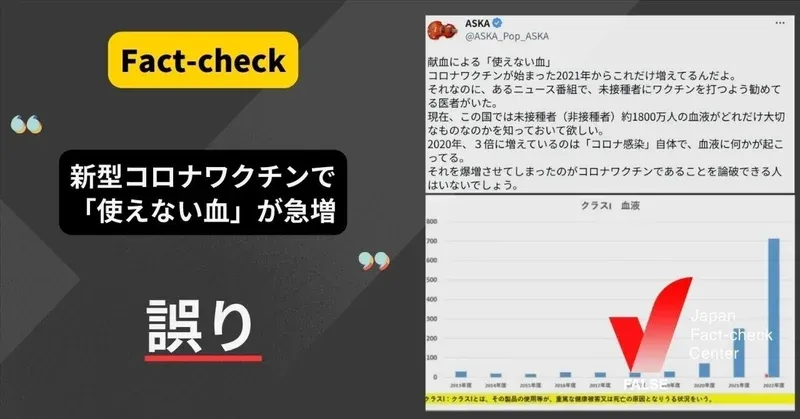
新型コロナワクチンによって「献血で使えない血」が急増した
Publisher’s rating: 誤り
The review says the increase in blood-product recalls was attributed mainly to COVID-19 infections identified after donation, not vaccination. Of the 251 recalls in fiscal 2021, 234 involved infection, suspected infection, or a positive infection test; the review also reports that no recalls due to vaccination had occurred since 2021.
ATENÇÃO!!!! Vacina para Hepatite B (rADN) com Óxido de Grafeno
Publisher’s rating: Falso
Drinking cold drinks after eating mangoes is fatal
Publisher’s rating: FALSE

"Es mentira que los carbohidratos suben el azúcar".
Publisher’s rating: Engañoso
COVID-19 vaccines are causing cases of "turbo cancer".
Publisher’s rating: FALSE
