PeakMetrics / Fact Checks
Health & medicine fact checks
Explore claims publishers have checked about health & medicine. Read their original ratings and follow the evidence.
Search fact checks
Search by text or image13,667 published reviews in this topic
doctors are hiding the fact that kidneys can regenerate
Publisher’s rating: Mostly False
sugar, honey and coconut oil lighten lip colour
Publisher’s rating: Mostly False
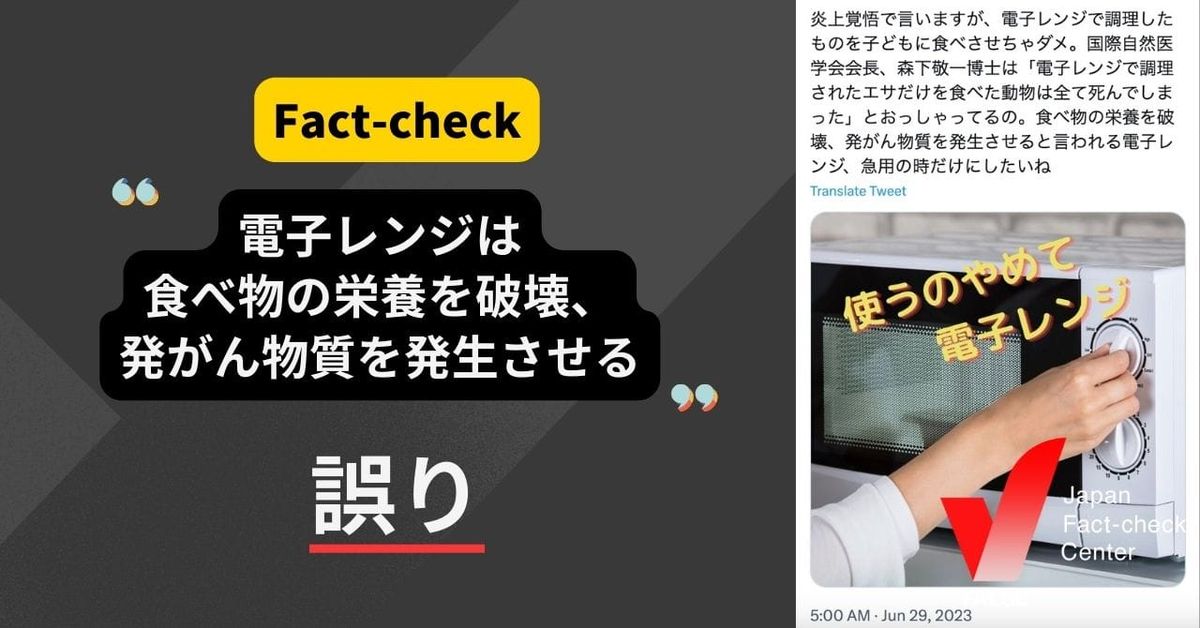
電子レンジは食べ物の栄養を破壊し、発がん物質を発生させる
Publisher’s rating: 誤り
The review says microwave-cooked food is as safe and nutritious as food cooked in conventional ovens, while noting that heat can break down some nutrients regardless of the cooking method. It also reports that research has not found a substantial increase in cancer risk from electromagnetic fields.
banana smoothie can help in reducing belly fat
Publisher’s rating: Mostly False
a mixture of toothpaste and lemon whiten skin
Publisher’s rating: Mostly False

Die Sonne ist gar nicht gefährlich, sondern heilsam.
Publisher’s rating: Sonne ist trotz der Produktion von Vitamin D und dem Glückshormon Serotonin gefährlich. Sonnenschutz ist unerlässlich.
Regelmäßiges Sonnenbaden härtet die Haut ab.
Publisher’s rating: Eine "gesunde Bräune" gibt es nicht. "Bräune ist im Grunde schon ein Zeichen, dass die Haut SOS schreit”, sagt eine Dermatologin.
Social media users claimed that a medical incident involving Bronny James, the son of NBA player Lebron James, was caused by the COVID-19 vaccine.
Publisher’s rating: FALSE: Claims that Bronny James was injured by the vaccine are nothing more than wild and irresponsible speculation. There's no evidence that this was related to a vaccine.

Florida County hat die mRNA-COVID-Impfstoffe zur Biowaffe erklärt.
Publisher’s rating: Lediglich eine Gruppe von Lokalpolitikern hat dazu eine Forderung gestellt - Florida oder ein Bezirk des Bundesstaates haben keine der behaupteten Maßnahmen vollzogen.
The claim turned a political demand into an action supposedly taken by “Florida County.” The dpa review says that in July 2023, posts alleged Florida or a county had declared mRNA COVID-19 vaccines a “bioweapon.” It distinguishes that allegation from what actually happened: a group of Florida Republicans published a resolution calling for COVID-19 vaccinations to stop and for the vaccines to be classified as a bioweapon. The resolution was a request, not a government order. The review checked whether the state or a county had implemented the alleged measures. It reports that Florida’s government had not published such a declaration, and that the state’s page on COVID-19 vaccination developments did not mention a halt. It also says none of Florida’s 67 counties had made a declaration matching the claim. The Republican group was active in Brevard County, but the county government there had neither stopped vaccinations nor declared the vaccines a bioweapon. The review further explains a naming problem in the claim: there is no Florida county whose proper name is simply “Florida County.” Its conclusion rests on the distinction between the resolution’s non-binding demand and actions by state or county authorities. The excerpt says the government could respond to the request as it chose; it does not report that the requested policy changes were enacted.
Nicht die Sonne verursacht Hautkrebs, sondern giftige Inhaltsstoffe in Sonnencreme.
Publisher’s rating: Dass die UV-Strahlen der Sonne schädlich sein und Hautkrebs verursachen können, ist Fakt. Mit mehr als 200.000 Neuerkrankungen pro Jahr ist Hautkrebs laut dem Deutschen Krebsforschungszentrum die häufigste Krebserkrankung in Deutschland. Es gibt keine Hinweise darauf, dass Sonnencreme Hautkrebs verursacht.
an intimate whitening cream can work instantly
Publisher’s rating: Mostly False
This screenshot shows Pfizer’s patent to use COVID-19 vaccines to ‘track’ people
Publisher’s rating: FALSE
Anita Szczepaniak, znana jako Biodoktor, nie jest zarejestrowana w Centralnym Rejestrze Lekarzy jako osoba uprawniona do wykonywania zawodu lekarza.
Publisher’s rating: Fałsz

In diesem Kopfschmerzmittel von Pfizer ist Graphenoxid.
Publisher’s rating: Es gibt keine Hinweise darauf, dass die Schmerztabletten Graphenoxid enthalten. Der Aufdruck besteht aus dem unbedenklichen Eisenoxid. Außerdem stellt Reckitt Benckiser und nicht Pfizer das Produkt her.
The claim concerned a video shared on Facebook in which a woman said that the black marking on a pain-relief capsule was potentially harmful graphene oxide. The accompanying German text also attributed the medicine to Pfizer. The review identifies the product under discussion as Nurofen and examined both the alleged ingredient and the manufacturer attribution. The article reports that Reckitt Benckiser, the Nurofen manufacturer, told dpa that its tablets do not contain graphene oxide and that the black marking is ink containing black iron oxide. It also says the medicine’s ingredient list does not list graphene oxide, but does list iron oxide. This provides evidence about the listed ingredients and the manufacturer’s account of the ink, rather than relying on the video’s magnetic-particle demonstration. On the Pfizer point, the article says Nurofen is a competitor to Pfizer’s pain medicines and therefore Pfizer cannot be the manufacturer of Nurofen Zavance. The supplied review thus addresses the same product and the two central assertions in the claim.
mammograms are harmful and ineffective
Publisher’s rating: Mostly False
Research from related reporting addresses the claim’s two parts, but the evidence distinguishes mammograms themselves from computer-aided detection (CAD), a tool used to assist with interpreting mammograms. A Times of India article says the radiation doses involved in mammograms are “far below levels that can cause cancer” and that regular mammograms are “crucial for early detection of breast cancer.” This excerpt supports neither the claim that mammograms are harmful from radiation nor the claim that screening is ineffective. A separate report describes a limitation in older CAD systems, not in mammography generally. It says studies found that CAD-interpreted mammograms had “increasing false positives without improving cancer detection rates.” That is evidence of a problem with this added computer support in the studies described; it does not establish that mammograms themselves are ineffective or harmful. The supplied excerpts provide no study details, measurements, or broader assessment of mammography’s benefits and risks, so they support a distinction between screening and one interpretation technology rather than a comprehensive evaluation of mammography.

Klaus Schwab vient d'admettre publiquement qu'il envisage de mettre en œuvre des confinements forcés de Covid à la chinoise partout dans le monde pendant la prochaine pandémie dont il s'attend à ce qu'elle se produire bientôt.
Publisher’s rating: Non. Le WEF les a démenties auprès de la dpa. Il n'existe par ailleurs aucune preuve que Klaus Schwab ait tenu de tels propos, d'autant plus qu'il ne possède pas le pouvoir d'instaurer ce genre de mesures.