PeakMetrics / Fact Checks
Elections & voting fact checks
Explore claims publishers have checked about elections & voting. Read their original ratings and follow the evidence.
Search fact checks
Search by text or image5,413 published reviews in this topic

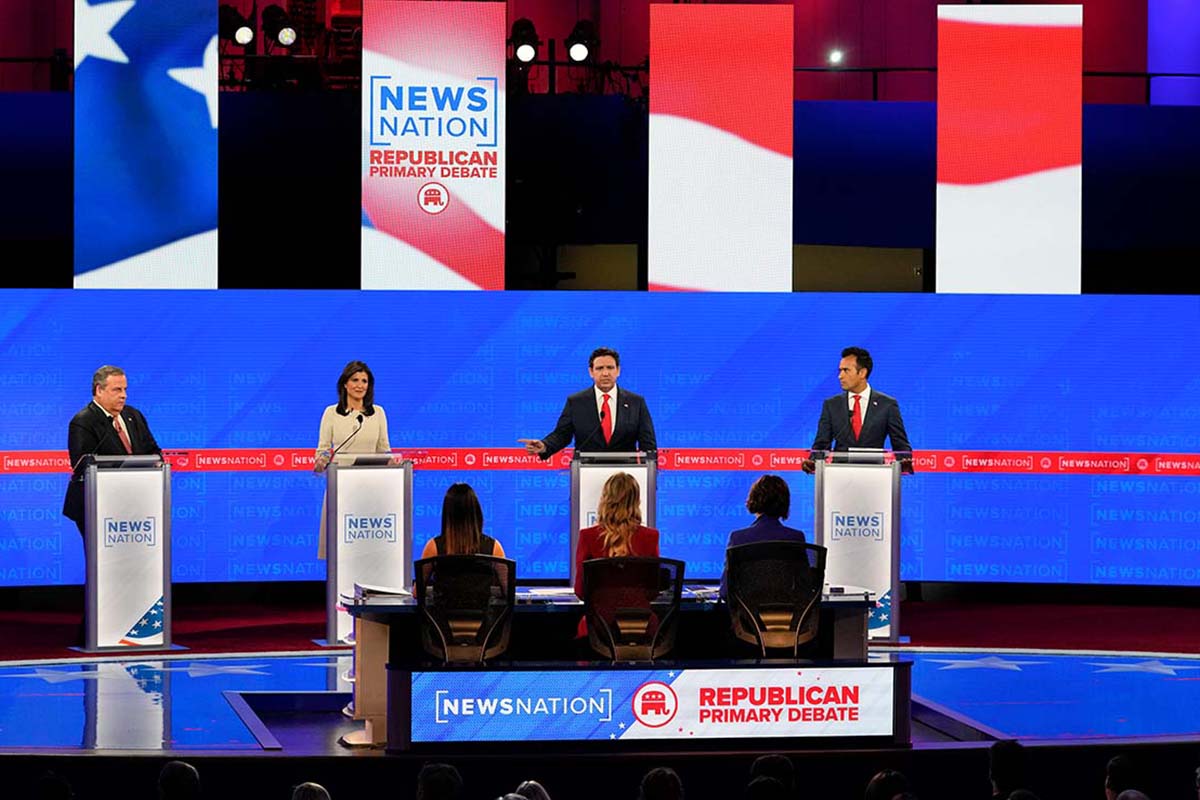
"The 2020 election was indeed stolen by Big Tech."
Publisher’s rating: This is wrong

En este video, Jorge Baradit está llamando a votar A Favor
Publisher’s rating: Engañoso
तेलंगाना में कांग्रेस की जीत होते ही भारत के झंडे पर कलमा लिख दिया गया
Publisher’s rating: False
This video shows Vasundhara Raje congratulating Ravindra Singh Bhati for winning the Rajasthan state elections.
Publisher’s rating: False

BJP secured seats in multiples of 56 in the recently held 2023 Chhattisgarh, Rajasthan and Madhya Pradesh assembly elections
Publisher’s rating: MISLEADING
The review checks a social-media post claiming that BJP’s seat totals in the 2023 assembly elections in Chhattisgarh, Rajasthan and Madhya Pradesh were multiples of 56. The post’s stated figures were 56 seats in Chhattisgarh, 112 in Rajasthan and 168 in Madhya Pradesh. The review identifies the elections as part of the 2023 contests held across five states and compares those claims with the election results. For its check, the review says it consulted party-wise results on the Election Commission of India website. It reports that BJP won 54 seats in Chhattisgarh, not the 56 claimed, and that the final results showed 115 seats in Rajasthan and 163 in Madhya Pradesh. Those three reported totals do not match the respective figures in the post, nor are they multiples of 56. The review’s conclusion is therefore supported by the figures it cites: the post’s claimed totals differ from the reported results in all three states. It also points readers to constituency-wise results for the states, but the supplied excerpt does not include those underlying result pages.


2023 తెలంగాణ అసెంబ్లీ ఎన్నికల్లో ఒక టాంపర్ చేసిన ఎలక్ట్రానిక్ ఓటింగ్ మెషిన్(EVM) వాడారు
Publisher’s rating: FALSE

ये कांग्रेस पार्टी द्वारा आयोजित एक चुनाव अभियान के दौरान है
Publisher’s rating: False

Smartmatic disqualified by Comelec due to 2016 voting irregularities
Publisher’s rating: Misleading

Na Dinamarca toda pessoa que recebe algum tipo de ajuda social fica inabilitada para votar. Desta forma se evita que a cidadania se transforme em clientelismo político e que sejam votantes cativos
Publisher’s rating: Falso
The claim says Denmark disqualifies everyone receiving any kind of social assistance from voting, supposedly to prevent political clientelism. Boatos.org examines that specific allegation, describing it as a message that circulated in Spanish and Portuguese and returned to circulation during Argentina’s elections. The review says the story was already circulating online years earlier and reports that Denmark’s embassy in Argentina had publicly rejected it in 2022. The review explains that voting eligibility and social assistance are not generally linked in the way the claim suggests. It quotes the embassy’s explanation that Danish citizens who reside permanently in Denmark and have reached voting age—then 18—can vote, unless they are under guardianship. The review further explains that the constitutional wording cited in the viral message concerns a historical category of “poor relief,” not all present-day assistance. According to the review’s account, before 1933 receiving “poor relief” could result in loss of voting rights. A 1933 social reform introduced other benefits that largely replaced that category, and “poor relief” was officially removed from Danish law in 1961. The review concludes that the viral claim wrongly turns this historical rule into a blanket current ban: it says qualified people can vote today, subject to the guardianship qualification.

वसुंधरा राजे भाजपा के बागी रविंद्र सिंह भाटी को जीत की बधाई दे रहीं है।
Publisher’s rating: False

2023 తెలంగాణ అసెంబ్లీ ఎన్నికలలో కాంగ్రెస్ ఒడిపోతుందని రేవంత్ రెడ్డి మీడియా ముందు ఒప్పుకున్న వీడియో
Publisher’s rating: FALSE

कांग्रेस75तेलंगाना – एनडीटीवी पोल ऑफ पोल्स में तेलंगाना में कांग्रेस को बहुमत दिया गया है
Publisher’s rating: False

The Centre For Policy Alternative Has Published Survey Results On The Outcome Of The 2024 Presidential Election!
Publisher’s rating: Misleading
The claim was that the Centre for Policy Alternatives (CPA) had surveyed Sri Lankan voters and predicted that Anura Kumara Dissanayake, leader of the National People’s Power, would receive 51% of the vote in the 2024 presidential election. The review says the claim spread with a video, amid social-media discussion of candidates and expected results after President Ranil Wickremesinghe announced that presidential and parliamentary elections would take place in 2024. To check the attribution, the review reports that it searched mainstream media and CPA’s social-media accounts, then emailed CPA. It found no mainstream-media report of a CPA election-outcome survey and no recent CPA announcement about one. CPA told the reviewers it had not conducted a poll or survey about the upcoming election. The review also says CPA identified its last survey, published on September 15, 2023, as a study of economic reforms—not election outcomes. The video’s narration provided a clue to the apparent mix-up: although the social-media caption named CPA, the narration attributed the poll to the Institute for Health Policy (IHP). The review quotes an IHP post describing October 2023 estimates that put Dissanayake at 51%, Sajith Premadasa at 30%, Ranil Wickremesinghe at 13%, and a generic Sri Lanka Podujana Peramuna candidate at 6%. Thus, the 51% figure appeared in the cited material, but it was attributed to IHP, not CPA. The review notes that social-media users questioned IHP’s methodology and asked about sample size, demographics, and representativeness. It says it emailed IHP for further information and planned to update the article with the response; the supplied text does not include that response. Its evidence therefore supports correcting the poll’s attribution, but does not provide the further methodological details sought from IHP.