PeakMetrics / Fact Checks
Elections & voting fact checks
Explore claims publishers have checked about elections & voting. Read their original ratings and follow the evidence.
Search fact checks
Search by text or image5,413 published reviews in this topic
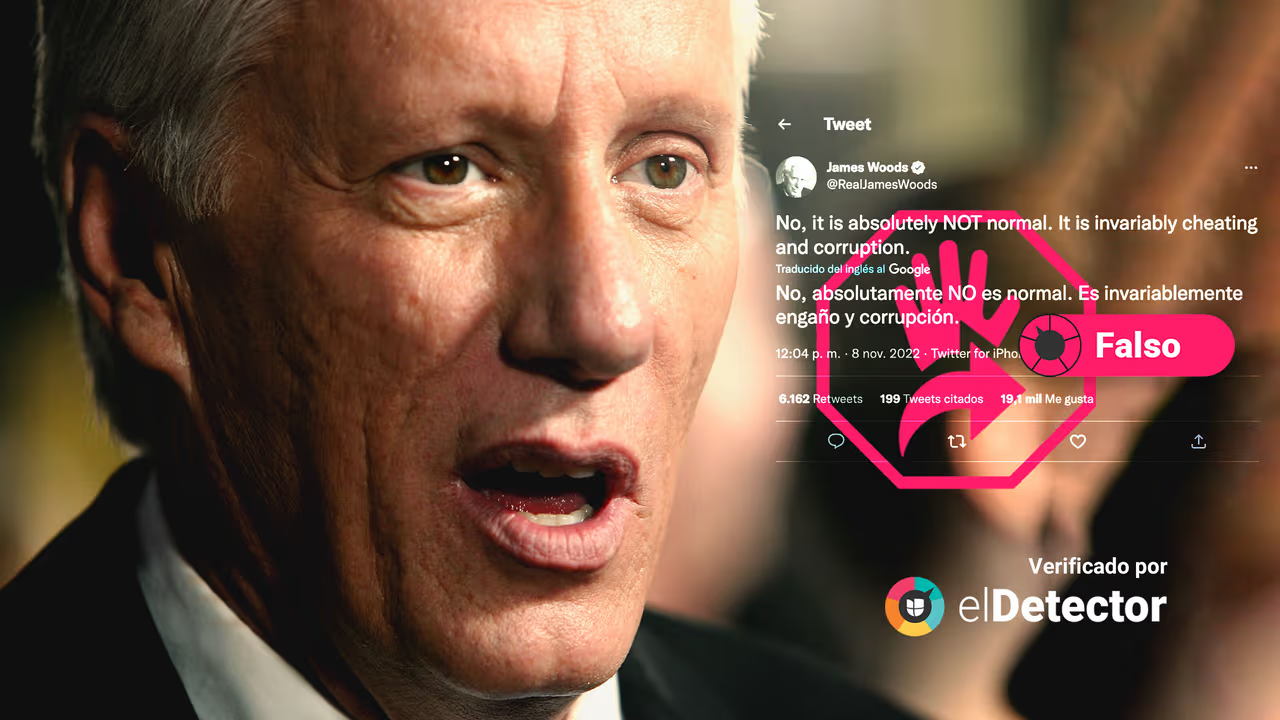
“No, definitivamente NO es normal. Invariablemente es trampa y corrupción” que los resultados de las elecciones de medio término no estén disponibles la misma noche electoral.
Publisher’s rating: Falso
The review examines James Woods’s claim that it is abnormal and evidence of “trampa” and “corrupción” when midterm-election results are not available on election night. It says Woods made the claim in response to a Vox.com post and explains that the timing of results depends on state rules for receiving and counting ballots. The review’s central evidence is that election procedures differ by state: it reports that 19 states allow ballots to be sent on Election Day and that Maryland may count ballots as late as ten days afterward. It also cites President Joe Biden’s November 2, 2022 explanation that in some cases the winner might not be known for several days because legitimate ballots take time to count. Those examples show why results may remain incomplete after polls close without that delay itself establishing fraud. The review concludes that it is false to treat election-night delays as inherently abnormal or as proof of a scheme. Its explanation is specifically about the varying ballot-receipt and counting schedules across states; it does not claim that every delay is justified or assess any particular state’s results.

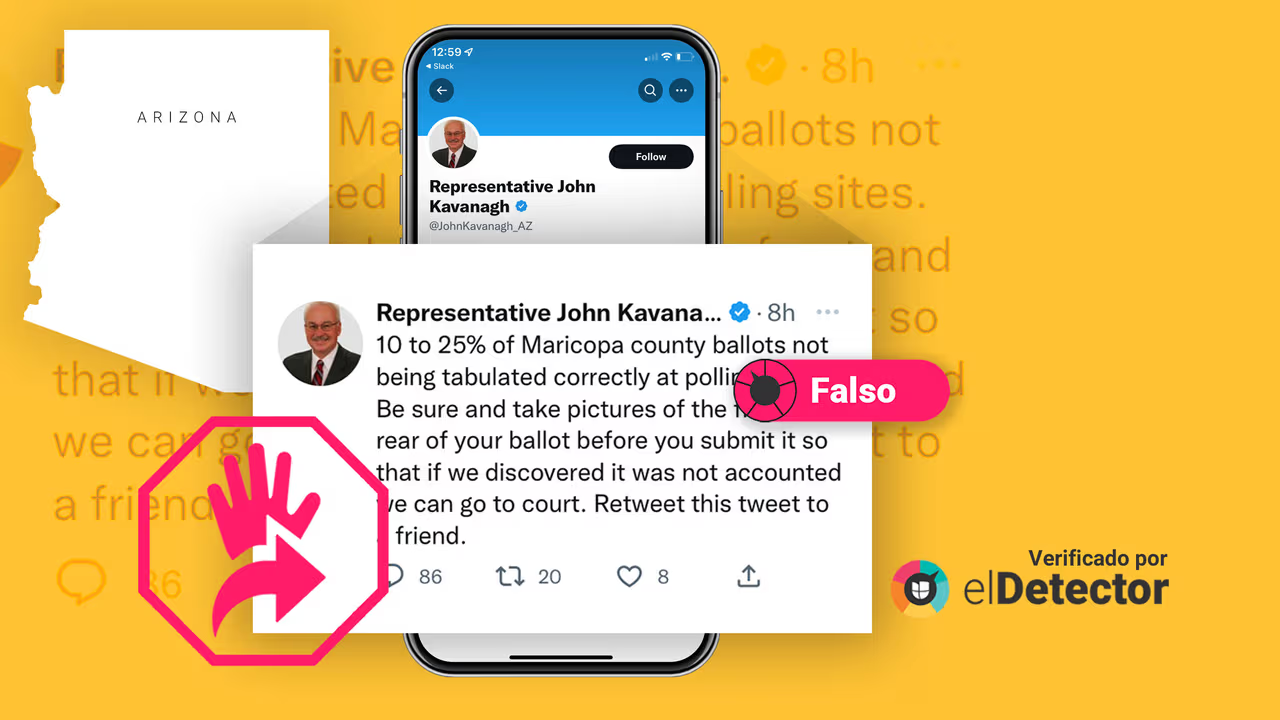
“Del 10 al 25% de las boletas del condado de Maricopa no se tabulan correctamente en los lugares de votación" durante la jornada electoral del 8 de noviembre.
Publisher’s rating: Falso
The claim concerned Maricopa County, Arizona, on November 8, 2022: Representative John Kavanagh said that 10% to 25% of ballots at polling places were not being tabulated correctly. The review reports that Kavanagh posted the allegation without evidence while seeking reelection, and that the county denied it shortly afterward. The claim was not that every tabulator was working without problems: the article says there were tabulation problems at 60 voting centers, but describes them as technical and says state election officials assured voters that ballots were secure and would count toward the final results. The review’s decisive evidence is the county’s public response on its official Twitter account. It says that at 5:54 p.m. the county called the assertion false and included a screenshot of Kavanagh’s tweet. The article does not provide a separate numerical audit establishing a tabulation-error rate; instead, it reports the county’s direct rebuttal and the state elections department’s assurance about the ballots. It therefore distinguishes reported equipment or tabulation difficulties from the much broader allegation that a specified share of ballots would not be counted correctly. The review also addresses Kavanagh’s accompanying recommendation that voters photograph their ballots. It says Arizona Senate Bill 1287 prohibits photographs inside polling places within 75 feet (22.8 meters), with violations classified as misdemeanors. The article’s conclusion is that the ballot-tabulation allegation was false and that the recommendation to take photographs was not lawful under the cited rule.

‘ABP News’ opinion poll predicting Congress victory in the upcoming Himachal Pradesh elections 2022
Publisher’s rating: FALSE
The viral video was presented as an ABP News opinion poll forecasting a Congress majority in the upcoming 2022 Himachal Pradesh elections, with projected totals of 39–45 seats for Congress and 22–28 for the BJP. FACTLY’s review says the clip was not a new poll: it was an edited version of ABP News poll footage from before the 2017 Himachal Pradesh election, with the party names changed. To check the video’s provenance, the review reports searching the internet with relevant keywords and finding similar poll visuals in a video published on ABP News’s YouTube channel on 31 October 2017. It says those original visuals projected the BJP at 39–45 seats and Congress at 22–28 seats for the 2017 election—the reverse of the party projections in the viral version. The review identifies the alteration as morphing the party names in the older clip. The review also distinguishes the old footage from the poll it describes as ABP News’s latest: that poll projected 38–46 seats for the BJP and 20–28 for Congress in the 2022 election. The evidence therefore supports the review’s conclusion that the viral video falsely represented altered 2017 footage as a current poll predicting a Congress victory.

In dit filmpje is te zien hoe je voor democraten kunt stemmen, maar niet voor republikeinen: verkiezingsfraude dus.
Publisher’s rating: Het filmpje is gemaakt op 1 maart 2022, de dag van de voorverkiezingen in de staat Texas. Het heeft dus niets te maken met de huidige midterms in de VS. Bovendien was er ook in maart geen sprake van fraude. Voor bepaalde tijd kon bij dit specifieke stembureau niet gestemd worden op de Republikeinen, omdat er een gebrek was aan Republikeinse kiesrechters.

Dominion Voting telt stemmen in Nederlandse verkiezingen.
Publisher’s rating: Dominion Voting is niet, en was nooit actief bij Nederlandse verkiezingen. Dat bevestigen woordvoerders van het bedrijf en van de Kiesraad.
The review investigates whether Dominion Voting Systems has counted votes in Dutch elections. It reports that a Dominion spokesperson told dpa the company had never provided services for Dutch elections. The explanation connects this to how voting is conducted in the Netherlands: voters use paper ballots, and votes are counted by hand. The review says electronic voting machines were abandoned in 2007, after concerns about their reliability and a committee’s advice. “Het bedrijf is voornamelijk actief in Noord-Amerika” and “Nederland nog nooit gebruik heeft gemaakt van de diensten van het bedrijf” are the review’s account of Dominion’s activity and its confirmation from the company. The review distinguishes counting ballots from digitally transferring election results. It says polling-station results are carried to the constituency and central election boards both in person and digitally, but that Dominion software is not used for this transfer. A Kiesraad spokesperson also told dpa that the council uses its own software, OSV2020, to add results, while “het papier is altijd leidend.” On the evidence described, Dominion is not involved in counting Dutch election votes, and digital handling of results does not establish that it is. The review also supplies context for how the allegation arose: it says Dominion became a focus of claims about alleged fraud after Donald Trump lost the 2020 US presidential election. It notes that similar claims about Dominion’s activity had circulated elsewhere, but its Dutch conclusion rests on statements from Dominion and the Kiesraad and on the described paper-based counting process.
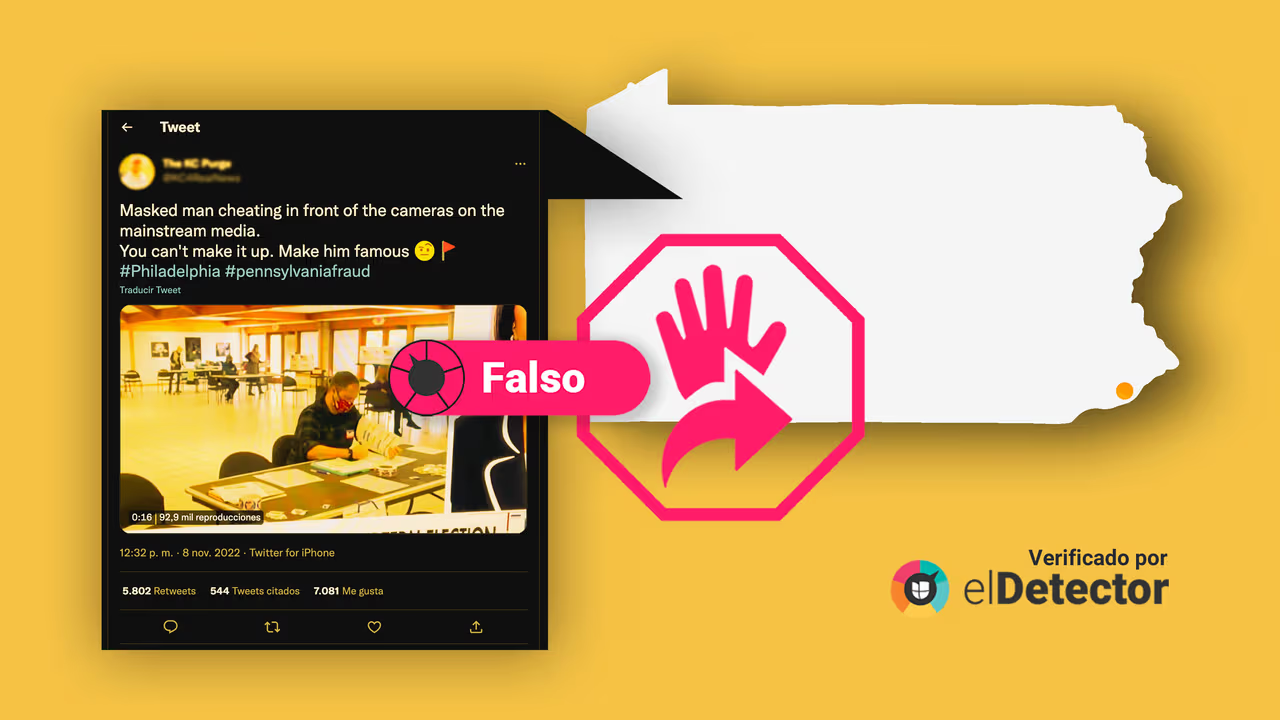
Video muestra a alguien "haciendo trampa" en un colegio electoral de Filadelfia.
Publisher’s rating: Falso
The claim concerns a video of a person marking papers at a polling place, presented online as evidence of cheating in Philadelphia, Pennsylvania. The review says the footage was recorded from a television broadcast of Fox News’s The Faulkner Focus and that the broadcast itself identified the location as Madison, Wisconsin—not Philadelphia. It reports that the on-screen location graphic changed from “Filadelfia” to “Madison, WI,” and that presenter Harris Faulkner also named Madison during the program. To check what the person was doing, the review reports contacting the Madison clerk’s office. Deputy clerk Jim Verbick identified the person as an election official who initialed ballots before they were given to voters, confirming that each was an active ballot. The article also quotes the clerk’s office explaining that an official circles the voter’s district number and initials the ballot, with a second official adding initials before it is handed over. On this evidence, the footage shows a routine ballot-handling procedure rather than ballot tampering, and it was misrepresented as occurring in Philadelphia.

“Los fallos extendidos de las máquinas [de votación en el condado de Maricopa, en Arizona] no son accidentales”.
Publisher’s rating: Falso
CENTENAS de urnas com 100% dos votos para Lula (...)
Publisher’s rating: Exagerado

Deze video toont verkiezingsfraude, live op TV.
Publisher’s rating: De video toont een inspecteur die zijn initialen op lege stembiljetten zet. Dit is geen fraude, integendeel, het wordt vereist door de wet in Wisconsin.
The video was circulated as apparent live television footage of someone falsifying ballots. The review identifies it as a clip from Fox TV’s The Faulkner Focus and reports that a version showing the location identifies Madison, Wisconsin. A reverse-image search placed the footage at Olbrich Botanical Gardens, which the review identifies as a polling location in the city. The video shows a man handling papers and occasionally marking them, but the review says the social-media version cropped out the location information visible in the upper-left corner of the fuller clip. The review checked what the man was doing with Scott McDonell, the Dane County clerk. McDonell said the activity was standard procedure: an election inspector indicated the ward and put his initials on an otherwise blank ballot. The review says this was required by Wisconsin law, and that another worker marked the ballots in the same way. It also reports that Madison’s clerk confirmed the procedure. These details identify the marks as election-administration checks on unfilled ballots, rather than evidence that votes were being altered. Thus, the footage does show a worker marking ballots on camera, but the review’s account of the location, the officials’ explanation, and the described procedure does not support the fraud allegation. The cropped presentation omitted location context; the review does not describe the marking as hidden or as an attempt to change votes.

Vídeo de cerca de nove minutos publicado no YouTube mostra uma sequência de imagens de manifestações e invasões para sugerir que eleitores de Luiz Inácio Lula da Silva (PT) estariam promovendo ilegalidades após o petista vencer as eleições. O conteúdo é acompanhado do título “Urgente! Eleitores do LULA já começaram a aterrorizar o Brasil. Cenas fortes”.
Publisher’s rating: Enganoso

BJP’ candidate K. Rajagopal Reddy led by 2000+ votes by the end of 4th round in Munugode by-election counting
Publisher’s rating: FALSE
The claim concerns the fourth round of vote counting in the Munugode by-election and says BJP candidate K. Rajagopal Reddy was ahead by more than 2,000 votes. FACTLY says it examined a widely shared post making that assertion and compared the candidates’ round-four totals with figures released by the Election Commission of India. The review reports that TRS candidate K. Prabhakar Reddy had 26,443 votes, while BJP’s Rajagopal Reddy had 25,729. Those reported totals put TRS—not BJP—ahead by 714 votes at the end of the fourth round. The numbers therefore contradict both the claimed lead and its direction; they do not show BJP leading by more than 2,000 votes. FACTLY also gives the first four rounds’ party totals, which match the reported round-four figures, and concludes that the post’s claim is false. The review distinguishes the fourth-round count from the eventual result: it says TRS won the seat with 97,006 votes to BJP’s 86,697. That final margin is separate from the narrower lead reported after round four and does not change which candidate was ahead at that earlier point.

Seção eleitoral 1212 de Toronto foi apagada e não registrou voto de eleitor de Bolsonaro
Publisher’s rating: Falso

URGENTE: UMA BOMBA VAI ESTOURAR. O Presidente Bolsonaro vai provar que houve FRAUDE nas urnas Eleitorais!
Publisher’s rating: Falso
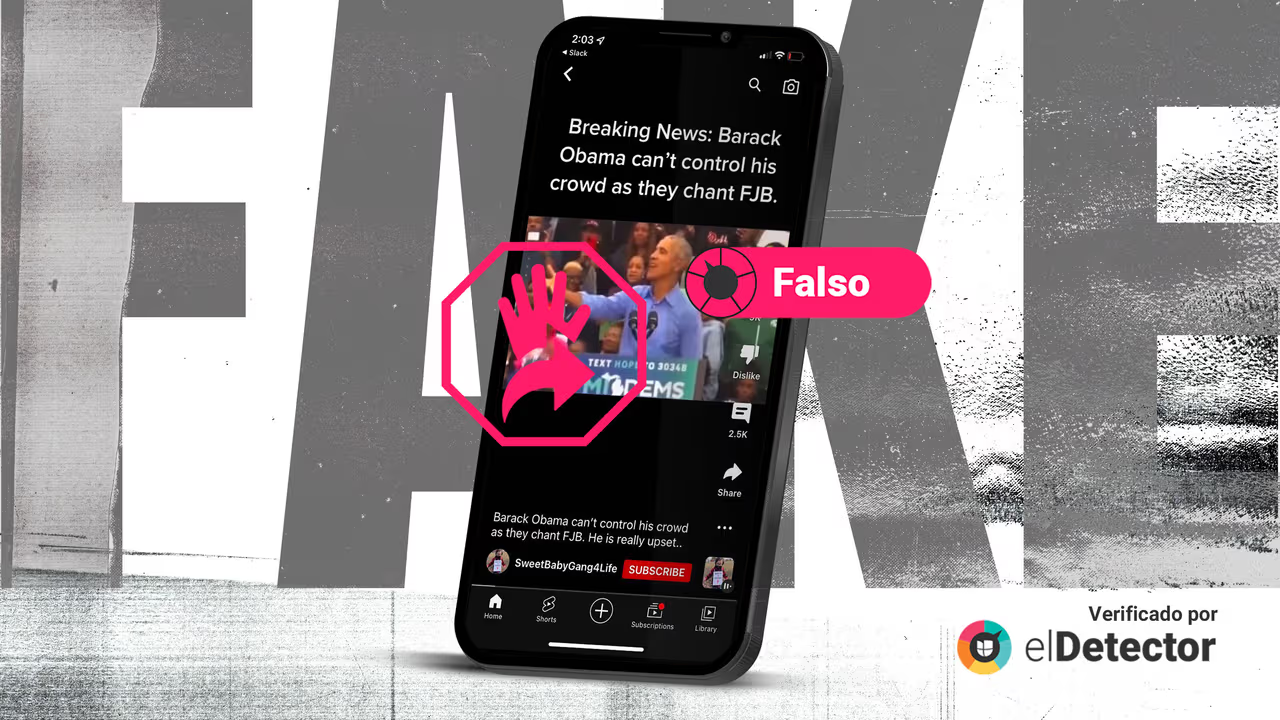
Video muestra cómo la multitud se le fue de las manos a Barack Obama durante un mitin previo a las elecciones de medio término de 2022.
Publisher’s rating: Falso
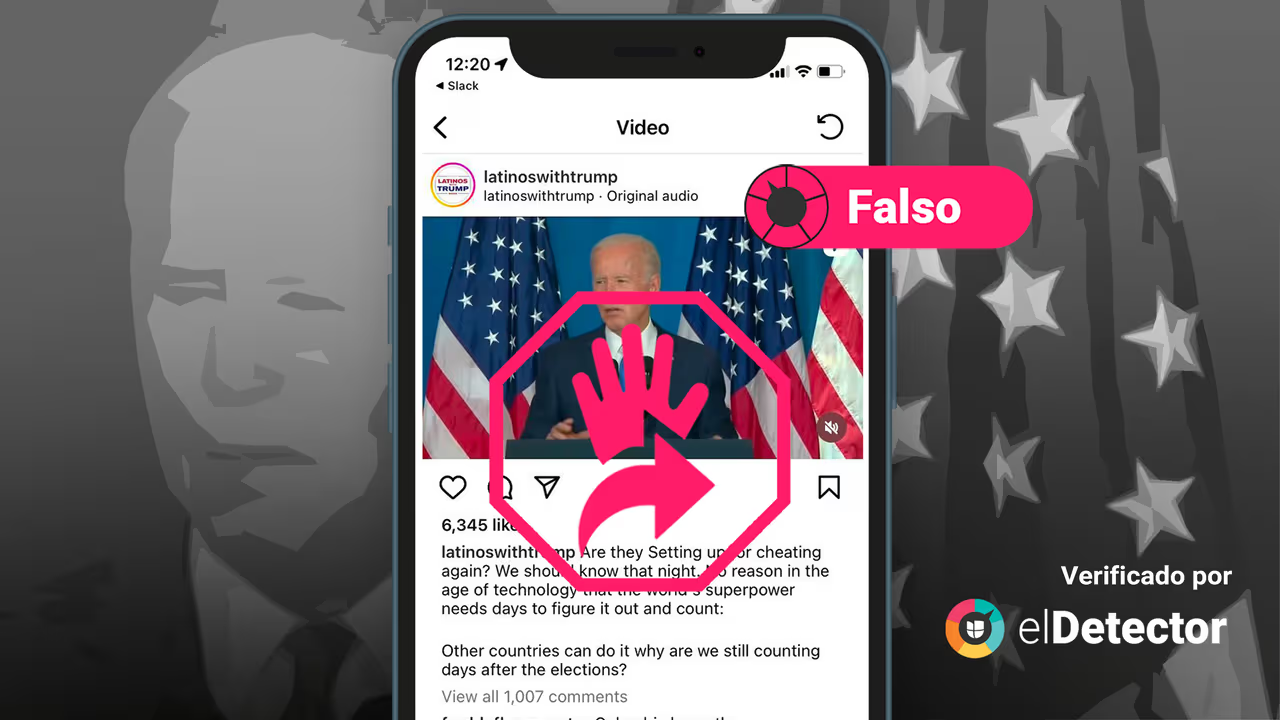
Si no se anuncia el 8 de noviembre el resultado de las elecciones de medio término sería un indicador de fraude.
Publisher’s rating: Falso
The claim concerned the 2022 U.S. midterm elections: a post by Latinos With Trump suggested that if results were not announced on election night, that could mean fraud. The review traced the allegation to an Instagram excerpt of President Joe Biden’s November 2 campaign speech, paired with a caption asking whether officials were preparing to cheat and asserting that results should be known that night. Biden had said some states might take days to identify a winner while they counted valid ballots. The review explains that the delay itself does not establish fraud: election administration and ballot-counting rules differ by state. (The original review describes the claim as “Es falso que si no se anuncia el 8 de noviembre el resultado de las elecciones de medio término sería un indicador de fraude”; its supplied conclusion also says the timing of an announcement does not mean fraud is occurring.) The review’s evidence focuses on why counting times vary. It reports that at least 19 states allowed ballots to be mailed on Election Day, and that California could count ballots received as late as November 15. It also cites state-by-state rules on when mail ballots may be processed: 16 states did not allow counting to begin until polls closed, while 23 allowed counting to start on Election Day before polls closed. The review notes that signature verification could add processing time. These rules and procedures provide specific non-fraud explanations for results taking longer when ballots remain to be counted or validated. To check the allegation, the review says it consulted state election information and the National Conference of State Legislatures, and emailed political scientist Fabio Naranjo of Barry University about differences in state procedures. Naranjo contrasted states that count after polls close with Florida, where votes are counted as they arrive and results can be known sooner. The evidence therefore addresses the claim’s premise directly: a delayed announcement can reflect differing lawful counting processes, and delay alone is not evidence that fraud occurred.