PeakMetrics / Fact Checks
Economy & business fact checks
Explore claims publishers have checked about economy & business. Read their original ratings and follow the evidence.
Search fact checks
Search by text or image7,104 published reviews in this topic


"While Americans are paying record high prices at the pump, this administration decides to give our oil to the EU and China."
Publisher’s rating: Misunderstands global oil market

Says CEOs got advance notice of COVID, then resigned to dump stock.
Publisher’s rating: False
A $15-per-hour minimum wage would raise the price of a Taco Bell burrito to $38.
Publisher’s rating: False

“Mike Bloomberg owns more wealth than the bottom 125 million Americans.”
Publisher’s rating: Mostly True

The Disney company is losing subscribers, visitors and stock value for opposing Florida’s “Parental Rights in Education” law.
Publisher’s rating: No Evidence


"After years and years of wage stagnation, we are finally seeing rising wages."
Publisher’s rating: I mean, probably?
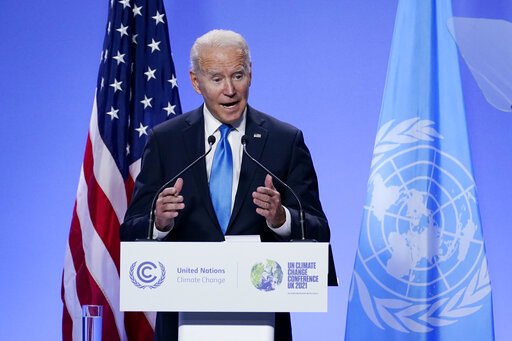
“Wages have gone up higher, faster than inflation.”
Publisher’s rating: Mostly False

Up until 1913 Americans kept all of their earnings.
Publisher’s rating: Half True
Related reporting repeats a version of the historical premise behind the claim: S5 says America “thrived without income taxes before 1913.” It then presents the creation of the Federal Reserve and the IRS as what changed that situation. S1 similarly refers to a “return to pre-1913 prosperity” and replacing federal income tax with tariffs. These are assertions within reports about a proposed political and financial reset, not findings from a historical investigation described in the excerpts. Neither excerpt supplies records, data, or a method for checking whether Americans kept all their earnings. In particular, the excerpts’ statements about the absence of income taxes do not establish the broader wording that people kept *all* earnings. The supplied material therefore documents that this premise is being repeated, but does not substantiate the claim as stated.

Fuddruckers is “closing ALL locations.”
Publisher’s rating: False
Related reporting does not support the claim that Fuddruckers is closing all locations. It describes the chain as having survived earlier financial difficulties and continued operating, while also noting that some restaurants closed. A report about the chain’s 2010 bankruptcy says it “continued to serve burgers in several states” and distinguishes company-owned closures from franchise locations involved in the bankruptcy. That account describes contraction, not a complete shutdown. (S2) Later reporting also describes efforts to keep and grow the brand. A 2025 account says Fuddruckers began opening new locations and reopening former ones after its 2021 sale to Black Titan Franchise Systems. (S3) Separately, a May 2026 report says the chain had shrunk substantially but still had “just 44 restaurants today.” Taken together, these excerpts indicate that Fuddruckers faced closures and a much smaller footprint, but that locations remained open; that evidence contradicts the absolute claim that all locations were closing. (S6)

பெட்ரோல் டீசல் மீதான வாட் வரியை உயர்த்தியது தமிழக அரசு !
Publisher’s rating: Fake
“It’s wrong that billionaires got $400 billion richer during the pandemic, while millions lost their $600 a week in extra unemployment.”
Publisher’s rating: Cherry-picked number

Says Congress gave Wall Street "trillions of dollars of zero interest loans."
Publisher’s rating: Half True
درباره وعده محسن رضایی برای تبدیل ریال به قویترین پول منطقه
Publisher’s rating: Rating unavailable

“It’s been over 50 years since minimum (wage) and inflation parted ways, then over a decade since the federal minimum went up at all.”
Publisher’s rating: True
Related reporting provides limited evidence about the claim’s point that the federal minimum wage has not risen recently, but does not assess the full historical comparison between minimum-wage growth and inflation. An NPR report about a Brookings Institution study says that the federal minimum wage had been “frozen at $7.25 an hour since 2009.” That supports the claim’s reference to a long period without a federal increase, but the excerpt does not show the wage’s earlier history or calculate when its path diverged from inflation. The same report gives figures for broader wage and price trends: it says national wages rose 1.3% in 2024, compared with inflation of 2.9%. Those figures describe 2024 and national wages generally, not the federal minimum wage over the preceding 50 years. The supplied reporting therefore cannot confirm the claim’s historical comparison or independently verify its wording about when minimum wages and inflation “parted ways.”