PeakMetrics / Fact Checks
Economy & business fact checks
Explore claims publishers have checked about economy & business. Read their original ratings and follow the evidence.
Search fact checks
Search by text or image7,104 published reviews in this topic

India ranked 9th on the foreign direct investment (FDI) inflows in 2016 – World Investment Report 2017.
Publisher’s rating: PARTLY TRUE
The claim concerns India’s position in the ranking of countries by foreign direct investment inflows for 2016, as reported in the UN’s World Investment Report 2017. FACTLY’s review identifies the report as published by UNCTAD, the United Nations Conference on Trade & Development, and says its ranking confirms that India was ninth for that year. This directly supports the claim’s stated year and rank. The review also places the 2016 result in a broader sequence of inflows to India. It reports that inflows rose from $7.6 billion in 2005 to $47.1 billion in 2008, then fell to $24.2 billion in 2012 before increasing again through 2016. The article gives the 2016 inflow as $44.5 billion and says it fell to $39.9 billion in 2017. That later decline is relevant context, but it concerns a different year from the claim. The review says India ranked tenth in 2017 according to the World Investment Report 2018. Thus, the review confirms the ninth-place ranking for 2016 while noting the subsequent change; its final assessment includes that 2017 context.
Moody’s upgraded India sovereign credit rating from Baa3 to Baa2 for the first time in 14 years.
Publisher’s rating: TRUE
FACTLY’s review examines the specific claim about Moody’s upgrade of India’s sovereign credit rating, as part of a broader article checking claims about India’s global standing in foreign direct investment. For this rating claim, the review says it consulted Moody’s website and cites the agency’s announcement that the Government of India’s local- and foreign-currency issuer ratings were raised from Baa3 to Baa2. The announcement also changed the outlook from positive to stable. The review separately cites the Press Information Bureau for the interval: it reports that the previous upgrade had occurred in January 2004, when the rating moved from Ba1 to Baa3. On that evidence, the review says the upgrade came after 13 years, supporting the substance of the claim’s description of an upgrade after roughly 14 years. Its evidence establishes the rating change and the previous upgrade date; it does not independently give a calendar date for the upgrade being checked.
India is the world number one in attracting Greenfield FDI
Publisher’s rating: PARTLY TRUE
The claim concerns India’s rank in attracting Greenfield FDI—not its rank for all FDI inflows. FACTLY describes Greenfield FDI as investment in new assets or projects rather than acquisitions, and says the claim was based on fDi Intelligence, which the review identifies as tracking cross-border Greenfield investment across countries and sectors. The key qualification is that the ranking cited is specifically by capital investment.
India ranked 3rd in the list of top prospective host economies for 2016-18 in the UNCTAD World Investment Report (WIR).
Publisher’s rating: TRUE
FACTLY’s review examines a specific claim about India’s place in UNCTAD’s list of top prospective host economies for 2016–18. It identifies the relevant source as the World Investment Report and compares the rankings reported in the 2016 and 2017 editions. The claim concerns prospective host economies, not the separate rankings for actual FDI inflows or greenfield investment that the same review discusses elsewhere. [S1: “The third claim is that India is ranked 3rd in the list of top prospective host economies for 2016-18 in the UNCTAD World Investment Report (WIR).”] For the evidence, the review quotes the 2016 report as saying that “MNEs’ three top prospective host countries – China, India and the United States – remain unchanged in this year’s survey.” It then says India is third among those three and that it remains in that position according to the 2017 report. This supports the claimed placement in the prospective-host list across the cited reports. [S1: “The World investment report 2016 says ‘MNEs’ three top prospective host countries – China, India and the United States – remain unchanged in this year’s survey.’ India is ranked third among the three countries and it remains so even according to The World Investment Report 2017.”] The review adds historical context: it says India had also held third place during the UPA period, but dropped to fourth in the 2014 report. That context describes a ranking that had varied over time; it does not undermine the review’s account of India’s position in the 2016–17 reports. The review concludes that India continued to rank third in the prospective-economy list. [S1: “India was in the 3rd position even during the UPA, but fell to the 4th position in as per the 2014 report.”]

از جمعیت ۸۰ میلیون نفری ایران تنها ۱۴میلیون نفر شغل تماموقت دارند.
Publisher’s rating: درست

ایران ارزانترین قیمت موبایل اینترنتی در دنیا را دارد.
Publisher’s rating: گمراهکننده

Haré todo lo posible para impedir que el Salario Mínimo Interprofesional suba a 900 euros
Publisher’s rating: Falso
Newtral’s review addresses a specific statement attributed to Pablo Casado: “Haré todo lo posible para impedir que el Salario Mínimo Interprofesional suba a 900 euros.” It reports that, although Casado had opposed the minimum-wage increase agreed by the government and Podemos, he did not say that exact sentence: “no ha pronunciado frases como «haré todo lo posible para impedir que el Salario Mínimo Interprofesional suba a 900 euros».” The review distinguishes the disputed wording from Casado’s reported public remarks. At an information breakfast, it says, he described the budget project as “el pilar de la nueva recesión futura de España.” It also quotes him arguing that wage increases should be limited by what the economy could support and warning that “las ingenierías salariales acaban generalmente en la cola del INEM.” The article further says Casado argued that a 22% increase in the minimum wage could prompt a 20% rise in wages overall, and asked whether the Spanish economy was ready for such an increase. Thus, the review supports the distinction between his opposition to the proposed rise and the viral wording presented as a direct quotation: the former is reported, while the latter is explicitly denied.

The Facebook page “Vip protection agent of the Philippines organization of license bodyguard” called out to companies on Sunday, October 7, to tell them that mandatory 14th month pay has been approved by the government.
Publisher’s rating: HB 8095 is not yet an enacted law, but a bill that has been pending with the House of Representatives’ (HoR) Committee on Labor and Employment since August 15, 2018.
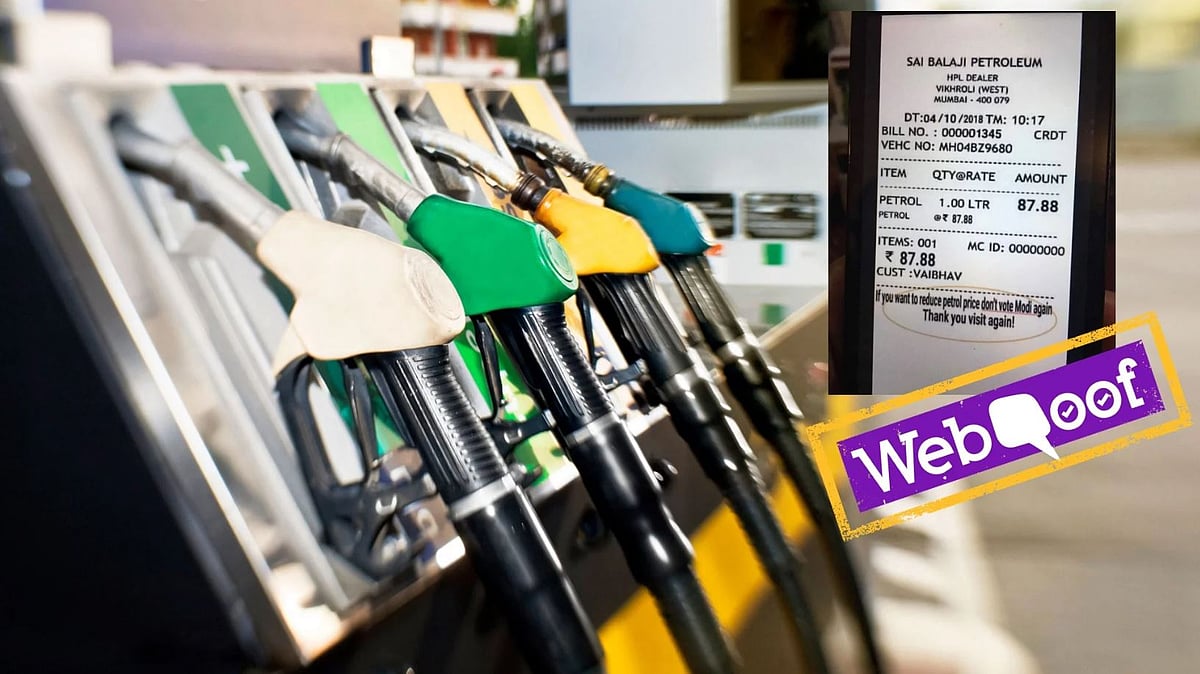
पेट्रोल पंप संचालकों ने बिल पर लिखवाया "अगर आप पेट्रोल की कीमत को कम करना चाहते हैं तो मोदी को दोबारा वोट न दें. धन्यवाद, फिर मिलें !"
Publisher’s rating: FALSE

With over 19,183 crores deposited in Sukanya Samriddhi accounts,financial future has been secured for crores of girls.
Publisher’s rating: FALSE
The review assesses two connected parts of the infographic’s claim: the number of Sukanya Samriddhi Yojana (SSY) accounts and the amount deposited, and whether those figures justify saying the financial future of crores of girls has been secured. The scheme allows a girl’s natural or legal guardian to open an account in her name from birth until she turns ten; the review describes it as a small-savings scheme administered by the Ministry of Finance. For the figures, the review compares the infographic’s claim of more than 1.26 crore accounts and over Rs 19,183 crore deposited with figures the government shared in the Lok Sabha. As of 30 June 2018, it reports 1,39,85,442 accounts and deposits of Rs 25,979.62 crore. Thus, the account and deposit totals were higher than the infographic’s stated figures at that date; the review attributes the difference to the scheme’s “dynamic nature.” Those larger totals do not, in the review’s analysis, establish that crores of girls had secured financial futures. It compares the number of accounts with the total female population aged 0–10 in the 2011 census and reports that the accounts represented less than 15% of that population. The review therefore separates the numerical account-and-deposit claim, which it says the later figures exceed, from the broader assertion about coverage, which the account-to-population comparison does not support.

Over 3,65,996 crores rupees have been directly transferred into the bank accounts of beneficiaries for 432 schemes in last 4 years.
Publisher’s rating: TRUE
The review examined a government infographic claim that more than ₹3,65,996 crore had been transferred directly into beneficiaries’ bank accounts over four years. The article’s opening description gives the scheme count as 431, while its later restatement of the claim says 432. It compared that claim with information on the Direct Benefit Transfer (DBT) website, which listed covered schemes and services and provided detailed transfer reports. The review reported that, as of October 2018, more than ₹4.6 lakh crore had cumulatively been transferred through DBT. It also said the website then listed 464 schemes and services across 57 ministries. On that evidence, the reported transfer total exceeded the amount in the claim; the article’s stated factual finding concerned 464 schemes and services, rather than confirming either 431 or 432 as the count. The article added that DBT began on 1 January 2013 under the previous government and was continued and expanded by the current government. This is relevant context for the claim’s reference to transfers over four years, but the excerpt does not provide a year-by-year breakdown or establish that every rupee in the cumulative total was transferred within that four-year period.
ஜெர்மனியில் எரிபொருள் விலையை அந்நாட்டு அரசாங்கம் உயர்த்தியது. விலை உயர்த்தப்பட்ட சில மணி நேரங்களில் மக்கள் தாங்கள் சென்று கொண்டு இருந்த தெருக்களில் கார்களை நிறுத்தி விட்டு அங்கிருந்து நடந்தே வீடுகளுக்கு சென்று விட்டனர். ஒரு மில்லியனுக்கும் அதிகமான கார்கள் வீதிகளில் நிறுத்தப்பட்டதன் விளைவால் அரசாங்கம் எரிபொருள் விலையை குறைத்து விட்டது.
Publisher’s rating: Fake
۱۹۴ کشور عضو FATF هستند و فقط دو کشور ایران و کرهشمالی عضو آن نیستند.
Publisher’s rating: نیمهدرست
More than 1 crore income tax payers linked their Aadhaar with PAN.
Publisher’s rating: UNVERIFIED
The review reports that more than 16.84 crore PAN numbers had been linked with Aadhaar as of March 2018. But it says the data did not establish how many linked PAN holders were income tax payers, so that part of the claim could not be verified.

The government ensured clean auctions of coal blocks and telecom spectrum and set a new benchmark.
Publisher’s rating: TRUE
FACTLY examined an infographic claim that the government had ensured clean auctions of coal blocks and telecom spectrum and set a new benchmark. Its account says coal-block allocations were made under the Coal Mines (Special Provisions) Act, 2015, and the Mines and Minerals (Development and Regulation) Act, 1957. It also describes e-auctions, online applications and security audits, citing a government answer to the Lok Sabha that characterized the process as transparent. These details support that auctions took place and that procedures were used; they do not, by themselves, establish the broader assertion that the auctions were “clean.” For telecom spectrum, FACTLY relied on another Lok Sabha answer describing the auction and noting that major telecom service providers participated. The review also points out that spectrum auctions were not new: it says they had occurred as far back as 2001. Thus, the evidence supports the occurrence of auctions, while the claim of a new benchmark is a separate, subjective judgment. The review explicitly distinguishes those verifiable facts from the benchmark claim, which it says cannot be verified. Its conclusion is therefore qualified: the auction events are supported, but the benchmark portion is not established by the evidence presented.