PeakMetrics / Fact Checks
Economy & business fact checks
Explore claims publishers have checked about economy & business. Read their original ratings and follow the evidence.
Search fact checks
Search by text or image7,104 published reviews in this topic

La flat tax è una ottima idea, proposta prima ancora che dalla Lega da Forza Italia nel lontano 1994.
Publisher’s rating: Vero
Renato Brunetta’s claim concerned whether Forza Italia had proposed a flat tax before the Lega, not whether the two parties’ later tax plans were identical. The review examined the parties’ 1994 political programmes and distinguished that historical claim from the tax measures described by the government led by Giuseppe Conte in 2019. The decisive evidence was in Forza Italia’s 1994 election programme: it proposed a single 30 per cent personal income tax rate for everyone. The review contrasted this with the Lega’s programme from the same year, which called for a revision of the tax system but did not propose a fixed rate. On that comparison, the review concluded that Forza Italia had proposed a flat tax before the Lega. The review also qualified what that conclusion does—and does not—establish. It said the 2018 centre-right programme proposed a single rate without specifying its level, while the government agreement provided for two fixed rates, 15 and 20 per cent. It therefore distinguished Berlusconi’s single-rate proposal from later measures or proposals described as a “flat tax,” which the review said did not amount to one rate across income brackets. The review’s conclusion supports Brunetta’s historical comparison, not an equivalence between the 1994 proposal and the government’s later plans.
Government created over 840,000 new jobs in 2018
Publisher’s rating: False.

Claim: Tirupur bus depot withdrawn its circular on 10 rupee coins
Publisher’s rating: TRUE
The review examines a specific dispute at the Tirupur transport depot: whether it issued a circular telling bus conductors not to accept ₹10 coins and then withdrew that instruction. It says the circular was issued on June 21 after the depot encountered difficulty submitting ₹10 coins to a bank. The review reports that the instruction drew criticism and caused public concern, after which the depot withdrew it.
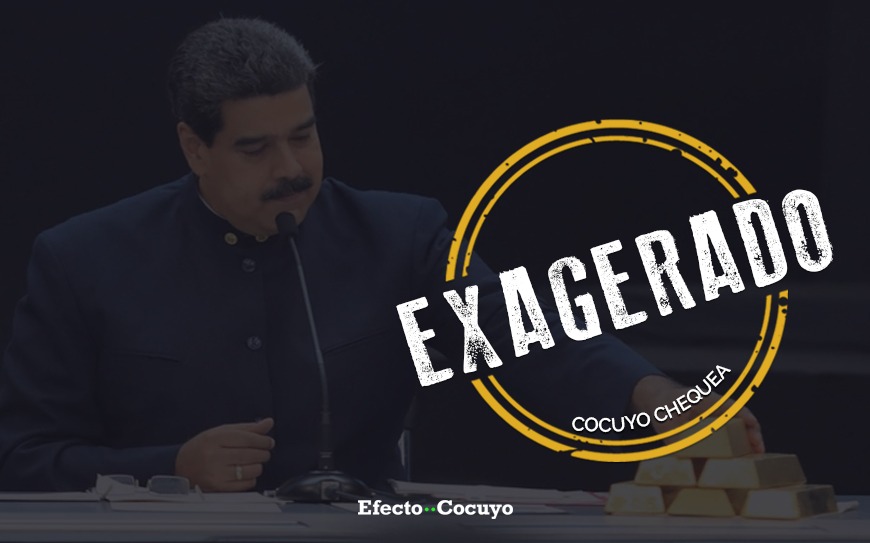
Riqueza minera de Venezuela equivale a 1,2 billones de euros
Publisher’s rating: Exagerado

L’Italia è un Paese che genera avanzi primari, quindi al netto della spesa per interessi lo Stato incassa più di quello che spende.
Publisher’s rating: Vero
The claim was made by Lega senator Alberto Bagnai on 16 June during an appearance on Rai2’s Mezz’ora in più. He said that Italy generated primary surpluses, meaning that the state took in more than it spent after interest costs were excluded. The review checked the claim against public-finance figures, including Ministry of Economy and Finance calculations based on Istat data, and figures and estimates cited from the Bank of Italy and the parliamentary research service. The review distinguishes the overall budget balance from the primary balance. Italy’s total spending exceeded its total revenue from 1990 to 2018, but that does not by itself disprove the claim: the primary balance excludes interest paid on previously accumulated debt. The review reports that Italy ran a primary surplus in every year from 1991 onward except 2009. Istat figures cited in the article put the primary balance above 1 per cent of GDP from 2011; the Bank of Italy’s April 2019 bulletin put the 2018 surplus at 1.6 per cent of GDP, or €27.47 billion. The claim is therefore supported as a general description of Italy’s recent record, with a material exception. The review also reports that the parliamentary research service estimated a primary surplus of €21.86 billion, or 1.2 per cent of GDP, for 2019. That was a forecast, not a recorded result. The overall budget remained in deficit, so the finding concerns the balance before interest payments, not the state’s total revenues and spending.
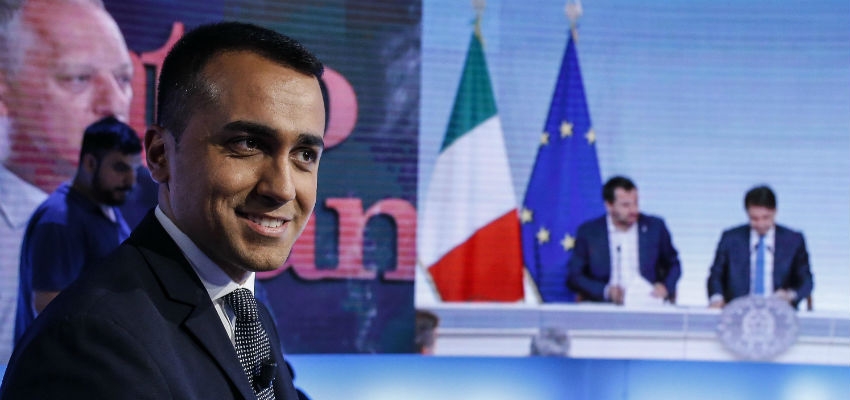
In Portogallo un lavoratore non può prendere meno di 650 euro al mese, in Spagna non meno di 826 euro, nel Regno Unito, Francia, Germania, Paesi Bassi, Belgio, Irlanda e Lussemburgo un lavoratore non può prendere meno di mille euro al mese.
Publisher’s rating: C'eri quasi
The claim concerns the monthly minimum wages Di Maio cited for nine European countries. The review says the figures were “sostanzialmente corretti” when assessed against EU data for 2018, but notes that newer 2019 figures were higher in several countries. It therefore distinguishes between the time period the quoted amounts describe and the later rates. For 2019, the review gives Portugal’s monthly minimum as 700 euros gross and Spain’s as 1,050 euros. It also says that in France, the United Kingdom, Ireland, Belgium, Luxembourg, the Netherlands and Germany, the monthly minimum wage remained well above 1,500 euros gross. These figures explain why the review regards the older amounts as broadly accurate for 2018, while identifying imprecision when compared with the more recent figures.
David O'Loughlin, president of the Australian Local Government Association (ALGA) and mayor of Prospect in South Australia claims NSW raises $750 million each and every year from waste levies and that only 18 per cent goes back to the waste industry via councils.
Publisher’s rating: Mostly True - Mostly accurate, but there is a minor error or problem.

A claim that British Airways is giving free tickets to 5,000 people to celebrate its 50th anniversary
Publisher’s rating: False.British Airways IS NOT Giving Free Tickets
در هشت سال ریاست جمهوری خاتمی، بهای ارز تنها دو برابر شد و در ۴۰سال گذشته تنها در دولت اصلاحات ارز تک نرخی شد.
Publisher’s rating: نیمهدرست

Se han despedido a 108 trabajadores del Centro de Investigación Príncipe Felipe
Publisher’s rating: Falso
The claim concerns 108 workers allegedly dismissed from the Príncipe Felipe Research Centre in Valencia. Newtral reports that the dismissals did happen, but as part of a workforce adjustment in 2011 prompted by budget cuts—not as a current event, as the circulating message suggested. The review therefore distinguishes the underlying event from the misleading presentation of its timing: “Los despidos son reales, sin embargo, se produjeron en 2011 como parte de un ERE llevado a cabo por los recortes presupuestarios que sufrió el centro.” The review also says that the message’s other examples—a golf tournament and Santiago Calatrava’s designs for towers that were never built—were real and paid for by the regional government with public money. Their inclusion does not make the message’s presentation of the layoffs as current accurate. Newtral connects the message’s apparent origin to 2011 because it refers to World Cancer Day falling on a Friday; the review says the observance is on February 4 and that the last Friday occurrence was in 2011. Finally, the message’s attribution to Complutense University professor Vicente Lahera is disputed: Newtral reports that Lahera denied writing it and said someone had copied his email signature details to impersonate him. The review also reports that the centre said its situation had changed over the intervening eight years and that it had created up to eleven research groups. Together, these details support the conclusion that the viral message combined real past events with misleading attribution and timing.

బ్యాంకులు ఇచ్చే వివిధ డెబిట్ కార్డుల మీద వినియోగదారులు జీవిత బీమా పొందవచ్చు.
Publisher’s rating: PARTLY TRUE

Treasurer Jackie Trad's claim that Queensland has helped Australia become one of the top three global LNG exporters.
Publisher’s rating: True - The checkable claim is true.
Australian Workers Union national secretary Daniel Walton claims that Australia ranked 72nd in the world and was tied with East Timor, Greece and Pakistan on a global index for co-operation in labor-employer relations.
Publisher’s rating: Mostly False - Mostly false with one minor element of truth.

A claim that Gombe State’s debt is N110 billion
Publisher’s rating: False, Gombe state does not owe N110 billion

Claim the green strip position on a 500 rupees note
Publisher’s rating: FALSE

La spesa reale delle famiglie cala dello 0,9 per cento, è la prima volta dal 2013.
Publisher’s rating: Vero
The review checks Giorgia Meloni’s claim about household spending in Italy in 2018. It reports that Istat surveys showed real household spending fell by 0.9 per cent compared with 2017, and says a contraction of this kind had not appeared in the surveys since 2013. The key qualification is inflation: the review says the fall is in real terms, accounting for inflation. In current values, average monthly household spending instead edged up, from €2,564 in 2017 to €2,571 in 2018. Thus the nominal increase does not contradict the claimed real decline.

Plastic eggs are being manufactured and sold in the Indian markets.
Publisher’s rating: FALSE
The review examines a social-media video shared with the claim that plastic or fake eggs were being manufactured and sold in Indian markets. It notes that the person who posted the video was unsure whether it was authentic, while other users treated the claim as true and shared it widely. The review’s stated conclusion is that the claim is false. To assess the allegation, the review says it searched Google for news about plastic, artificial, or fake eggs. It found conflicting reports: some media articles said such eggs had been found in parts of India, while others disputed the claim. The review then looked for official announcements and orders, and identified a Food Safety and Standards Authority of India (FSSAI) guidance note addressing the plastic-egg allegation. The review quotes that note as saying there was no technology available to produce an artificial egg that would perfectly resemble a natural egg, and that plastic eggs were a “myth.” It also reports that an FSSAI press release discussed false scares about plastic rice and eggs. The cited evidence therefore supports the review’s conclusion by presenting the regulator’s response to the specific allegation, while acknowledging that media coverage had included contradictory claims. The excerpt does not identify the video’s location or establish that every object alleged to be a fake egg was examined.
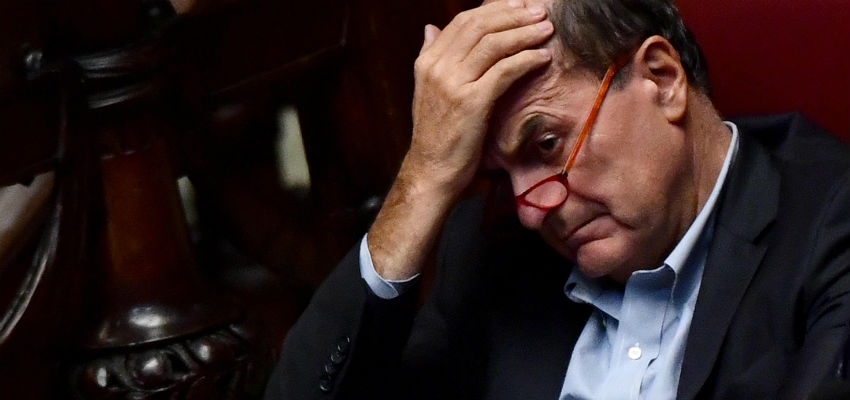
In Italia l’86 per cento delle transazioni avviene in contanti, in Svezia il 13 per cento.
Publisher’s rating: Vero
The claim concerns figures Pierluigi Bersani gave on 30 May 2019 during an appearance on Piazzapulita: that 86 percent of transactions in Italy were in cash, compared with 13 percent in Sweden. Pagella Politica checked the Italian figure against a European Central Bank study and the Swedish figure against data from Sweden’s central bank. The Italian study sought to estimate the value and volume of cash payments relative to other payment methods. It collected residents’ payment details through a one-day diary and a questionnaire about payment habits. The review reports that the ECB data support the 86 percent figure for Italy. [S1] For Sweden, the review says there were no ECB figures because Sweden had not adopted the euro. Instead, it cites a 2018 report from the Sveriges Riksbank, based on a recurring survey of consumers. That survey found that 13 percent of respondents said their most recent payment in a shop had been in cash. The two numbers therefore refer to measures described differently in the article: Italy’s share of transactions, and Sweden’s respondents reporting their last in-store payment. [S1] The review concludes that Bersani’s figures are supported by the cited data. Its explanation also supplies an important qualification to the comparison: the Swedish 13 percent is specifically about a respondent’s most recent shop payment, not a measure described in the same terms as the Italian transaction share. [S1]
El cupón de Lidl para obtener un bono de 50 euros
Publisher’s rating: Falso
The review examined a form presented as a Lidl coupon offer for a 50-euro bonus. It reports that after answering questions, users were asked for their name, email, postal code and birth date. The page’s promise that the user had qualified for the bonus was false; the review also says the purported Lidl anniversary was invented. Before reaching the personal-data form, users were required to share the link on Facebook with a “thanks” message, a step the review says helped spread the offer and build a personal-data database. (S1: “No, «usted no ha sido calificado» para obtener un bono de 50 euros de Lidl. Tampoco es el aniversario de la cadena de supermercados alemana. Todo es mentira.”; “Tu nombre y apellidos, tu email, tu código postal y tu fecha de nacimiento.”; “compartir el link en tu cuenta de Facebook con el texto «gracias».”) The investigation proceeded through the offer’s steps, including continuing beyond the initial form. The page then disclosed that participating could expose users to commercial communications from third parties. The review identified Green Flamingo by following the page’s “Unsubscribe” button, and quotes the company describing its service as connecting users with third-party advertising. The excerpt does not establish that Lidl was offering the bonus; rather, the apparent prize was part of a data-collection and marketing process. (S1: “Pero sí que quien está detrás es Green Flamingo. Aparece al pulsar el botón ‘Unsubscribe’.”; “la opción de optar por anuncios de terceros, lo que le permite a terceras compañías seleccionadas ponerse en contacto con usted con grandes ofertas.”) The review also says it checked the page’s domain-registration information, which was anonymized, and contacted Lidl. Lidl told the review it had taken steps to report the page and seek its closure. These details support the review’s account of the investigation, but the excerpt does not say that the page was closed or identify its creators. (S1: “Hemos consultado los datos de dominio de su página para poder localizarla, ya que cuando se registra su información pasa a formar parte de la base de datos pública WHOIS. Sin embargo, estos han sido registrados como anónimos por sus creadores.”; “La compañía de supermercados Lidl nos informa de que ya ha emprendido «las acciones pertinentes para informar y proceder al cierre de la página».”)