PeakMetrics / Fact Checks
Economy & business fact checks
Explore claims publishers have checked about economy & business. Read their original ratings and follow the evidence.
Search fact checks
Search by text or image7,100 published reviews in this topic

El PP introdujo en su reforma laboral el despido por baja médica
Publisher’s rating: Falso

«in Italia, ogni anno, c’è uno spreco di 12 miliardi di euro in prodotti alimentari» «In Italia sprechiamo ancora 6,5 mld di euro di cibo l'anno»
Publisher’s rating: C'eri quasi

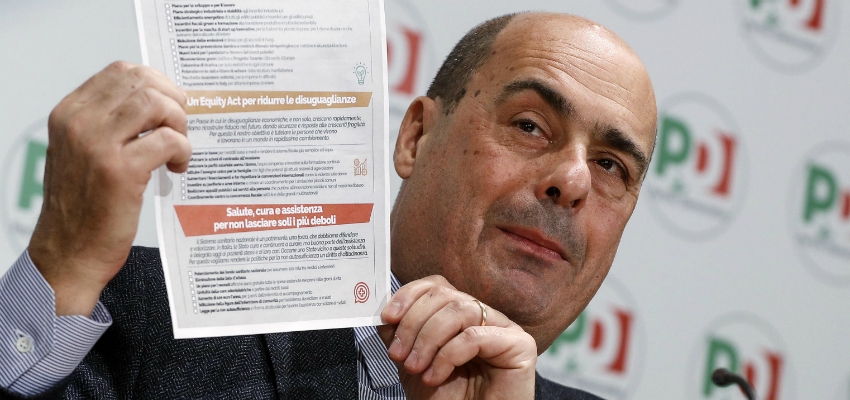
«Siamo da vent’anni il Paese che cresce meno in Europa»
Publisher’s rating: Nì
The review examines Nicola Zingaretti’s claim that Italy had been Europe’s slowest-growing country for twenty years. It compares European countries’ annual GDP growth rates from 2000 through 2018, using the latest Eurostat data available to the review, and also considers the change in each country’s real GDP between 2000 and 2018. Those measures address different questions: annual rankings identify which country grew least in a particular year, while the longer-period comparison measures cumulative change in GDP levels. The annual figures do not support the claim as a description of every year. From 2008 to 2018, Italy ranked last only in 2018; in earlier years, other countries sometimes recorded lower growth. For 2000–2007, the review says Italy was not last in any year, although it was generally near the bottom from 2002 to 2006. The comparison also has qualifications: in 2017 Italy was second-lowest if Greece is excluded, and the review notes the severe economic crisis affecting Greece. The longer-period measure paints a particularly weak picture for Italy, but still does not make it the slowest in Europe: its real GDP increased 3.5 per cent between 2000 and 2018, the second-worst result in the EU, while Greece recorded 0.5 per cent. The review also notes that Italy’s annual growth was usually lower than that of other large European economies, with exceptions. Taken together, the evidence supports a qualified rather than absolute version of Zingaretti’s assertion.

O PRESIDENTE JAIR BOLSONARO JÁ FEZ A SUA PARTE! GOVERNO FEDERAL REDUZ IMPOSTOS NO VALOR DO COMBUSTÍVEL!!
Publisher’s rating: Falso
Are there more full-time baristas than coal industry workers in Australia?
Publisher’s rating: Incorrect

«Questo non è un Paese per giovani, perché lo stipendio mediano di un giovane sotto i 30 anni è poco più di 800 euro al mese, perché ha il più basso numero di laureati in Europa, quasi poco più della metà della Francia, perché sottofinanzia da tanti anni il sistema dell’istruzione. […] Si stima che 60 mila laureati ogni anno lasciano l’Italia»
Publisher’s rating: C'eri quasi
Pagella Politica checked statements made by Carlo Calenda in a Facebook video addressed to the Sardine movement. Calenda argued that Italy was not a country for young people, citing the pay of under-30s, the number of graduates, education funding and the annual departure of 60,000 graduates. The review assessed each point against the data it identified, while noting qualifications that make some of Calenda’s comparisons less straightforward. On pay, the review traced the figure to testimony by Confindustria’s Pierangelo Albini at a Senate hearing on 4 February 2019. Albini put the median net monthly salary of under-30s at their first job at €830. The review said Calenda’s “just over €800” figure was therefore broadly accurate, but clarified that the estimate concerned young people in their first job, not all under-30s. For graduates, Eurostat data for 2017 placed Italy sixth among EU countries by absolute number, with 388,600 graduates; the review said Italy was last among the most populous countries, at about half France’s number. On the share of 30–34-year-olds with tertiary qualifications, 2018 figures instead placed Italy second-last in the EU, at 27.8%, ahead of Romania. On education spending, the review cited 2017 Eurostat figures: Italy spent 7.9% of total public expenditure on education, the lowest share in Europe, and 3.8% of GDP, which put it fifth from last. It also reported that tertiary education spending was 0.3% of GDP, compared with an EU average of 0.7%. Finally, Istat figures for 2018 recorded about 29,000 Italian graduates moving abroad—not 60,000. The review said the larger number could reflect either an estimate that adjusts for undercounting in Istat’s records or a Cgia figure that combines 29,000 graduates with 33,000 people holding diplomas. Its overall conclusion was that Calenda’s claims were broadly close, but some needed qualification and the 60,000 figure did not match the official count for graduates alone.

حاضرم سوگند بخورم ۷۰ تا ۸۰ درصد مردم اروپا سطح زندگی پایینتری از مردم ایران دارند.
Publisher’s rating: شاخدار
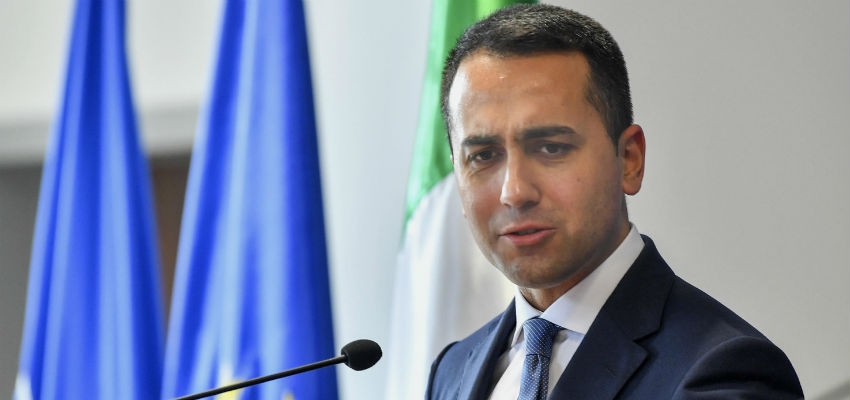
«Il 32 per cento del Pil deriva dall'export»
Publisher’s rating: Pinocchio andante
The review examined a statement by Italy’s foreign minister Luigi Di Maio, made in an interview published by Il Sole 24 Ore on 11 February: “32 per cent of GDP derives from exports.” It distinguishes the value of exports from the part of GDP that exports contribute after imports are accounted for. The review reports that, in 2018, Italian exports of goods and services were worth €555.3 billion, while GDP was €1,765.4 billion. Exports were therefore about 31.5 per cent of GDP in value, but that comparison does not establish that the same share of GDP derives from exports. [S1: “L’export italiano di beni e servizi nel 2018 è stato pari a 555,3 miliardi di euro. Il Pil, quello stesso anno, è stato pari a 1.765,4 miliardi di euro. Dunque sarebbe corretto dire che l’export italiano nel 2018, in termini di valore, corrisponde a circa il 32 per cento del Pil (31,5 per cento per la precisione). È invece sbagliato dire che il 32 per cento del Pil ‘derivi’ dall’export.”] To explain the distinction, the review describes the expenditure-side calculation of GDP: national final consumption expenditure and investment are combined with net exports—the difference between exports and imports. For 2018, it gives consumption of €1,400.7 billion, investment of €320.6 billion, exports of €555.3 billion and imports of €511.2 billion. The resulting trade surplus was €44.1 billion, and those figures sum to the reported GDP total of €1,765.4 billion. [S1: “Il Pil 2018 dell’Italia risulta quindi, dal lato della spesa, così costruito: 1.400,7 miliardi di spese per consumi finali nazionali, più 320,6 miliardi di investimenti, più la differenza tra 555,3 miliardi di export e 511,2 miliardi di import, pari a 44,1 miliardi di euro. La somma dà esattamente i 1.765,4 miliardi di Pil complessivo sopra citato.”] The review’s central point is that the GDP calculation includes exports in balance with imports, not exports alone. It says the €44.1 billion surplus represented 2.5 per cent of GDP—not 32 per cent. Thus, the export-to-GDP value comparison is broadly accurate, but it does not support Di Maio’s wording about the share of GDP that derives from exports. [S1: “La componente che va a contribuire alla costruzione del Pil è insomma il ‘saldo’ tra import ed export, non l’export. Questo saldo commerciale nel 2018 è stato pari a 44,1 miliardi di euro, e dunque ha contribuito per il 2,5 per cento al Pil.”]
Foreign exchange earnings grew 7.4% to Rs. 1.88 lakh crores for the period January to November 2019 from Rs. 1.75 lakh crores.
Publisher’s rating: MISLEADING
The claim concerns a statement in Finance Minister Nirmala Sitharaman’s 2020–21 Budget speech: foreign-exchange earnings (FEE) increased 7.4% to Rs. 1.88 lakh crores for January–November 2019, up from Rs. 1.75 lakh crores. The review says those figures appear in the Ministry of Tourism’s End Year Review 2019, so it does not dispute the reported amounts or the stated increase. The review’s objection is to presenting that increase as a notable achievement without comparing it with earlier years. It says it examined the Ministry of Tourism’s annual reports and found that FEE growth in previous years had been higher. In particular, it describes the 2019 growth rate as the lowest since 2012. Thus, the figures can be accurate while their presentation as an achievement omits relevant historical context about the slower rate of growth. The review separately assesses the speech’s statement about India’s Travel & Tourism index ranking. It says the ranking improved, but notes that the comparison should begin with the 2013 index rather than 2014. That separate correction does not alter the FEE comparison: the review’s stated basis for its assessment of the earnings claim is the historical growth-rate comparison, not the index ranking.
गरीबी मुक्त भारत बनाने की तैयारी, उत्तर प्रदेश से शुरू
Publisher’s rating: FALSE


«Dal 2011 la Germania viola sistematicamente le regole europee sforando il tetto del 6 per cento sulla bilancia commerciale [...]. Le regole europee valgono per tutti tranne che per la Merkel, in questi anni la Commissione UE si è limitata solo a richiamare Berlino dalle violazioni, ma senza sortire alcun effetto»
Publisher’s rating: Nì

Says that Amazon "is literally paying zero in taxes."
Publisher’s rating: Estimated to pay for 2019, not for 2017 and 2018


When the virus is spreading, But you still need a loan
Publisher’s rating: FALSE