PeakMetrics / Fact Checks
Economy & business fact checks
Explore claims publishers have checked about economy & business. Read their original ratings and follow the evidence.
Search fact checks
Search by text or image7,100 published reviews in this topic
Government is giving Kshs 2 billion to all citizens
Publisher’s rating: FALSE

"Something like two-thirds of the debt in the budget was borrowed by the Government before this outbreak of COVID-19"
Publisher’s rating: Correct
CBK has approved the use of cryptocurrencies
Publisher’s rating: FALSE
Related reporting does not support the claim that the Central Bank of Kenya (CBK) had approved cryptocurrency use generally. A report on Credit Bank’s proposed crypto-based cross-border payments says the bank was still seeking CBK approval to pilot the service. It describes the initiative as exploratory and says it would proceed only if the regulator gave permission. That is evidence of a pending request, not approval already granted. The proposal concerned a specific use: Credit Bank and payment provider Anzens planned to explore USDA, a dollar-backed stablecoin, for cross-border settlements. The report says customers could convert shillings or US dollars into USDA for international payments under the proposed model. It also states that Kenya had not fully integrated cryptocurrencies into its regulated financial system. This account therefore distinguishes a proposed, conditional pilot from broad authorization to use cryptocurrencies. Separate reporting on Kenya’s 2026 virtual-asset rules describes a narrower approval requirement for stablecoins on exchanges: a stablecoin must be approved by the CBK and issued by a licensed issuer before an exchange may list it. That is a condition imposed by the rules, not evidence that the CBK had approved cryptocurrencies generally or that a particular stablecoin had received approval. These later reports address regulatory developments after the claim’s supplied review date; they do not establish the claim’s status at that earlier time.

Newspaper clipping of a job notification by ‘Avestran Infotech’ for 5,285 vacancies in the Indian Railways
Publisher’s rating: FALSE
The review examines a newspaper clipping attributed to Avestran Infotech that advertised 5,285 vacancies across eight categories in Indian Railways, reportedly on an outsourcing basis. The post also used the notice to suggest that privatization of the railways was beginning. The review’s conclusion is that the recruitment notice was not genuine: it reports that the Ministry of Railways described the advertisement as fake. The review says it checked the application website printed in the clipping, www.avestran.in, and found it was not working at the time of its investigation. It then looked for information about the notice and found a Ministry of Railways clarification. The website check is part of the review’s account, but the decisive evidence it presents is the ministry’s statement about the advertisement and recruitment authority. According to the quoted clarification, Railways had not authorized a private agency to recruit staff on its behalf, and railway recruitment advertisements were issued by Indian Railways. The ministry also said it had begun an investigation and would pursue action under the law. This directly contradicts the clipping’s presentation of Avestran Infotech as recruiting for Indian Railways; the review therefore labels the claim false.
میزان ارزبری تولید خودرو ۵۰ درصد کاهش یافته است.
Publisher’s rating: نادرست
PATÉ DE JABALÍ Y MOUSSE DE PATO, ENTRE OTROS PRODUCTOS GOURMET COMPRADOS EN LA MONEDA
Publisher’s rating: Falso
بزرگترین مجتمع تولید متانول جهان، پتروشیمی کاوه در بوشهر است.
Publisher’s rating: شاخدار
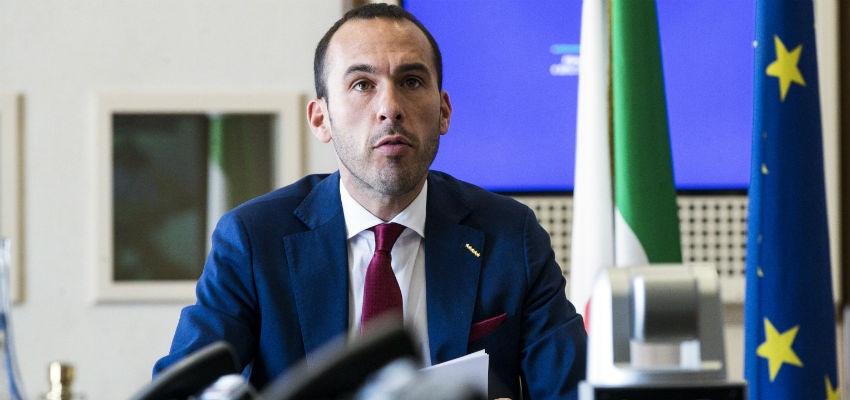
«In questi due anni da sottosegretario in tutti i Paesi target della mia azione (e sono tanti) l’export italiano è aumentato mediamente di almeno il 15 per cento»
Publisher’s rating: Pinocchio andante
Manlio Di Stefano, then an undersecretary at Italy’s Foreign Ministry, wrote on Facebook on August 5, 2020, that Italian exports had risen by at least 15% on average in the countries targeted by his work during his two years in office. The review notes that he did not specify which countries he meant. His formal responsibilities included bilateral relations with Asian countries, but not China, alongside trade-related duties; the review says those responsibilities did not make the intended set of “target” countries or the effect of his own work clear. The ministry had been asked to clarify, but had not responded at the time of the review. To test the claim despite that ambiguity, the reviewer used exports to Asian countries, excluding China, as a proxy based on Di Stefano’s stated responsibilities. The review compared 2017, before he took office in June 2018, with 2019, the latest full year available in the analysis and before the Covid-19 epidemic emerged. It reports that Italian exports to Asia overall went from €66.4 billion in 2017 to €66.3 billion in 2019. China’s exports fell from €13.5 billion to about €13 billion; subtracting China left exports to the rest of Asia rising from almost €53 billion to €53.3 billion, or about 0.7%—well below the claimed increase. The review also gives context for that comparison: Italy’s total goods exports rose by just under 6% between 2017 and 2019. It concludes that the available figures do not support Di Stefano’s 15% claim for the Asian countries considered, while noting that the claim could not be checked more precisely without clarification of which countries he meant.
اقتصاد ایران تابآوری بالاتری نسبت به اقتصاد اروپا و آمریکا در برابر کرونا داشته است.
Publisher’s rating: نادرست
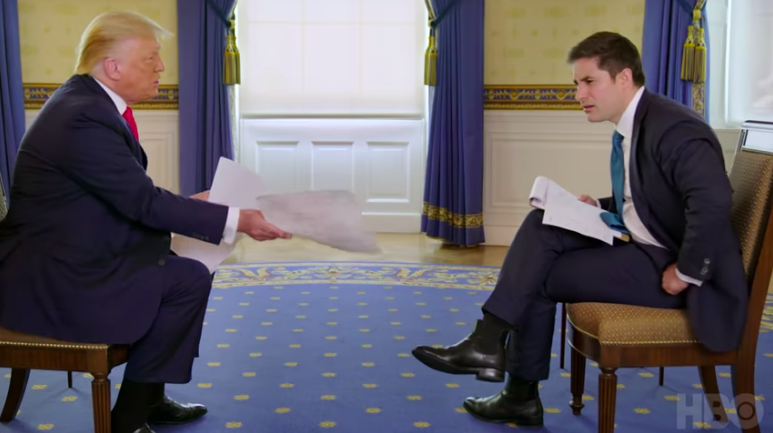
"With African Americans, I’m doing very well. They had the best employment numbers they’ve ever had. ... They were making more money than they ever made."
Publisher’s rating: Largely continued Obama trends

Cadbury is giving 500 Free baskets of Cadbury chocolates to everyone on its 196th Anniversary
Publisher’s rating: FALSE
The claim concerned a social-media post promising 500 free Cadbury chocolate baskets to everyone for Cadbury’s 196th anniversary. FACTLY reports that Mondelez India Foods Limited, the producer of Cadbury chocolates in India, had made no announcement of such an offer and concludes that Cadbury was not giving away the baskets. To check the offer, the review says it searched for information about it and examined the company’s official website and press releases. It found no announcement of free baskets in those press releases. The review also reports that Cadbury had told The Sun the offer was a scam, warned customers against phishing websites, and said genuine promotions would be announced on Cadbury’s official channels. The review adds that a similar claim about a basket giveaway for Cadbury’s 194th anniversary had circulated in 2018. In that instance, Cadbury told a Facebook user that it was not the company’s promotion and advised consumers to be careful. This earlier episode is supporting background; the review’s conclusion about the 196th-anniversary claim rests on its reported search for an official offer and Cadbury’s warning about the alleged promotion.
609 രൂപക്ക് രണ്ടരലക്ഷം നമ്മുടെ അക്കൗണ്ടിലേക്കു വരുന്ന ഇ പോളിസി കേന്ദ്രസർക്കാരിന്റെ കൊറോണ ഇൻഷുറൻസ് പോളിസിയാണ്.
Publisher’s rating: FALSE
The Agaram Foundation has budgeted Rs. 2 lakh crore between 2006 and 2020. 15000 crore has been accounted for by the Income Tax Department. This is the problem. How can an NGO fund so many crores? Was black money used to exchange on a commission basis ??? The background is also being investigated as several thousand crores have come from Mumbai alone. Let’s wait and see.
Publisher’s rating: Fake
Immer wieder wird auf Webseiten mit vermeintlichen Aussagen von Prominenten für Investitionen in die Kryptowährung Bitcoin geworben. Dabei handelt es sich um eine Betrugsmasche. Die Aussagen und Quellen sind frei erfunden, Prominente distanzieren sich. Ein Beispiel: ein vermeintliches Interview des SAP-Gründers Hasso Plattner im ZDF-«Morgenmagazin».
Publisher’s rating: Ein solches Interview mit entsprechenden Aussagen über Bitcoin hat nie stattgefunden, wie das ZDF und Hasso Plattner auf Anfrage mitteilen.
The review investigated a promotional webpage that attributed Bitcoin-investment endorsements to SAP founder Hasso Plattner, allegedly from an interview on ZDF’s “Morgenmagazin.” The page promoted a purportedly successful Bitcoin trading scheme and included claims such as that “Bitcoin Code” was a way to build a fortune quickly. The review describes the page as designed to resemble journalism, while also using television-channel logos and a modified ZDF logo in an image presented as showing Plattner with “Morgenmagazin” host Mitri Sirin. (S1: “Auf der Seite werden dem SAP-Gründer und Milliardär Hasso Plattner Aussagen zugeschrieben, die dieser angeblich im ZDF-«Morgenmagazin» getätigt haben soll.”; “Ein Beispiel: «Und im Moment ist meine »Gelddruckmaschine« ein neues Auto-Trading-Programm, Bitcoin Code. Es ist zugleich auch das Beste was ich jemals gesehen habe, um blitzschnell ein kleines Vermögen aufzubauen.»”) To check whether the interview and statements were genuine, the German Press Agency asked representatives of both Plattner and ZDF. Plattner’s spokesperson said there had been no such interview, and ZDF also denied that it had taken place. The review additionally reports that online searches found no evidence for the supposed quotations, including in other contexts. These checks address the specific alleged interview and its attributed Bitcoin claims, rather than merely the broader existence of cryptocurrency scams. (S1: “Auf Anfrage der Deutschen Presse-Agentur erklärt eine Sprecherin Plattners: «Es gab kein derartiges Interview.» Auch das ZDF verneint auf Anfrage, dass es ein solches Interview gegeben habe.”; “Online-Recherchen führen zu keinen Belegen für die vermeintlichen Zitate, auch nicht in anderen Zusammenhängen.”) The review describes further signs that the page was not an authentic news report: it says the page imitated an RTL offering, used other broadcasters’ logos, and combined promotional language with links to registration and requests for bank details. Those details provide context for why the alleged endorsement appeared in a deceptive investment promotion, but the central finding rests on the direct responses from Plattner’s spokesperson and ZDF and the absence of online evidence for the attributed quotations. (S1: “Die Seite, auf der die offenkundig gefälschten Zitate veröffentlicht wurden, ahmt in ihrer Gestaltung ein Angebot des Fernsehsenders RTL nach und nutzt Logos weiterer Fernsehsender.”; “Stutzig machen jedoch der teils werbende Sprachstil («Starten Sie einfach die Auto-Trading-Software [...]») und die Verlinkungen zu einer Seite, auf der eine Registrierung und die Hinterlegung von Bankdaten gefordert wird.”)

గాంధీ బొమ్మ మన కరెన్సీ నోటు మీద ముద్రించడం మొదలుపెట్టినప్పడి నుండి మన కరెన్సీ విలువ పడిపోవడం మొదలయింది
Publisher’s rating: FALSE