PeakMetrics / Fact Checks
Economy & business fact checks
Explore claims publishers have checked about economy & business. Read their original ratings and follow the evidence.
Search fact checks
Search by text or image7,099 published reviews in this topic
If the minimum wage was indexed to "inflation, people would be making 20 bucks an hour right now."
Publisher’s rating: False.

The prices of essentials commodities in 2014 are much higher when compared to the prices in 2021
Publisher’s rating: FALSE
FACTLY checked a social-media post asserting that essential commodities cost much more in 2014 than in 2021. Its review distinguishes the prices printed in the post from the prices it says were actually reported by the Department of Consumer Affairs. It reports that the post’s 2014 figures were substantially overstated: Moong Dal was listed at ₹180 per kg rather than ₹97.26, Urad Dal at ₹179 rather than ₹79, and Tur Dal at ₹210 rather than ₹75.83. For its comparison, FACTLY says it calculated all-India averages of month-end prices from the Department’s website. It reports that the 2021 figures in the post were almost close to actual prices, while the 2014 figures varied greatly from them. The review’s examples of actual prices show increases between the years: Urad Dal rose from ₹79.09 per kg in 2014 to ₹108.96 in 2021, and Tur Dal from ₹75.83 to ₹104.96. It also says these two dals were the only commodities in the post to have an annual price increase over that period, with increases minimal for the remaining commodities. Thus, the comparison in the post is misleading because its inflated 2014 figures do not match the reported prices. On the Department-based comparison described by FACTLY, 2021 prices were higher than 2014 prices—not the reverse. The review separately notes that the post also discussed LPG cylinder prices, but says that issue had been addressed in another fact-check.


Banks will remain shut for 11 days in March 2021
Publisher’s rating: MISLEADING
The post claimed that banks would be shut for 11 days in March 2021. FACTLY checked the Reserve Bank of India’s holiday calendar, which listed five holidays in addition to second and fourth Saturdays and Sundays. The key qualification is that those five holidays did not apply uniformly across regional offices: the calendar did not show any one regional office observing all five. The location-specific entries illustrate why adding the holidays together does not establish 11 days of closure for every bank across India. The calendar listed 5 March as a holiday only at Aizawl, while 22 and 30 March were listed as holidays only at Patna. FACTLY therefore concluded that the claim misrepresented region-specific holidays as if they all applied everywhere. The review also noted a separate, proposed disruption: the United Forum of Bank Unions called for a two-day strike from 15 March to protest the proposed privatisation of two state-owned lenders. The excerpt reports a call for a strike; it does not establish that this strike occurred or that it meant all banks nationwide were shut. Its central finding is that the listed holidays did not all apply to banks in every state.

ఐక్యరాజ్య సమితి విడుదల చేసిన ర్యాంకింగ్స్ ప్రకారం అభివృద్ధి చెందుతున్న దేశాల్లో భారత దేశానిది 163వ స్థానం
Publisher’s rating: FALSE

Faxina na Petrobras: o presidente novo, um general, demitiu 300 funcionários do prédio central
Publisher’s rating: FALSO: O general Joaquim Silva e Luna ainda não assumiu o comando da petroleira, uma vez que sua indicação deve passar pela análise de órgãos internos da empresa. Ele não teria como, portanto, ter demitido ninguém.
El banco central de Cuba no recibirá billetes que contengan la frase «PATRIA Y VIDA»
Publisher’s rating: Falso

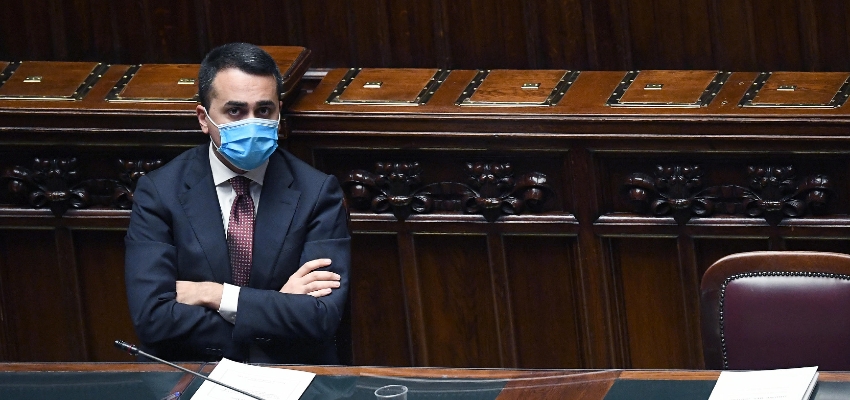
«Il Congo ha la seconda riserva di rame al mondo, un quarto dell'oro di tutto il mondo, un terzo dei diamanti, l'80 per cento di cobalto e coltan»
Publisher’s rating: Pinocchio andante
Luigi Di Maio made the claim during a February 24 Senate briefing about the killing of Italian ambassador Luca Attanasio, carabiniere Vittorio Iacovacci and their driver, Mustapha Milambo, in the Democratic Republic of the Congo (DRC) on February 22. He attributed to the country the world’s second-largest copper reserves, a quarter of the world’s gold, a third of its diamonds, and 80 per cent of cobalt and coltan. The review checked the figures against the most up-to-date estimates it cited from the U.S. Geological Survey (USGS), distinguishing reserves from mining production where relevant. For copper, the review reports 19 million tonnes of DRC reserves out of 870 million worldwide. The DRC ranks second in Africa, behind Zambia, but at least eight other countries have larger reserves globally. For gold, the review says the DRC does not appear among the 17 countries holding more than 80 per cent of global reserves, and is surpassed by at least seven countries. Its diamond-reserve share is about 10 per cent, not a third; its 2019 share of natural-diamond production was 20 per cent. The cobalt and coltan figures need a distinction between reserves and production. The DRC has about 50 per cent of global cobalt reserves and accounted for 70 per cent of cobalt production in 2019, rather than 80 per cent. The USGS figures cited by the review do not specify coltan reserves. Instead, the review uses tantalum production as an indicator: the DRC was the leading producer in 2019, with about 31 per cent of world production. It also notes that a 2019 Foreign Ministry document may have contributed to Di Maio’s figures, but its statistics referred to Africa, not the world. The review concludes that the figures were incorrect, though the cobalt and coltan claims were less far off than the copper, gold and diamond claims.

«Solo in pochissimi Stati, tra cui l'Italia, con le tasse dei cittadini vengono finanziate le testate giornalistiche»
Publisher’s rating: Pinocchio andante
The claim concerned a Facebook post by Michele Sodano, a deputy elected with the Five Star Movement, criticizing the approval of the Milleproroghe decree. He argued that Italy was exceptional because only “very few states” used taxpayers’ money to fund journalistic outlets. The review says the decree postponed cuts to publishing subsidies that had been introduced in the 2019 budget law. It also clarifies that the claim concerns public support for journalism and publishing, not the Rai licence fee, which the article treats as a separate form of public-service funding.

vídeo mostra preço de gasolina no PARAGUAI $2,62
Publisher’s rating: Falso


Fecha tudo,depois a gente vê a economia. São 320 Habibs passando o ponto. Imaginem o desemprego
Publisher’s rating: Falso

2020తో పోల్చుకుంటే 2021లో నిత్యావసర వస్తువుల ధరలు గణనీయంగా పెరిగాయి
Publisher’s rating: FALSE
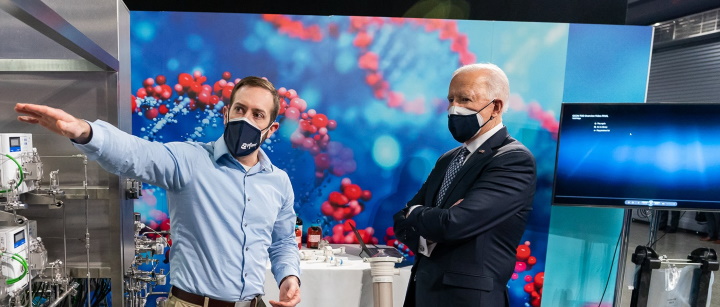
"An analysis by the Wall Street firm Moody’s estimates that if we pass my American Rescue Plan, the economy will create 7 million jobs this year.”
Publisher’s rating: Spins the Facts
"And let's not forget that going into this crisis, we saw welfare dependency at a 30-year low because we'd got that unemployment rate down."
Publisher’s rating: Yes, but more to it

Petrol prices in BJP ruled states are lower compared to non-BJP ruled states
Publisher’s rating: MISLEADING
The claim compared petrol prices in BJP-ruled states with prices in non-BJP-ruled states, asserting that the former were lower. FACTLY’s review examined retail petrol prices at Indian Oil Corporation outlets across cities as of 22 February 2021. It found that some BJP-ruled states did have low prices, but the comparison presented in the post selected low-priced BJP states against non-BJP states with higher prices, rather than showing that prices were lower across BJP-ruled states as a group. (“As per the prices of litre petrol at retail outlets of IOCL outlets across the cities as of 22 February 2021”; “Prices of petrol in BJP ruled states, where it is low, are compared to those non-BJP ruling states where the prices of litre petrol are high.”) The reported figures show why the broad comparison is misleading: Bhopal, in BJP-ruled Madhya Pradesh, had the highest listed price, ₹98.6 per litre. Jaipur and Mumbai, in non-BJP-ruled Rajasthan and Maharashtra, were second and third at ₹97.10 and ₹97 per litre. At the other end, Itanagar, in BJP-ruled Arunachal Pradesh, had the lowest listed price, ₹84.15 per litre. These examples show variation within both categories, not a uniform BJP-state price advantage. (“the cost of litre petrol is highest in Bhopal, capital of a BJP ruled state at ₹ 98.6/Ltr”; “Jaipur (Rajasthan) and Mumbai (Maharashtra) both non-BJP ruled states stood at second and third position”; “The cost of litre petrol is least at ₹ 84.15/Ltr in Itanagar, Arunachal Pradesh a BJP ruled state.”) The review also says five of the ten states with the highest petrol prices—Madhya Pradesh, Manipur, Nagaland, Karnataka and Bihar—were ruled by the BJP and its allies. That evidence directly counters the post’s selective comparison: low prices in some BJP-ruled states did not establish that petrol was cheaper in BJP-ruled states overall. (“Five (Madhya Pradesh, Manipur, Nagaland, Karnataka, Bihar) of the top ten states in the country where the price of litre petrol is high are ruled by the BJP and its allies.”)

Só hoje o General Joaquim Silva e Luna, novo Presidente da Petrobras botou mais de 300 funcionários pra rua.
Publisher’s rating: Falso