PeakMetrics / Fact Checks
Economy & business fact checks
Explore claims publishers have checked about economy & business. Read their original ratings and follow the evidence.
Search fact checks
Search by text or image7,096 published reviews in this topic

هل الشركات المؤهلة مسبقًا في ملف النفط اللبناني "وهمية"؟
Publisher’s rating: غير صحيح
El precio promedio de la gasolina llegó en marzo a ser el más alto registrado en EEUU
Publisher’s rating: Verdad
Russland hat keine Schulden und es gibt dort keine inneren Konflikte. Europa verfügt über nur zwei Terminals für Flüssigerdgas.
Publisher’s rating: Mehrere Behauptungen sind falsch. Russland hat sowohl Auslandsschulden als auch innere Konflikte. Europa könnte - mit einigen Anstrengungen - auf russisches Erdgas verzichten. Es gibt zudem schon jetzt mehr als 20 Terminals für den Umschlag von Flüssigerdgas auf dem Kontinent.
The dpa review concerns a Facebook post from Switzerland arguing that Europe needs Russia and that Russia is debt-free and free of internal conflict, while Europe has only two LNG terminals and cannot replace Russian gas. The review distinguishes between the post’s claims rather than treating them as one proposition: it says Russia has both foreign debt and domestic conflict, that Europe could reduce reliance on Russian gas with effort, and that the continent already has more than 20 LNG terminals. “Im Facebook-Post wird unter anderem behauptet, Europa sei ohne Russland «verloren». Russland brauche Europa nicht, umgekehrt brauche Europa aber Russland. Diese Meinung wird mit Angaben begründet, von denen einige nachweislich falsch sind.” On debt, the review cites figures attributed to Russia’s state audit body via TASS and to the International Monetary Fund. It reports public debt of 17.8 percent of GDP in 2020 and an IMF estimate of 17.9 percent at the end of 2021, while noting that this level was low compared with other countries. It also reports that Russia’s Finance Ministry said on 13 March 2022 that the country would initially pay foreign debts in rubles. These details contradict the absolute claim that Russia had no debt. “Russland hat tatsächlich weniger Schulden als viele westliche Staaten, ist jedoch keineswegs schuldenfrei.” For domestic conflict, dpa points to a 2017 analysis by Germany’s Federal Agency for Civic Education describing growing rivalry among governing elites, increasing repression, and social tensions. It also cites low turnout in the September 2021 parliamentary election and the banning of Navalny-linked organizations and independent media, as well as Memorial’s dissolution in December 2021. For LNG capacity, it reports that The National Law Review put Europe at 29 terminals, 21 in EU member states, and notes plans for another 20 large import terminals. On gas replacement, the review reports that the International Energy Agency proposed a ten-point plan after Russia’s invasion of Ukraine, including alternative imports and faster renewable-energy projects. It says replacement would be challenging and costly, not impossible.
Dies ist ein Gewinnspiel von Penny.
Publisher’s rating: Das angebliche Gewinnspiel ist nicht seriös und stammt nicht von der Firma Penny.
Russland hat weder Schulden noch innere Konflikte, während die EU auf russisches gas angewiesen ist und auch nur über zwei Flüssiggas-Terminals verfügt.
Publisher’s rating: In dem Post werden mehrere falsche Behauptungen aufgestellt.

«Noi dall’Ucraina e dalla Russia importiamo il 30 per cento del grano»
Publisher’s rating: Il leader di Azione esagera.
«L’Italia ha la componente fiscale tra le più alte in Europa, con accise e Iva che pesano per il 55 per cento sul prezzo al consumo della benzina e per il 52 per cento su quello del gasolio»
Publisher’s rating: Il capogruppo della Lega al Senato ha ragione.
The claim concerns a statement by Massimiliano Romeo, then the League’s Senate group leader, that taxes made up 55% of the consumer price of petrol and 52% of the price of diesel in Italy, and that the country’s fuel-tax share was among Europe’s highest. The review says Romeo had asked the government to address recent fuel-price increases. It evaluates both the Italian percentages and their comparison with other European countries. (S1: “Il 14 maggio il capogruppo al Senato della Lega Massimiliano Romeo ha chiesto con una nota al governo di intervenire per contenere i recenti aumenti dei prezzi di benzina e gasolio.”; “Secondo Romeo, il nostro Paese ha tra le imposte «più alte in Europa» sui carburanti, che pesano per il «55 per cento» sulla benzina e per il «52 per cento» sul gasolio.”) For the Italian figures, the review describes a calculation using Ministry of Ecological Transition observations for the week of February 28 to March 6. Petrol averaged €1.95 per litre; the review attributes €0.35 to VAT and about €0.73 to excise duties, together roughly 55% of the price. For diesel, it gives about €0.62 in excise duties and nearly €0.33 in VAT per litre, amounting to about 52%. These figures address the claim’s tax shares, rather than suggesting that the entire pump price consists of taxes. (S1: “Secondo le rilevazioni del Ministero della Transizione ecologica, nella settimana tra il 28 febbraio e il 6 marzo, un litro di benzina in Italia è costato in media 1,95 euro.”; “Di questi, 0,35 euro sono andati in Iva e circa di o,73 euro in accisa.”; “per un litro di gasolio, circa o,62 euro vanno infatti in accisa e quasi 0,33 euro in Iva.”) For the European comparison, the review reports using European Commission figures updated to March 7. It says only Greece and Malta exceeded Italy’s petrol-tax share, at 56%, while Malta alone exceeded Italy for diesel, at 54%. It also contrasts Italy with EU averages of 49% for petrol and 43% for diesel. On the evidence presented, the claim’s figures and its “among the highest” comparison are supported. (S1: “Secondo le rilevazioni più recenti della Commissione europea, aggiornate al 7 marzo, solo Grecia e Malta hanno un peso delle imposte sul costo della benzina più alto del nostro, attestandosi al 56 per cento.”; “Il 52 per cento italiano di peso del fisco sul prezzo del gasolio è poi superato solo dal 54 per cento di Malta.”; “In generale, la media Ue è rispettivamente del 49 e del 43 per cento.”)

صادرات نفت خام از ۱/۵ میلیون بشکه فراتر رفتهاست.
Publisher’s rating: غیرقابل اثبات
Le prix du carburant à la pompe était moins élevé qu'aujourd'hui en juillet 2008, alors que le prix du baril de pétrole était plus élevé à l'époque.
Publisher’s rating: Le message induit en erreur. Son auteur omet de préciser que la situation de juillet 2008 n’avait rien de comparable avec celle de mars 2022, ne fût-ce qu’en raison de l’évolution du taux de change entre le dollar et l’euro.
The review examines a Facebook post comparing summer 2008 with March 2022 and suggesting that fuel was cheaper at the pump in 2008 even though oil was more expensive. Its figures concern diesel in Belgium, so the comparison is more specific than a general claim about all fuel prices: the review reports a record oil price of $147 per barrel on July 7, 2008, and a normal diesel pump price of €1.424 per litre that month. On March 7, 2022, it gives the oil price as $125.14 per barrel and the maximum normal diesel price as €2.0840 per litre. These figures support the basic comparison, but the review says the dollar-to-euro exchange rate helps explain why the pump prices cannot be compared by looking at the dollar oil price alone. The review reports that a dollar was worth €0.63 in July 2008 and €0.92 in March 2022. It says this meant the price of a barrel, calculated in euros, rose by nearly 30% between those dates, affecting the pump price. It also cites lower diesel excise duties in 2008, as well as increased costs for refining, transport and distribution since then. The investigation therefore gives a reason the post could mislead: its headline comparison omits factors that affect the euro price paid at the pump. The review does not dispute the quoted Belgian diesel figures; it qualifies what can be inferred from them.
۸۰ درصد سود ناشی از گردش مالی مصرف سیگار به جیب شرکتهای خارجی میرود.
Publisher’s rating: نیمهدرست
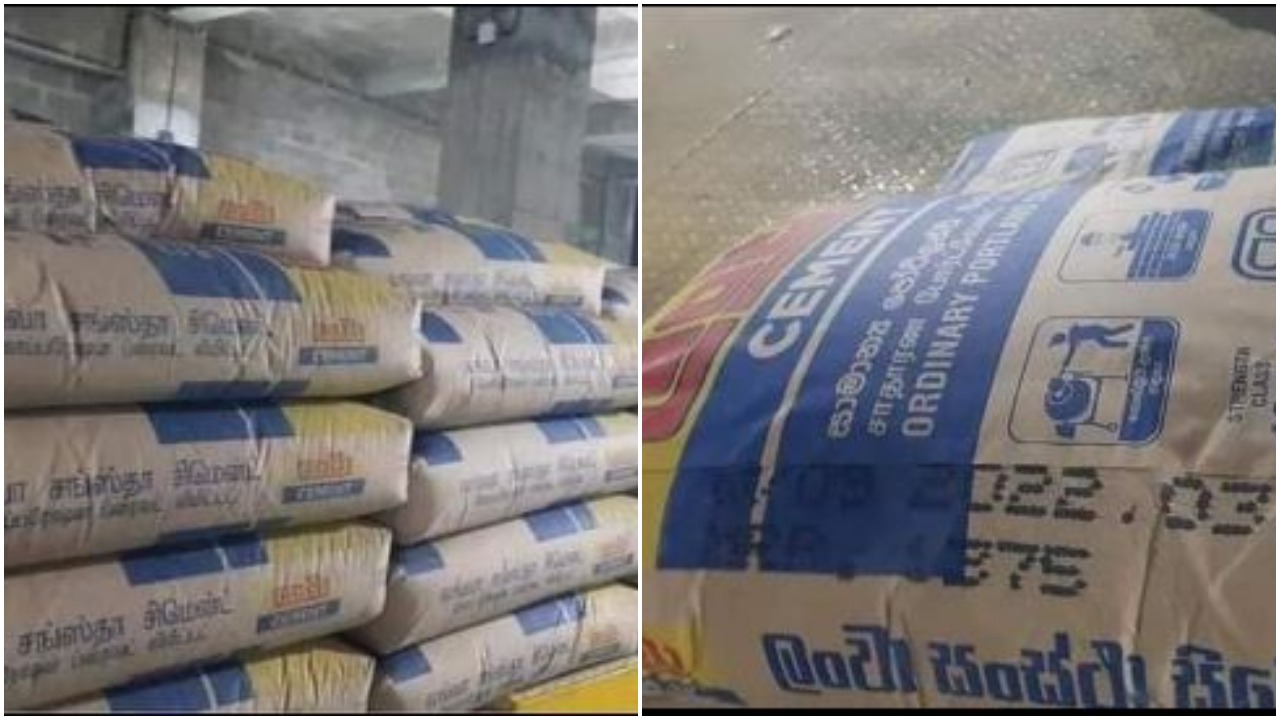
නව හම්බන්තොට සිමෙන්ති කම්හලෙන් පැයකට සිමෙන්ති පැකට් ලක්ෂ 2 ක් නිපදවීමේ හැකියාවක් තිබේද ?
Publisher’s rating: Misleading
The claim concerned the newly opened Lanwa cement factory in Hambantota and the assertion that it could produce 200,000 cement packs in an hour. Fact Crescendo says it investigated social-media posts that paired factory and cement-bag images with that hourly production figure. The review reports contacting factory general manager Prasad Silva by telephone after examining a televised interview with project manager Nuwan P. Jayasuriya.

එතනෝල් හිඟය හේතුවෙන් මත්පැන් නිෂ්පාදනයත් නතර කරනවාද?
Publisher’s rating: Explainer


حكومة النظام السوري تصدر لائحة بأسعار جمركة الأجهزة الخلوية باهظة الثمن
Publisher’s rating: كذب
ഇന്നലെ രാത്രി പെട്രോൾ പമ്പുകളിൽ ഉണ്ടായ തിരക്ക്
Publisher’s rating: MISLEADING

ඉන්ධන අර්බුදය සම්බන්ධයෙන් නොමග යවන සුළු සටහන් පෙළක්!
Publisher’s rating: Misleading
Fact Crescendo Sri Lanka examined two social-media posts that used photographs to suggest fuel shortages were occurring in England and Sri Lanka. The investigation reports that it reverse-image-searched the photograph presented as an English fuel station and traced it to Reading, England, on 25 September 2021. The queues were linked to a shortage of fuel-delivery drivers, not to a shortage of fuel caused by Sri Lanka’s dollar crisis. The review also notes a separate, more recent UK context: queues were again reported amid fears that Russia’s invasion of Ukraine would raise fuel prices. The photograph presented as a Sri Lankan fuel queue was also misidentified. The review traces it to Nigeria, where it showed people queuing at a Capital Oil filling station along the Lagos–Ibadan highway in 2015. It says the image has been reused to depict queues in Lagos during Nigerian fuel shortages, including in 2022, when reporting attributed a shortage to unsafe levels of methanol found in imported petrol. The review acknowledges that Sri Lanka did have fuel shortages and queues, but says the two images did not establish that the situations depicted were caused by the Sri Lankan crisis. Its conclusion is specific to the photographs and captions: one showed a 2021 UK driver-supply disruption, and the other a Nigerian queue, rather than the claimed current events.