PeakMetrics / Fact Checks
Economy & business fact checks
Explore claims publishers have checked about economy & business. Read their original ratings and follow the evidence.
Search fact checks
Search by text or image7,095 published reviews in this topic

KFC, Domino’s Pizza, Pizza Hut, McDonald’s, Coca-Cola, Pepsi සමාගම් මෙරටින් ඉවත් වීමේ සූදානමක්?
Publisher’s rating: Misleading
The claim concerned whether six named food and beverage companies were preparing to leave Sri Lanka during the country’s economic crisis. Fact Crescendo examined that specific allegation, which it said was circulating on social media. Its review reports that it first looked for coverage of the supposed departures in mainstream media and then contacted representatives or management connected with each company in Sri Lanka. According to the review, KFC’s marketing manager said the departure claim was entirely false and that neither the parent company nor anyone else had announced such a move. Representatives of Pizza Hut, Domino’s and McDonald’s also said no decision to leave had been made. The review reports that Coca-Cola’s regional manager likewise denied any departure decision; he said the company and other beverage producers had discussed difficulties importing raw materials with Prime Minister Ranil Wickremesinghe and expected a solution to the foreign-currency shortage. Pepsi’s manager also said there was no truth to the posts and that no decision to leave Sri Lanka had been made. The review’s conclusion was that the circulating posts were misleading: the company contacts it describes denied plans to leave, while the Coca-Cola discussion concerned supply and import difficulties, not an announced withdrawal. The article also notes that companies in other countries facing economic crises have not all responded alike, so those examples do not establish that these six companies were leaving Sri Lanka.
هماکنون برخی اقلام در کشورهایی مثل سوئد و انگلیس، به یک معنا، جیرهبندی شدهاند.
Publisher’s rating: گمراهکننده

INVESTIMENTOS DE LUCIANO HANG EM CRIPTOMOEDAS, PREOCUPA GRANDES BANCOS
Publisher’s rating: Falso
The claim says that an entrepreneur called “Luciano Hang Lemann” promoted a cryptocurrency program called Bitcoin Code during a CBN interview, supposedly presenting it as a way to make money and prompting banks to intervene. The review identifies this as a fabricated investment promotion, rather than a genuine interview or disclosure of an investment. It describes the circulating text as claiming that Itaú asked for the interview not to air, but reports that the purported interview never happened. [S1: “De acordo com um texto que circula por diversos sites (provavelmente colocado de forma paga), o Luciano Hang Lemann teria começado a investir em criptomoedas e começado a comprar bitcoins com um sistema chamado Bitcoin Code” and “a entrevista nunca existiu”] The review explains that the name combines two different people: Luciano Hang, identified as the owner of Havan, and Jorge Paulo Lemann, identified as an owner of companies including Ambev. It says neither gave the described CBN interview. As checks, the review reports searching for information about the subject and finding that CBN had warned its name and presenter Bianca Santos were falsely used to promote a bitcoin scam; that separate scam used Joseph Safra’s name. It also notes that Hang had publicly said he did not invest in cryptocurrencies and bitcoins, and recounts his response during the Pandemic CPI. These points support the review’s conclusion that the claimed interview and endorsement were not genuine. [S1: “Na realidade, o texto ‘misturou’ o nome de dois empresários. Um deles é Luciano Hang, dono da rede de lojas Havan. O outro é Jorge Paulo Lemann, dono de empresas como a Ambev.” and “Nenhum dos dois deu uma entrevista à CBN falando do ‘maravilhoso sistema de criptomoedas Bitcoin Code’.” and “A própria CBN aponta que o nome da emissora e da apresentadora Bianca Santos foi utilizado falsamente para promover um golpe financeiro com bitcoins. Na ocasião, o nome utilizado é de Joseph Safra.” and “Vale apontar que Luciano Hang já declarou publicamente que não investe em criptomoedas e bitcoins.”]


Switzerland became rich and developed because the money in the accounts of one of its private banks which were dormant for 7 years was seized and transferred to the authorities
Publisher’s rating: FALSE
The claim attributes Switzerland’s wealth and development to authorities taking money from a private bank’s accounts after they had been dormant for seven years. The review says that the asserted seven-year seizure does not match the rules it examined: under the Swiss requirements it quotes, the assets must first be without contact for 10 years and then dormant for another 50 years. Only after that 60-year period are they published, and transfer to the federal government is conditional on no beneficiary making a justified request within the specified delay. The review describes checking a 2015 USA Today article and the Swiss “Dormant accounts” website. The USA Today excerpt it cites concerns a published list of accounts dormant for 60 years, with around $45 million in unclaimed assets. The quoted website rules likewise describe publication after a total of 60 years and conditional liquidation and transfer—not confiscation after seven. On this evidence, the post’s seven-year premise is contradicted by the cited account rules. The post also invokes a survey in 2000 supposedly finding that 99.2% of Swiss people wanted seized money used for tourism development. The review says it could not find information supporting that survey. It distinguishes this from a 2016 referendum about a proposed basic income, which it says was rejected and was not about using seized funds. The review also mentions a separate history involving dormant accounts of Jewish people killed in the Holocaust, including a settlement in 1998 and a compensation fund that closed in 2013 after paying out $1.24 billion. It presents that as a distinct issue, not evidence for the post’s seven-year claim.

Trois grandes multinationales américaines ont acheté 17 millions d'hectares de terres agricoles ukrainiennes.
Publisher’s rating: « Ce n’est pas vrai ! », déclarent à l’unisson les associations « Ukrainian Agri Council » et « Ukrainian Agribusiness Club », interrogées par la dpa. Les étrangers ne peuvent pas acheter de terres agricoles en Ukraine et ne pourront pas le faire avant que le peuple ukrainien en décide autrement, par référendum.
A economia brasileira era 30% industrial [de transformação], hoje é 9%
Publisher’s rating: Verdadeiro

BNDES emprestou R$ 320 milhões para o empresa que administra a carreira do Gustavo Lima
Publisher’s rating: Falso

Claim: Annamalai not said that Gujarat petrol price is lower than saudi arabia
Publisher’s rating: FALSE
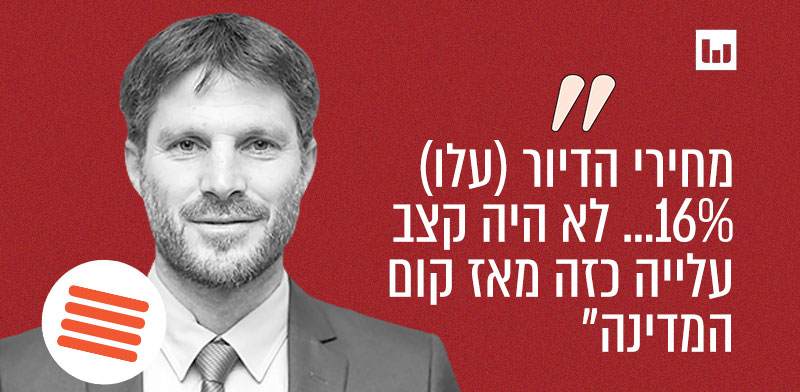
[מחירי הדיור עלו] ב-16%, לא היה [דבר כזה] מאז קום המדינה
Publisher’s rating: לא נכון
The claim concerned remarks by Knesset member Bezalel Smotrich during a no-confidence debate in the Knesset. He said housing prices had risen by 16% and that no such rise had occurred since the state was founded. The review checked both parts of the statement: the current increase and whether it was historically unprecedented. For the current figure, the review examined the Central Bureau of Statistics’ house-price index, which compares prices using transactions from overlapping periods. It reports that the annual increase in the latest available index was 16.3%, so Smotrich’s description of the current rise as about 16% was accurate. The review also notes that the latest three index readings were provisional and could be revised. The historical comparison undermines the claim that the rise was unprecedented. The review examined the available index series, which begins in 1994, and found 20 readings higher than 16.3%. These readings occurred in two periods: 1995–1996 and 2009–2010. The review gives examples including a 19.7% annual rise in early 1995, a peak of 21.4% in May–June 1996, and a 21% rise in the year ending March 2010. Thus, the evidence supports the approximate current figure but contradicts the claim that it had no precedent.


සහන අයවැයෙන් රාජ්ය සේවයේ වැටුප් ඉහළට දමයි ද?
Publisher’s rating: Explainer

Manmohan Singh’s tweet criticising the current state of Indian banks and how they are being emptied
Publisher’s rating: FALSE
The claim concerns a viral screenshot of a Hindi tweet suggesting that people should look at what remains in the Reserve Bank and other banks, rather than focus on what is inside the Taj Mahal, Qutub Minar and Gyanvapi. The post attributed that criticism of Indian banks to former Prime Minister Manmohan Singh. FACTLY’s review concludes that he did not post it. The review identifies the account behind the tweet as “@aryanzalwar” and says its bio described it as a fan page for Manmohan Singh. It therefore attributes the message to a fan account, not to Singh himself. The review also says Singh did not maintain a Twitter account, and notes that the tweet’s apparent attribution arose because the account used his name and display picture. As further context, FACTLY says that although Singh had criticised the government’s economic policies in February of that year, those remarks did not concern the Reserve Bank or other Indian banks. The review reports no recent comments by him in line with the viral tweet. This distinction matters: criticism of economic policy is not evidence that he authored this specific message.

استقرار الاقتصاد العالمي مرهون بالمملكة العربية السعودية
Publisher’s rating: تضليل

विश्वास न्यूज ला एक पोस्ट सोशल मीडिया वर फिरत असल्याचे दिसले, चित्रात एक पाचशे रुपयांची नोट दिसते ज्यात भगवान श्री रामाचे चित्र दिसते. दावा करण्यात येत आहे कि हि भारतातील नवीन नोट आहे.
Publisher’s rating: FALSE
The claim concerned a social-media image said to show a new Indian ₹500 note bearing an image of Lord Rama. The review identifies the Facebook user who shared it as Mamon Neog and describes the post as asking whether the image was genuine. Its investigation concluded that the pictured note was not a newly issued Indian note, but an edited image. To check the picture, Vishvas News says it examined the note and noticed the serial number “9SS 436040.” Searching that number online led the investigators to an image on Shutterstock, which they said established that the viral picture was false. The review also says it found online applications capable of creating fake banknote images with a person’s face. These are the methods and findings reported by the publisher, not independent checks performed here. The review reports that it found no media report announcing such a note. It also says newspaper deputy editor Manish Mishra, senior finance journalist Sopan Pandharipande, and freelance finance journalist Atik Sheikh each characterized the image or claim as false or edited. The review notes that it had contacted the Reserve Bank of India’s Department of Communication and would update the fact-check if a response arrived; the supplied excerpt does not provide any such response. Its conclusion is that the image was edited and that the government had not introduced the purported note.