PeakMetrics / Fact Checks
Culture & entertainment fact checks
Explore claims publishers have checked about culture & entertainment. Read their original ratings and follow the evidence.
Search fact checks
Search by text or image3,169 published reviews in this topic
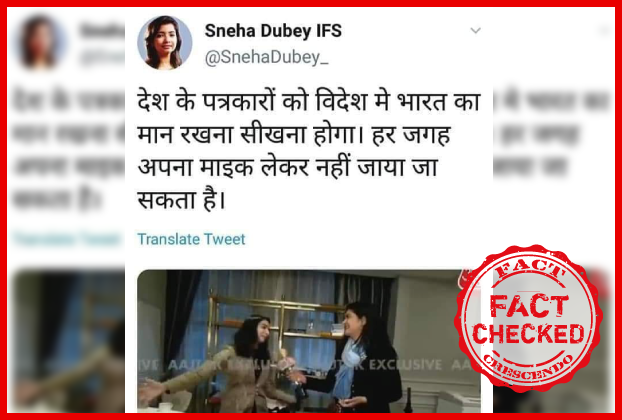
एंकर अंजना ओम कश्यप स्नेहा दुबे से सवाल पुछ रही है और स्नेहा दुबे ने हाथ से इशारा कर उन्हें बाहर जाने को कह रही हैं
Publisher’s rating: False
Foto toont poster voor nieuwe film "Mijn beste vriendin Anne Frank" met sticker "voor ongevaccineerden verboden".
Publisher’s rating: De foto en sticker zijn echt. De sticker is daarentegen niet verbonden aan de film of enig marketingmateriaal daarvoor. Daarnaast is de bewering op de sticker ook fout. Hoewel sinds 25 september een coronapas verplicht is voor een bioscoopbezoek, volstaan een negatieve testuitslag of herstelbewijs daar ook voor.
The investigation examined a social-media image of a poster for the film “Mijn beste vriendin Anne Frank” bearing a sticker that says unvaccinated people are prohibited. It found that the photograph and sticker were genuine, but that the sticker was not part of the film’s poster or its marketing. The film had premiered on 9 September 2021, and the source notes that the same poster without the sticker appeared on the film’s IMDb overview page. [S1: “De film \"Mijn beste vriendin Anne Frank\" ging op 9 september 2021 in première. Dezelfde poster (zonder sticker) is ook te zien op de overzichtspagina van de film op imdb.”] To check where the photographed poster was, the investigators used visual details in the image, including the canal-side setting, distinctive streetlamp and a lime-green van. They identified the electrical cabinet as being on Herengracht, opposite number 466, and compared the van with a Google Maps image of the location from June 2020. The outdoor advertising operator Centercom confirmed that more than 100 posters had been displayed around Amsterdam between 13 and 19 September, and that the sticker was not part of the film’s materials. [S1: “En inderdaad: de elekriciteitskast met poster bevindt zich op de Herengracht, tegenover nummer 466. Een limoengroene bestelwagen, vermoedelijk dezelfde, is ook zichtbaar op dezelfde locatie in een Google Mapsfoto van juni 2020.”] [S1: “Centercom is de buitenreclame-exploitant die verantwoordelijk is voor de reclamelijst waar de poster in hangt. Hun blauwe logo is op Google Maps duidelijk zichtbaar. Zij bevestigen dat er ruim 100 van zulke posters door de Amsterdamse straten hingen tussen 13 en 19 september. De sticker maakte geen deel uit van de poster of ander marketingmateriaal voor de film.”] The source also reports that a Centercom employee confirmed a sticker with that wording had been placed on the pictured poster; similar stickers were found on other film posters and removed. The sticker’s claim also omitted the available alternatives under the rules then in effect: from 25 September, people aged 13 and over needed a coronavirus pass to enter a cinema, but a negative test or proof of recovery could also qualify, and testing was free. [S1: “Een medewerker van Centercom kon aan dpa bevestigen dat er een sticker met de zin \"voor ongevaccineerden verboden\" op die poster zat. Op verschillende andere posters van de film werden dezelfde stickers aangetroffen en weer weggehaald door Centercom.”] [S1: “Sinds zaterdag 25 september moet iedereen van 13 jaar en ouder een coronapas voorleggen om naar de bioscoop te kunnen. Maar dat wil niet zeggen dat ongevaccineerden niet naar de film kunnen: ook een negatieve testuitslag of herstelbewijs zijn geldig. Testen is tevens gratis.”]

Yohani de Silve, SriLankan singer has been appointed as the cultural ambassador between Sri Lanka and India
Publisher’s rating: FALSE
The claim concerned whether Sri Lankan singer Yohani de Silva had been officially appointed cultural ambassador between Sri Lanka and India. The review says the claim arose from an Indian High Commission in Colombo Facebook post, published on 18 September 2021, that praised her as a “newest cultural Ambassador” while celebrating her popularity on Indian television. The review’s explanation is that the congratulatory wording was misread as an announcement of an official appointment. (S1: “Indian High Commission in Colombo’s official Facebook page posted a congratulatory message on 18 September 2021 praising Yohani de Silva, Sri Lankan singer who rose to fame in India with the song ‘Manike Mage Hithe’ as she is celebrated by the Indian TV networks.”; “However, the phrase ‘newest cultural Ambassador’ is misconstrued by netizens as she is officially appointed as the cultural ambassador, which is not the case.”) The review reports checking for confirmation on the High Commission of India website and the Indian Council for Cultural Relations website, where it found no information about an appointment. It also notes that Yohani’s own post described a visit hosted by the Indian Cultural Centre’s director, but did not say she had been appointed. As further support, the review says AFP was told by the Indian High Commission that she had not been appointed. Together, these points distinguish praise for her cultural influence from an official appointment. (S1: “As of today, there is no information regarding her appointment on the High Commission of India website or on the website of the Indian Council for Cultural Relations.”; “But nowhere she mentioned that she was appointed as a cultural ambassador.”; “AFP, a fact-checking agency was told by the Indian High Commission in their correspondence that Yohani was not appointed as a cultural ambassador.”)


Globo ladeira abaixo Renata Ferraz de Vasconcelos vai pra Record
Publisher’s rating: Falso

FACT CHECK: ජනප්රිය යොවුන් ගායන ශිල්පී යොහානි ද සිල්වාට සංස්කෘතික තානාපති ධුරයක්?
Publisher’s rating: Missing Context
The review investigates social-media posts claiming that singer Yohani de Silva had been appointed a new cultural ambassador by the Indian High Commission in Sri Lanka. The posts followed an embassy message praising her appearance on Indian television and the popularity of “Manike Mage Hithe.” The review distinguishes the embassy’s celebratory language from a formal appointment: it says the message did not state that Yohani had been given a new ambassadorial position. (S1: “සිංහල, ඉංග්රීසි සහ දමිළ භාෂා ත්රිත්වයෙන්ම පළවී තිබූ මෙම සටහනේ කිසිඳු ලෙසකින් යොවුන් ගායන ශිල්පීනී යොහානි ද සිල්වාහට නව තානාපති ධුරයක්, ඉන්දීය මහ කොමසාරිස් කාර්යාල විසින් පිරිනමා තිබූ බවක් සඳහන් කර නොතිබුණි.”) To check whether there was an official appointment, the review reports that it contacted the head of the High Commission’s media division. The official told the publication that no such appointment had been made. The review also reports that Chamath Sangeeth, who composed the music for the song, confirmed that Yohani had not received an official ambassadorial position. (S1: “එහිදී අපට තහවුරු කර සිටියේ එවැනි නිල පත්වීමක් සිදු කර නොමැති බවයි.”; “චමත් සංගීත් විසින් තහවුරු කළේද එලෙස නිල තානාපති ධුරයක් යොහානිට නොලැබුණු බවයි.”) The review notes that Yohani’s official social-media accounts did not say she had received the position either. It describes a separate event that could contribute to confusion: on the 21st, the director of the Indian Cultural Centre in Colombo hosted Yohani and her team. The article presents that hospitality, and the embassy’s description of Yohani as a cultural ambassador in a celebratory sense, as distinct from a formal appointment. Its conclusion is that the High Commission confirmed no official appointment had taken place. (S1: “තව ද සංස්කෘතික තානාපති ධුරයක් තමාට හිමි වූ බවට යොහානි ද සිල්වාගේ සමාජ මාධ්ය ජාලා ගිණුම් වල හෝ දක්වා නොතිබුණි.”; “ඉන්දීය මහකොමසාරිස් කාර්යාලය තහවුරු කළේ, එවැනි නිල පත්වීමක් සිදු කර නොමැති බවයි.”)

Turma da Mônica colocou um “peru” na Mônica para divulgar ideologia de gênero
Publisher’s rating: Falso


Toni Gonzaga signed a contract with PTV-4 to be part of its artist agency
Publisher’s rating: Satire

Photo of an artwork created by the Afghanistan graffiti artist Shamsia Hassani
Publisher’s rating: FALSE
The claim concerns a social-media photo presented as artwork by Afghanistan graffiti artist Shamsia Hassani. FACTLY reports that Hassani herself publicly denied creating the image, writing that it “is not my artwork” and asking users to credit the real artist. That direct denial addresses the attribution at the center of the claim. FACTLY also describes a reverse-image search that found the artwork on the Clio website. According to the review, Clio identified it as work by the Young & Rubicam advertising agency network, created in 2018 for Reporter magazine’s “Changing Your Perspective: Questioning Radicalism” campaign. The review says the same work appeared on other websites with that agency attribution. The image shared in the post was not identical to the original campaign artwork: FACTLY’s comparison found that it had been edited with an unknown red book. The review therefore identifies both a false artist attribution and an alteration to the image. Its conclusion is that the photo does not show artwork by Hassani; it shows an edited version of an older advertising-agency artwork.

বই হাতে হিজাব পরিহিত মহিলাদের ছবিটি কাবুল বিশ্ববিদ্যালয়ের অধ্যাপিকা এবং শিল্পী শামসিয়া হাসানির আঁকা
Publisher’s rating: FALSE
The claim concerns a specific image: a young woman in a hijab holding a red book, described in social-media posts as the work of Kabul University professor and Afghan graffiti artist Shamsia Hassani. Factcrescendo’s review says it investigated that image and concluded the attribution was false. The review describes the woman, the book, and the accompanying claim, rather than addressing a different image or a general question about Hassani’s art. To trace the image, the review reports using Google reverse-image search. It says the search led to the official Clio Awards website, where the image was identified as a 2018 image for Reporter magazine, based in Prague, Czech Republic. The review also says the image was nominated for a Clio award in 2018 and had the title “Questioning fundamentalism.” This provenance places the image in a Czech magazine context, not as a work by Hassani. The review further reports that Hassani herself shared the image on Twitter and explicitly denied making it. Her quoted post says that the image was being shared as her artwork, but “this is not my artwork,” and asks that credit be given to the real artist. The review notes that the original image showed the young woman holding Reporter magazine, whereas the viral version was presented with a red book. Together, the reported image-search result, the magazine identification, and Hassani’s direct denial support the conclusion that the attribution to her is incorrect.

এইগৰাকী #উৰ্ফীজাভেদ, #জাভেদআখতাৰৰ নাতিনী। #মুম্বাই বিমানবন্দৰত তেওঁক কি সাজ পৰিধান কৰি থকা দেখা গৈছে চাওক। জাভেদ আখতাৰে #শ্বৰিয়ত আৰু ভয়ৰ কথা কয় আৰু সকলোকে জ্ঞান বিলাই ফুৰে। বাকী উৰ্ফীয়ে সম্পূৰ্ণ #পাকিস্তান দেখুৱাই ফুৰিছে, #শ্বৰিয়তক প্ৰত্যাহ্বান দি আহিছে 🤭🙄🙄 #তালিবানপ্ৰেমী, #এইগৰাকীয়ে শ্বৰিয়ত আইন অনুসৰি শাস্তি পাব লাগে #পোষ্টটোৰ বাবে ক্ষমা বিচাৰিছোঁ
Publisher’s rating: FALSE

Paolla Oliveira diz que a prostituição será a única forma de sobrevivência das atrizes da Globo caso Bolsonaro seja reeleito
Publisher’s rating: Falso
The claim circulating online was that Paolla Oliveira told Caras that prostitution would be the only way for Globo actresses to survive if Jair Bolsonaro were re-elected. The review says the posts attributed to her also described tension behind the scenes at Globo and the broadcaster’s concession ending in 2022. It reports that the supposed remarks were shared in social-media posts and blogs, rather than accompanied by a traceable interview. The investigation describes two checks: searching Caras’s website for the alleged statement, and reviewing Oliveira’s own social-media response. It says the search found no such declaration and that the social posts and blogs were the only sources it found for the attribution. Oliveira’s response said she had never given the quoted statement to Caras and that it had never existed. The review also notes her objection to using prostitution to attack someone, while saying she respects women regardless of their work or circumstances. Together, the reported search and her direct denial address the specific attribution, rather than merely the broader political context.

আল্লাহর ৯৯ টি নাম নিয়ে গাওয়া মাইকেল জ্যাকসনের শেষ গান
Publisher’s rating: False

পারলে-জি বিস্কুটের প্যাকেটে ব্যাবহৃত ছোট মেয়ের ছবিটি আসলে লেখিকা সুধা মুর্তির
Publisher’s rating: FALSE