PeakMetrics / Fact Checks
Culture & entertainment fact checks
Explore claims publishers have checked about culture & entertainment. Read their original ratings and follow the evidence.
Search fact checks
Search by text or image3,169 published reviews in this topic
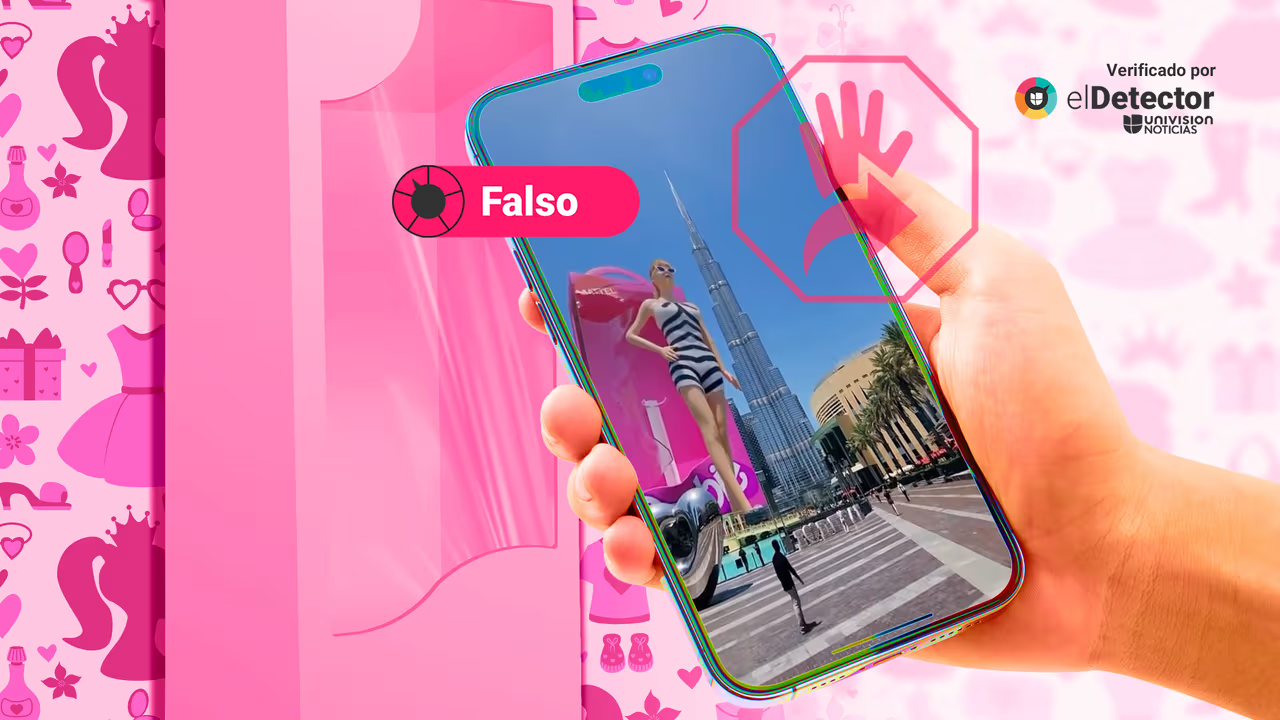
Imagen en 3D de una Barbie fue proyectada al lado del rascacielos Burj Khalifa, en Dubai.
Publisher’s rating: Falso
The claim concerned a viral video appearing to show a giant Barbie stepping out of her box beside Dubai’s Burj Khalifa. Posts described the scene as a 3D hologram. The review examined the video and traced it to Eye Studio, the agency that created the content. It reports that the video was digitally made, rather than a recording of a real projection or hologram. The review says it searched Google using relevant keywords and found posts identifying Eye Studio as the creator and linking to the agency’s original Instagram video. Although that original post did not directly state that the footage was computer-generated, another post from the same account included a CNN interview with creative director Juhi Rupani. In the interview, Rupani explained that the video was a digital creation and that the Burj Khalifa footage was recorded with an iPhone before the Barbie imagery was added digitally. The review also quotes Rupani saying that the agency told people the scene was not real, and reports that production took 10 days. This evidence addresses the central distinction in the claim: the video depicts a digitally created scene, not a Barbie physically projected beside the tower. The review notes that the agency later made a sequel adding Oppenheimer, but does not provide further production details about that sequel.

A hotel that enacted a bronze statue of Arnold Schwarzenegger in his honour refused to provide him with a room for free despite an earlier promise of a lifetime membership for him; in response, the actor slept under the sculpture and warned people of the fickle nature of one’s position, money, intelligence, and youth.
Publisher’s rating: False

SORRY नाम की यह फिल्म – सिर्फ 4 मिनट 17 सेकंड की फिल्म है और इसे 30 मिनट में बनाया गया था। लेकिन इसे ऑस्कर अवार्ड मिला।
Publisher’s rating: False
انتشار فیلم کالبدشکافی یک فرازمینی در ایالات متحده
Publisher’s rating: شاخدار


Daniel Virgil Maisonneuve, professionally known as Sub Urban, is an American singer, songwriter and producer.
Publisher’s rating: Daniel Virgil Maisonneuve, professionally known as Sub Urban, is an American singer, songwriter and producer.

A short film titled ‘Sorry’ won an Oscar award
Publisher’s rating: FALSE

Das Foto zeigt Kinder auf einer Pride-/LGBTQ-Veranstaltung.
Publisher’s rating: Das Foto hat mit einer Pride-Parade nichts zu tun. Es zeigt Teilnehmer einer jährlichen Fahrrad-Demonstration, die nackt radeln, um mehr Aufmerksamkeit für ihre Anliegen zu bekommen.
The image shows children among passers-by alongside several naked men with bicycles. The claim at issue is that this scene is a Pride or LGBTQ event. The dpa review rejects that identification: it says the photo was taken during the World Naked Bike Ride in London, a cycling demonstration, rather than at a Pride parade. The review identifies the event and location as 11 June 2016 at Lincoln’s Inn Fields in London. It says the wall visible on the right of the image matches that location. It also describes comparing the foreground man, identifiable by a Hawaiian necklace, with a photographer’s image of the same man riding at the demonstration on Westminster Bridge. The review further says that an Independent article confirmed the protest had been announced in London for that day. The dpa account characterizes the ride as a demonstration whose participants cycle naked to draw attention to their concerns, including climate change. It notes that later posts linked the image to Pride Month, but says the image itself was taken at the cycling event and that gender and sexual orientation were not the subject of the demonstration. The presence of children in the scene does not establish that the event was a Pride gathering.

Footage shows that Team Barbie knows the most amazing marketing stunts. 3D ad placed in front of Burj Khalifa to grab the audience’s attentionBeing a female director, Greta Gerwig broke the domestic box office record with $337 M globally. #Barbie #BurjKhalifa #3d #ad #Dubai
Publisher’s rating: Misleading

Dubai’de Barbie filminin 3 boyutlu reklam gösteriminin yapıldığı iddiası
Publisher’s rating: Yanlış

नाना पाटेकर हाल में बागेश्वर धाम गए थें
Publisher’s rating: False

Social media posts claimed that LeBron James, Barack Obama, and Joe Biden were photographed wearing pink outfits to the premiere of "Barbie."
Publisher’s rating: False: These are not genuine photographs. They are AI-generated images.

“The Simpsons” Show Did Predict The New Twitter ‘X’ Logo !
Publisher’s rating: False
The claim is that The Simpsons showed or predicted the X logo later adopted by Twitter. Factcrescendo Sri Lanka examined a viral image purporting to show one of the show’s characters holding a phone with an X app icon. Its review says its reverse-image search led to an earlier version of the picture, posted on Simpsons Wiki in 2018, and identifies the depicted scene as coming from “Ned’ n Edna’s Blend Agenda,” which aired on May 13, 2012. Those details connect the image to a specific episode and provide a way to compare the viral version with its earlier source. The review reports that the original frame showed an app icon resembling an older Safari icon, not Twitter’s later X logo. It therefore concludes that the viral image had been altered and that the X mark did not appear in the episode. This distinction is decisive: the circulating image was not evidence that the show had depicted the new logo if the relevant icon was changed from what appeared in the original frame. The review places the claim alongside Twitter’s rebranding in July 2023. It says Elon Musk announced a move away from the bird logo on July 23 and unveiled the new X logo shortly afterward; it also reports that CEO Linda Yaccarino confirmed the choice in a July 24 tweet. The review’s conclusion is that, despite other alleged Simpsons predictions, this image does not show a prediction of Twitter’s new logo.

Serginho Groisman morreu aos 73 anos em julho de 2023
Publisher’s rating: Falso

“රඟහල” ප්රසංගයෙන් කසුන් සහ උමාරා ඉවත්වීම හේතුකොටගෙන නිර්මාණය වූ සටහන් පිළිබඳ කරුණු දැක්වීමක්!
Publisher’s rating: Explainer
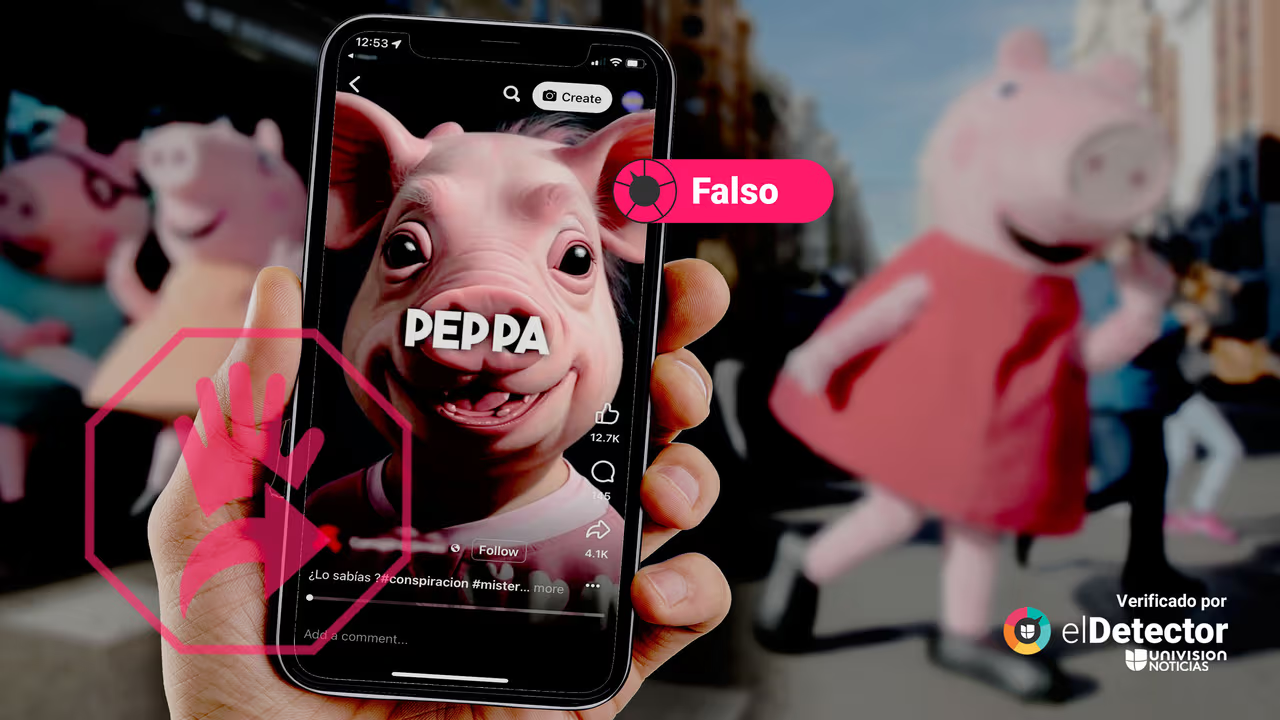
Peppa Pig está basada en unos granjeros que experimentaban con ADN de cerdos.
Publisher’s rating: Falso
The claim is that Peppa Pig was inspired by a real 1952 incident in which a poor farming family experimented with pig DNA, particularly on its youngest daughter. The review describes the story as circulating in a Facebook reel and a TikTok post, and quotes the video’s account of the family and its alleged arrest. The investigation says it checked whether that purported event had a factual basis and whether the program’s creators described it as their inspiration. The review reports that searches in Spanish and English, including searches focused on the United Kingdom where the cartoon was created, found no information about the alleged family or DNA experiments. It also consulted accounts from producer Phil Davies and co-creators Neville Astley and Mark Baker about how they developed the show. Those accounts instead describe wanting a character unlike familiar princesses and ballerinas, choosing a pig that snorted and liked mud, and drawing stories from everyday experiences. Davies said episodes came from simple situations, such as jumping in a muddy puddle. Taken together, the review’s reported searches did not substantiate the alleged 1952 event, while the creators’ and producer’s explanations describe a different, everyday creative process. The review also notes a limit to its documentary check: it had asked the UK Institute of Historical Research whether its archives contained the story, but had not received a response by the time the article closed.
Social media users claimed that AMC was intentionally sabotaging screenings of "Sound of Freedom."
Publisher’s rating: FALSE. There's no evidence that AMC intentional sabotaged screenings of "Sound of Freedom." The theater company, as well as the movie's distributor, have both dismissed this conspiratorial claims.