PeakMetrics / Fact Checks
Culture & entertainment fact checks
Explore claims publishers have checked about culture & entertainment. Read their original ratings and follow the evidence.
Search fact checks
Search by text or image3,169 published reviews in this topic

Award-winning broadcast journalist Jessica Soho was "abruptly dismissed" by GMA network.
Publisher’s rating: GMA Network has disputed the claim and said that Soho remains with them. She hosts GMA-7 news magazine show, Kapuso Mo Jessica Soho, and two programs on GMA News TV: State of the Nation with Jessica Soho and Brigada.

Claim: Mahatma Gandhi danced with a white lady
Publisher’s rating: FALSE

Claim: Chinmayi teases Nakkeeran Gopal for his affair with Vairamuthu
Publisher’s rating: Fact Crescendo Rating: False Headline
Ghanaian couples have to wear wedding outfit for divorce
Publisher’s rating: False

Viral images of bizarre houses have been designed by Michael Janzten
Publisher’s rating: FALSE

Grumpy Cat's net worth is 100 million dollars
Publisher’s rating: MIXTURE
The review investigates the claim that Grumpy Cat was worth $100 million, a figure it says circulated after the cat’s death and was repeated in a TV-9 report. It notes that the report gave no source for the figure. The review traces the $100 million estimate to a Daily Express story published on December 7, 2014, which mentioned £64 million in its headline and subheadline, but not in the body of the article. The review says that figure was subsequently repeated as a dollar estimate. The investigation then reports that Grumpy Cat’s owner, Tabatha Bundesen, rejected the $100 million figure in an interview with HuffPost on December 8, 2014. According to the review, Bundesen acknowledged that the cat earned money through deals but said the amount was not that high; she did not disclose the actual amount. The review also says Time reported that the cat’s wealth could not be established and noted Bundesen’s denial. The review describes evidence that Grumpy Cat had commercial success, including merchandise, a book, a film, and a copyright-infringement award of $700,000. It also mentions a 2013 New York Magazine estimate of $1 million. Those details support that the cat generated income, but the review does not present them as a verified accounting of her net worth. Its conclusion is that no official figure was available and that the $100 million claim was contradicted by the owner; the actual amount remained undisclosed.

Claim: Gowthami planning to reveal secrets of Kamal haasan
Publisher’s rating: FALSE
Fact Crescendo examined a social-media news card attributed to “News 9 Tamil,” which claimed that Gowthami had said it was time to reveal historical truths about Kamal Haasan. The review reports that the card was posted by the Facebook page BN Seithigal on May 17, 2019, without a link to an underlying news report. It also says the review found no website called “News 9 Tamil.” To check whether Gowthami had actually given the reported interview, the publisher searched for recent interviews and checked her official blog, Twitter and Facebook pages. It reports finding no such interview or matching statement on those accounts; the blog’s latest post was dated February 17, 2018. The review further describes the Facebook page as sharing news cards without links and says it found the card’s claim unsupported by a corresponding report. The publisher concluded that Gowthami had not given the claimed interview and that the Facebook post was misleading. Its account presents the card as a false attribution, not as evidence that Gowthami disclosed secrets about Kamal Haasan.

Claim: Vijay Sethupathi accused Central Government and rejected National award
Publisher’s rating: MIXTURE

Claim: Tamil Name board found in Japan Railway station
Publisher’s rating: TRUE
The claim concerned a social-media image said to show a Tamil-language directional sign at Shin-Okubo station in Japan. The sign’s Tamil text was described as directing people to keep to the right on the stairs, alongside Japanese text and the English station name. The review also notes that the image was shared with a message presenting it as evidence that Japan recognized India’s language, and that it circulated widely. To investigate the image’s origins, the review describes reverse-image searches using Google and Yandex. These led to posts and reporting about the image, including a 2018 tweet suggesting the Tamil sign was intended to encourage Tamil visitors expected for the 2020 Olympics. The review then examined reporting about the station’s multilingual signs: it said that one Tokyo station used more than 20 foreign languages, following a proposal by a retired station manager to assist foreign visitors and students. That report did not mention Tamil, so it did not independently establish the specific language on the disputed sign. The review also examined whether the image had been altered. Its reported image analysis found no signs of editing: the color patterns appeared consistent, including in the Tamil and Japanese portions. On that basis, the review concluded that the image was not edited and that a railway station in Tokyo had issued an announcement in Tamil. The account supports that conclusion through its reported image examination, while the separate multilingual-station reporting supplies context rather than direct confirmation of Tamil.
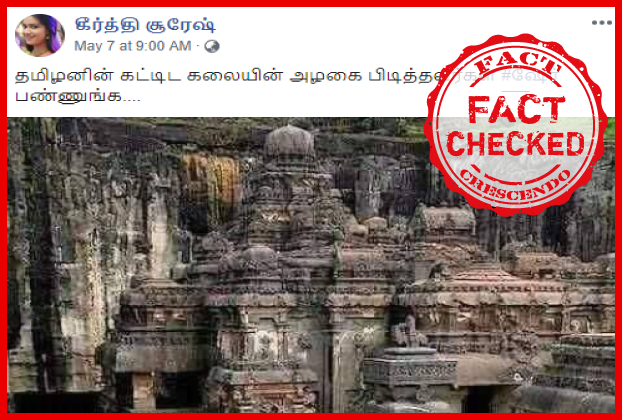
Claim: Kailasanatha temple in Ellora built by Tamilians
Publisher’s rating: FALSE

Arnold Schwarzenegger sleeping under his statue after being turned away from hotel
Publisher’s rating: Incorrect

Taimur Ali Khan sporting a 'NaMo Again' T-shirt
Publisher’s rating: FALSE

Kangana Ranaut slammed Shabana Azmi's Navratri tweet with anti-Islam rant
Publisher’s rating: FALSE
William Shakespeare said “I always feel happy, you know why? Because I don’t expect anything from anyone. Expectations always hurt. Life is short, so love your life, be happy. And keep smiling. Just live for yourself and before you speak, listen. Before you write, think. Before you spend, earn. Before you pray, forgive. Before you hurt, feel. Before you quit, try. Before you die, live.”
Publisher’s rating: Incorrect

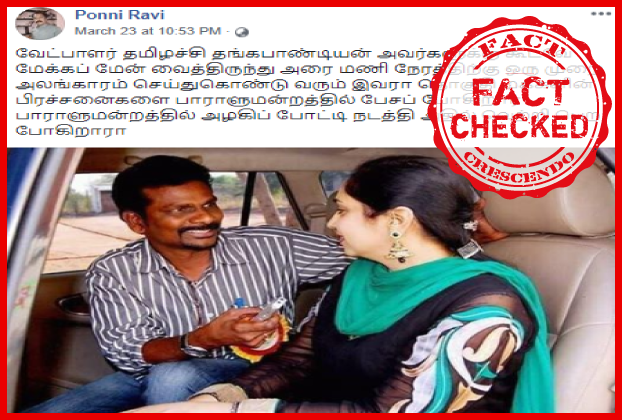
Claim: Tamizhachi has own make up man
Publisher’s rating: Fact Crescendo Rating: False
Claim is Kareena Kapoor Khan and Taimur promoting bjp
Publisher’s rating: Fact Crescendo Rating FALSE