PeakMetrics / Fact Checks
Culture & entertainment fact checks
Explore claims publishers have checked about culture & entertainment. Read their original ratings and follow the evidence.
Search fact checks
Search by text or image3,169 published reviews in this topic

Akshay Kumar supporting ABVP by holding the ABVP flag at JNU.
Publisher’s rating: FALSE
The claim concerns a photo of Akshay Kumar holding an ABVP flag, presented as evidence that he was supporting ABVP at JNU. FACTLY says its reverse-image search found other results showing the same photo. It reports that a Prokerala article from January 2018 linked the image to Akshay Kumar’s appearance at the flagging-off ceremony for Delhi University’s Women Marathon, rather than an event at JNU. FACTLY also points to a 2018 tweet by Kumar identifying the photo as related to the Delhi University marathon. The review’s account therefore identifies a different event and location for the image than the post’s claim. Its conclusion addresses the photo’s context; the excerpt does not provide further details about when or where the photo itself was taken.

చపాక్ సినిమాలో ఆసిడ్ దాడి చేసిన వ్యక్తి పేరుని రాజేష్ శర్మ గా మార్చారు.
Publisher’s rating: FALSE

The culprit’s name has been changed into a Hindu name (Rajesh/Rakesh) in Chhapaak movie.
Publisher’s rating: FALSE
The claim concerned the name of the acid attacker in Chhapaak: social media posts said the real-life culprit, identified in those posts as Nadeem Khan, had been renamed Rajesh or Rakesh in the film. FACTLY’s review says the film’s culprit is named Basheer, not Rajesh or Rakesh. It also explains a possible source of confusion: Rajesh is the name of Malti’s boyfriend, while Malti is the film character based on Lakshmi Agarwal. To check the claim, the review says it considered the Delhi High Court judgment and reports from people who watched a screening, as well as news articles and film reviews identifying the culprit’s name. It describes the judgment as showing that two people were convicted in the attack: Naeem Khan, also known as Guddu, and a woman named Rakhi. The review therefore distinguishes the real-life names it reports from the names of the film’s characters, rather than treating Rajesh as the attacker’s name.

Claim acid attacker name in the movie Chhapaak changed to a hindu name
Publisher’s rating: FALSE

na Paula Valadão chora e revela que perdeu o sucesso após apoiar Bolsonaro
Publisher’s rating: Falso

All three are blind. Enjoy their sweet voice. They sing like Asha & Rafi without any powerful music!! Pass on this video to all music loving persons.
Publisher’s rating: FALSE
The post claims that all three people shown singing are blind. The Quint investigated that specific video and concluded that the claim was false. It contacted Aabhas Joshi, who appears in the video; he said it was filmed in their Mumbai studio and that none of the three singers are blind. The review describes how it identified the people in the footage. It says a reverse image search of a key frame led to a video naming the singers as Aabhas Joshi, Priyani Vani and Shreyas Joshi. Joshi confirmed that the other two were his brother Shreyas and his friend Priyani. He also said the rumour’s original source was never found, adding that all three could see clearly. The evidence presented therefore addresses the people in the video, rather than relying on the post’s description of them. The article attributes the decisive information about their eyesight to Joshi, who was one of the people shown; it does not describe an independent examination of the singers’ vision.
"Jingle Bells" is a Christmas song.
Publisher’s rating: Mixed
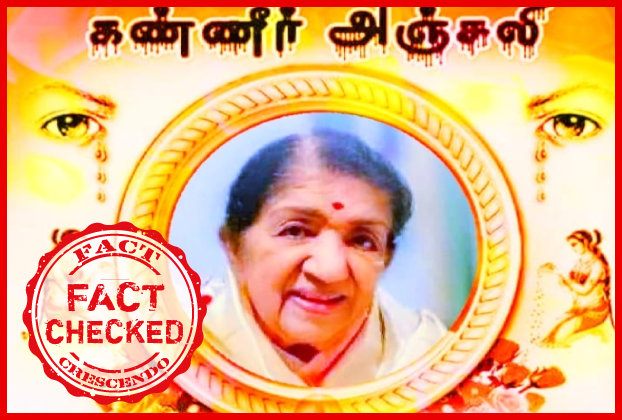
Claim: Social Media users paid tribute to Lata Mangeshkar
Publisher’s rating: FALSE
“Is lotus the national flower of India?”
Publisher’s rating: Misleading
Research from related reporting directly identifies the lotus as India’s national flower. In coverage of a New Zealand cricket jersey, News18 lists the lotus among the Indian motifs incorporated into its design and calls it “India’s national flower.” MyKhel’s account of the same jersey design also describes the lotus as “India’s national flower.” These excerpts support the answer that the lotus is regarded as India’s national flower. However, they make that statement while describing the jersey’s motifs; neither excerpt explains how the national-flower designation was established or cites an official source. This evidence therefore provides direct corroboration in related reporting, but not a documented investigation of the designation.

Claim: Actress Aishwarya Rajesh got married
Publisher’s rating: FALSE HEADLINE

Claim: ABVP functionary Bharat Sharma met Rajinikanth
Publisher’s rating: FALSE

Claim Bengali is declared as the second most spoken language in London
Publisher’s rating: FALSE
Claim Obama unveil Birsa Munda image on Birsa Munda Jayanti
Publisher’s rating: FALSE

Ratinho vê 'Xuxa' na plateia do seu programa e a expulsa: 'Não queremos você aqui'
Publisher’s rating: Falso
10 Most Commonly Searched Celebrities on Google in 2019
Publisher’s rating: Excellent

網傳「12月7日中共政協委員陳小春,在台灣桃園林口體育館,举办了募集東風-47導彈資金大會。...此次在台灣舉辦宣講會,所有門票收入都將用於製造東風導彈以及登陸艦」,經查:陳小春12月7日來台舉辦演唱會,而非宣講會,演唱會中也未提及政治相關議題。無實際資料能證實陳小春曾說過「台灣自古是中國的領土之一,必須要回歸,由於台灣政府不肯接受『一國兩制』,故此次在台灣舉辦宣講會,所有門票收入都將用於製造東風導彈以及登陸艦。」等言論。原始發布訊息者並無提出具體證據及說明。因此,此傳言為「錯誤」訊息。
Publisher’s rating: 錯誤
The claim said that Jordan Chan held a political presentation at Linkou Gymnasium in Taiwan on December 7, and that ticket proceeds would fund missiles and landing ships. The review examined that specific event and the alleged remarks. It reports that Chan did perform in Taiwan on that date, but that the event was a concert, not a presentation: “他們的確於2019年12月7日在台灣桃園國立體育大學林口體育館舉辦《2019 陳小春 STOP ANGRY 巡迴演唱會台北站》。” To check what happened at the concert, the review says it interviewed the concert’s joint organizer’s public-relations representative, who attended throughout. He said it was a concert, and that Chan did not mention the alleged content or political issues. A reporter who covered the event also said they did not hear the alleged remarks. These accounts directly address the event and the claim that it was a political fundraising presentation: “當天舉辦的是演唱會,並非傳言所提及的宣講會,且陳小春於演唱會中,也從未提及傳言所述之內容以及政治相關議題。” The review separately searched Chinese search engines, Chan’s Weibo account, and the Chan Ying Choi Facebook page for the claimed statements, but found no such material. It also contacted the Twitter account identified as the original poster to request evidence; the review says no response had arrived by the report’s stated cutoff. It therefore found no substantiation for the alleged remarks or use of ticket proceeds, and notes that the original post supplied no specific evidence: “原始發布訊息者並無提出具體證據及說明。”

Ein vermeintliches Gedicht von Heinrich Heine (1797-1856) kursiert seit Jahren in sozialen Medien und auf mehreren Blogs. Die ersten, mitunter leicht variierten Zeilen lauten: «Türken, Inder, Hottentotten sind sympathisch alle drei, wenn sie leben, lieben, lachen, fern von hier in der Türkei.»
Publisher’s rating: Heine hat diese Zeilen nicht geschrieben. Die Herkunft des Gedichtes ist unklar.
The claim concerns verses circulating online that attribute lines beginning “Türken, Inder, Hottentotten” to Heinrich Heine. The Deutsche Presse-Agentur checked the attribution by searching Heine’s complete works, which it said were searchable online. Its searches for “Türken” and “Türkei” returned no matches; searches for “Inder” and “Hottentotten” found other passages, but not the alleged poem. The review also reports that Karin Füllner, managing director of the Heinrich-Heine-Gesellschaft, confirmed to dpa that Heine never wrote these lines. The evidence described therefore weighs against Heine’s authorship: the alleged poem was not found in the searchable works, and the society’s director rejected the attribution. The review does not identify who created the misattribution, so its account does not establish the poem’s origin. It reports that the verses were already circulating by the early 1990s, but does not provide a definitive account of how they began.
The Declaration of Independence was signed July 4th, 1776.
Publisher’s rating: False
