PeakMetrics / Fact Checks
Culture & entertainment fact checks
Explore claims publishers have checked about culture & entertainment. Read their original ratings and follow the evidence.
Search fact checks
Search by text or image3,169 published reviews in this topic
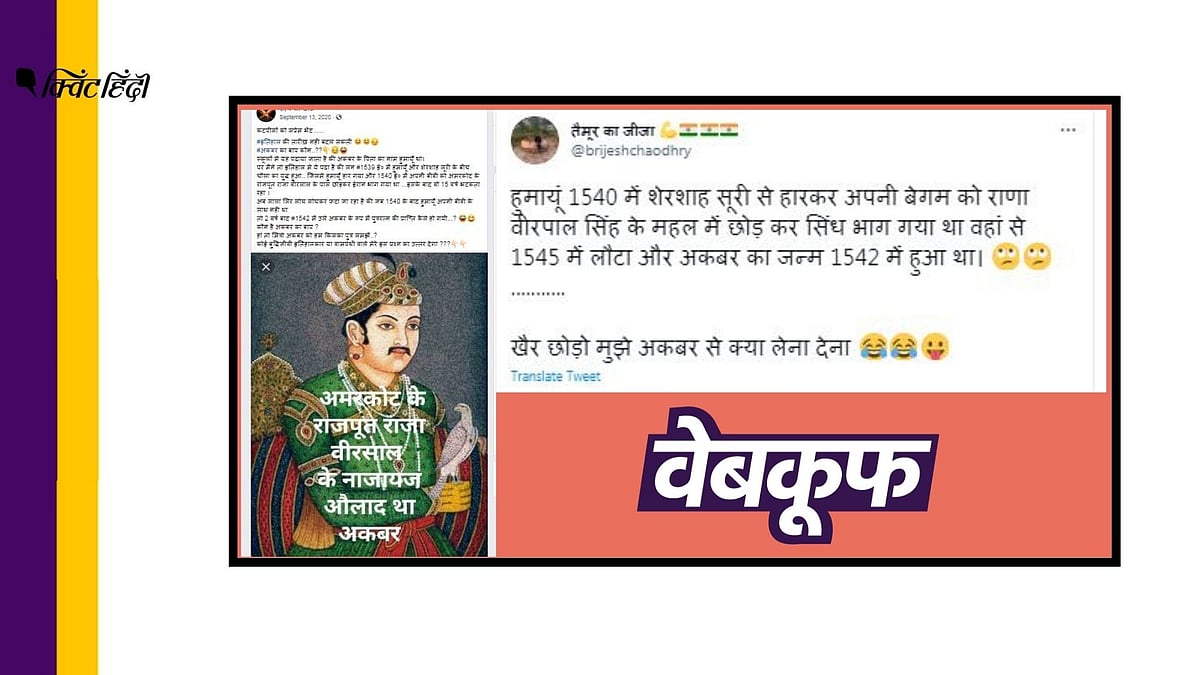
अकबर अमरकोट के राणा वीरसाल का बेटा था
Publisher’s rating: FALSE

Kangana Ranaut shared a recipe photo available on Google as her self-made food
Publisher’s rating: FALSE

రామాయణం సీరియల్ పాటని UK టాలెంట్ షో లో ఇద్దరు బ్రిటన్ యువ గాయకులు పాడుతున్న వీడియో
Publisher’s rating: FALSE

గూగుల్ లో ఉన్న రెసిపీ ఫోటోని షేర్ చేసి తను తయారు చేసిన వంటగా కంగనా రనౌత్ ట్వీట్ చేసింది.
Publisher’s rating: FALSE
"Lumad" refers to just one tribe around Cebu and "not all tribes in Mindanao."
Publisher’s rating: False

दावा किया जा रहा है कि कंगना ने गूगल से फोटो लेकर उसे खुद की डिश बताकर शेयर किया
Publisher’s rating: FALSE
Ang "Lumad" ay tumutukoy sa isang tribo lamang sa paligid ng Cebu at "hindi lahat ng mga tribo sa Mindanao."
Publisher’s rating: Hindi totoo

Video of two British boys singing the Ramayana serial title song at a UK talent show
Publisher’s rating: FALSE


Meooo a Anitta escreveu “SPIT FIRST” no que significa “cospe primeiro”, po**a muiito doida
Publisher’s rating: Falso
Eine vermeintliche Textpassage aus einem Werk des irischen Schriftstellers Clive Staples Lewis («Die Chroniken von Narnia») wird derzeit auf Facebook geteilt. Laut diversen Postings (hier archiviert) schrieb Lewis einen Dialog zwischen einem jungen und einem älteren Teufel über die Angst.
Publisher’s rating: Es gibt keine Hinweise darauf, dass Lewis den vorliegenden Text geschrieben hat. Lewis' Schreibstil wird allerdings oft imitiert, was den Ursprung dieses Textes erklären könnte.
The claim concerns a passage shared on Facebook as a dialogue between a young and an older devil, allegedly written by C.S. Lewis and drawn from a work identified in some posts as “Balamut Letters.” The investigation says that this title refers to a Russian translation of Lewis’s *The Screwtape Letters*, in which the demon Screwtape is rendered as Balamut. However, the title association does not establish that the circulating passage appears in Lewis’s book. The review reports that the C.S. Lewis Foundation had already addressed the passage in June 2020, saying it was not by Lewis. It also describes a direct text check: searching the English online text of *The Screwtape Letters* for keywords from the circulating English-language quotation produced no matches. The Foundation likewise ruled out the quotation as an excerpt from that book. The review cites two Lewis specialists as further evidence. Brenton Dickieson wrote that Lewis’s *Screwtape Letters* are often copied and that the “Screwtape genre” is used as a creative-writing technique. William O’Flaherty discussed the specific English-language quotation in a June 2020 blog post and concluded it was neither in *The Screwtape Letters* nor by Lewis. The review also notes that English-language posts sometimes attribute it to *The Devil’s Letters to His Nephew*, a title it says does not exist; it may have arisen by translating back the Spanish title for *The Screwtape Letters*.


শ্বেয়াৰ কৰি দাবী কৰিছে যে এই কণমানি কেঁচুৱাটি বিগত ২১ ফেব্ৰুৱাৰীত জন্মলাভ কৰা টাইমুৰ আলী খানৰ কনিষ্ঠ ভাতৃ।
Publisher’s rating: FALSE

A rap song in support of the farmers’ protest was played recently on MTV channel.
Publisher’s rating: FALSE
The claim concerns a rap video presented online as a recent MTV broadcast in support of the ongoing farmers’ protests. The review identifies the footage as a performance by Kolkata-based rapper Santhanam Srinivasan Iyer, known as EPR, on the reality show MTV Hustle. It says the performance took place in October 2019 and was about the plight of Indian farmers—not a recent broadcast connected to the protests then underway. The review therefore finds that the video was misleadingly linked to those protests. [S1: “This video shows Kolkata-based rap singer Santhanam Srinivasan Iyer, singing a rap song about the plight of Indian farmers, during the MTV Hustle reality show in October 2019. The video is an old one and has nothing to do with the ongoing farmers’ protests.”] To check the footage, the review reports using reverse image search, which led to a video on YouTube titled “EPR Tobe Ekla Cholo Re Rap.” That upload was dated 8 November 2019, and its description identified the performance as being from MTV Hustle. The review also says it found the same video on the MTV Hustle Facebook page, dated 15 October 2019. These earlier records support the conclusion that the circulating footage was not a recent airing. [S1: “On reverse image search, a video with similar visuals is found on a YouTube channel. This video was uploaded on 08 November 2019, with the title ‘EPR Tobe Ekla Cholo Re Rap’. In the description of the video, it is mentioned as the performance in MTV Hustle reality show.”] [S1: “‘MTV Hustle’ mentioned it as the rap song by EPR about the plight of Indian farmers.”] The timing also matters: the review places the introduction of the new farm bills in September 2020 and the protests that followed, whereas the performance footage predates that period. The video’s subject—farmers’ hardship—does not establish that it was made for, or broadcast in support of, the later protests. [S1: “On 14 September 2020, the Government of India introduced the new farm bills in Lok Sabha. Lok Sabha passed these amendments on 17 September 2020. On 20 September 2020, the new agriculture reform bills got passed in the Indian Parliament. Following this, Political parties and farm organisations like Bharatiya Kisa Union (BKU) started protesting against these new farm laws.”]

«Ad oggi, teatri e cinema sono chiusi in Francia, Germania, Regno Unito, Belgio, Portogallo»
Publisher’s rating: Vero
The claim concerns Culture Minister Dario Franceschini’s statement that, as in Italy, cinemas and theatres were closed in France, Germany, the United Kingdom, Belgium and Portugal. Pagella Politica says it checked the statement and found it correct: its review reports that cinemas and theatres were closed in each of the named countries, where restrictions were generally stricter than Italy’s at the time. The article’s conclusion explicitly covers both the named venues and countries: “Nei Paesi elencati i cinema e i teatri sono chiusi e, più in generale, sono in vigore misure più restrittive di quelle italiane.” The review provides country-specific reasons for that conclusion. It reports that the UK had been in lockdown since 4 January 2021, with entertainment venues including theatres, concert halls and cinemas closed; German restrictions closing cinemas and theatres had applied nationwide since 2 November 2020 and were extended on 19 February through 5 March. In France, the closure of cinemas and theatres was among measures in place from 30 October 2020. These details situate the claim in the restrictions in force when Franceschini made it, rather than establishing that the venues remained closed indefinitely. For Belgium, the article describes restrictions on leisure venues and says most limitations were confirmed on 5 February 2021. For Portugal, it reports that the country entered lockdown again on 15 January 2021, with cinemas and theatres among the cultural and artistic activities closed and no reopening date established. Together, the country-by-country descriptions support the central claim about closures at that time.

O Talento de Fred Astaire e Rita Hayworth. Ao som de “Feira de Mangaio” com Clara Nunes.
Publisher’s rating: Falso
एम.टी.वी चैनल के एक शो पर किसान आंदोलन के समर्थन में एक गायक गाना गा रहा है।
Publisher’s rating: Partly False

Tamil nameplate was replaced with Hindi at Erode Junction
Publisher’s rating: FALSE

Gene Kelly se inspirou no frevo de Recife para criar Cantando na Chuva
Publisher’s rating: Falso
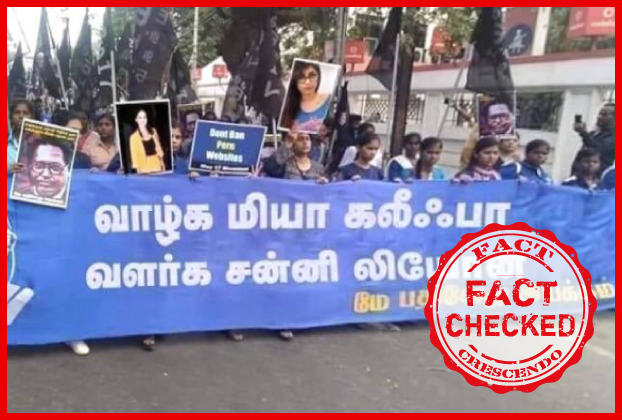
Claim: misinformation circulating as May 17 movement rallied for Mia Khalifa and Sunny Leone
Publisher’s rating: False