PeakMetrics / Fact Checks
Crime & justice fact checks
Explore claims publishers have checked about crime & justice. Read their original ratings and follow the evidence.
Search fact checks
Search by text or image6,854 published reviews in this topic
Two lesbian women assaulted on a London bus in a 30 May 2019 homophobic attack was a staged hoax for Pride month
Publisher’s rating: False
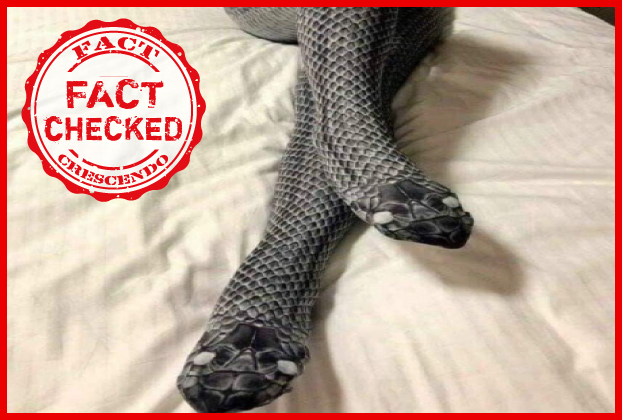
Claim: Man beaten wife for wearing Snake Stockings
Publisher’s rating: FALSE
Claim rapist of an 8 year old kid murdered in public at Barabanki
Publisher’s rating: FALSE

Claim: Woman Journalist attacked for questioning Modi government
Publisher’s rating: FALSE

Hyderabad city is on high alert. 43 women missing cases on this Saturday alone from the city and outskirts.
Publisher’s rating: FALSE
The claim said Hyderabad was on high alert because 43 women had gone missing in the city and outskirts on a single Saturday, and urged women to avoid travelling alone at night. FACTLY’s review identifies this as part of social-media posts about missing people in Hyderabad. It reports that the Telangana DGP rejected the rumours and described many missing-person cases as arising from individual circumstances, rather than evidence of a citywide threat. The review says the DGP stated that more than 85 per cent of the cases had been traced, while efforts continued in the remaining cases. It also reports that the DGP asked people not to spread the rumours or cause panic, and warned of legal action against those continuing to circulate them. These statements address the alarmist interpretation of the missing-person reports; the excerpt does not provide an independent case-by-case count verifying the specific figure of 43 on that Saturday. FACTLY also describes the context of an Eenadu article published on 11 June 2019. According to the review, that article discussed reasons for missing-person cases, including people willingly leaving home with partners, and alleged that police responses were lukewarm. The DGP, in turn, disputed that allegation and cited tracing outcomes. The review additionally notes that Telangana recorded 16,134 missing cases in 2016—an average of 44 per day—and concludes that Hyderabad was not on high alert and that the claim of women missing in large numbers was untrue.

Has Doctor Beaten up by Patients Family in Kolkata Passed Away?
Publisher’s rating: FALSE
The claim concerned Dr Paribaha Mukherjee, an intern at NRS Medical College in Kolkata who had been beaten by relatives of a deceased patient. Messages circulating online said he had died. The Quint’s review checked that specific claim with doctors at the hospital, rather than relying on the circulated messages. The article reports that Dr Nirupam Sarkar, an ex-house surgeon at NRS Medical College, called the death news “fake” and said Mukherjee’s condition was stable. It also says Sarkar reported that Mukherjee was being kept under observation at the Indian Institute of Neuroscience in Kolkata. The Quint then contacted another NRS intern, Dr Upoma Saha, who also dismissed the circulating message as fake and reiterated Sarkar’s account. The review distinguishes Mukherjee’s serious injury from the false report of his death: it says an intern was seriously injured in the assault, but the doctors it contacted said Mukherjee was alive and stable. The excerpt does not provide medical records or identify the date and time of the doctors’ confirmations, so the account supports the review’s conclusion through its reported conversations with two hospital doctors, not through publicly reproduced clinical documentation.
State House intruder dies of heart attack in prison
Publisher’s rating: False.

Claim: Aligarh baby rape confirmed in postmortem report
Publisher’s rating: FALSE

அரசின் தவறுகளை கேள்வி கேட்டதற்கு பாஜக குண்டர்களால் கொடூரமாக தாக்கப்பட்ட மும்பை ஊடகவியலாளர் நிகிதா ராவ்.
Publisher’s rating: Misleading

Kirron Kher said Rapes are happening from ages, it is part of the tradition, we cannot stop them.
Publisher’s rating: FALSE
FACTLY examined a post attributing to Kirron Kher the statement, “Rapes are happening from ages, it is part of the tradition, we cannot stop them.” Its conclusion is that she did not say rapes were part of tradition or could not be stopped; rather, the post distorted her remarks. The review says her point was that changing people’s mindset could help stop rape. (S1: “Kirron Kher did not say that rapes are part of the tradition and cannot be stopped. Her words were twisted to claim that she made the above statements.”) To check what she had said, the review reports searching for statements by Kher on rape and finding an ANI article. It quotes that article as saying Kher described such incidents as having taken place “since forever” and said that change depended on changing people’s mindset and began within the family. The review also points to a video of her statements about rapes in Haryana, uploaded by The Times of India in January 2018. (S1: “When searched for the statements made by Kirron Kher on rapes, an article published by ANI can be found in the search results.”; “Her statements on rapes in Haryana can be watched in a video uploaded by Times of India in January 2018.”) The distinction is between Kher’s reported observation that rape has occurred for a long time and the post’s additional claims that rape is a tradition and cannot be stopped. According to the review, Kher instead said rape could be stopped through changes in mindset and by giving women equal status within the family. The supplied excerpt does not provide the full ANI article or the video transcript, so those underlying materials cannot be independently assessed from this evidence alone. (S1: “But she said that rapes can be stopped by changing the mindset of people and by giving equal status to women in the family.”)
Claim Bengal police arrested a woman for calling her husband Shree Ram
Publisher’s rating: FALSE

నగరంలో హై అలెర్ట్. ఒక్క రోజే 43 మందికి పైగా నగరంలో అదృశ్యం
Publisher’s rating: FALSE

Claim Kirron Khers controversial statement on Chandigarh rape case
Publisher’s rating: FALSE
South African criminals drive fake police vehicles that can be identified by the marking “dog unit”.
Publisher’s rating: Mixed
Staircase not stolen from flats in Eldorado Park, South Africa
Publisher’s rating: Incorrect

