PeakMetrics / Fact Checks
Crime & justice fact checks
Explore claims publishers have checked about crime & justice. Read their original ratings and follow the evidence.
Search fact checks
Search by text or image6,836 published reviews in this topic

Visuals of a Muslim man confessing to killing his Hindu wife
Publisher’s rating: FALSE
تصویر قفل روی قبر دختران متوفی پاکستانی برای جلوگیری از تجاوز جنسی به جسد
Publisher’s rating: نادرست
“Apreensão da PF na casa de petistas Apreensão da PF na casa de Bolsonaro”
Publisher’s rating: Falso

बेंगलुरु के शिवाजी नगर के बस स्टॉप पर पुलिस ने कुछ लोगों को बच्चा चोरी करते हुये रंगे हाथों पकड़ा।
Publisher’s rating: False

A video of a man throwing goats from a speeding truck on Karachi Highway, Pakistan
Publisher’s rating: FALSE
The claim concerns a video said to show a man throwing goats from a speeding truck on Karachi Highway in Pakistan. FACTLY’s review addresses that specific video and concludes that it was recorded in Maharashtra, not Pakistan. Its account identifies the location as the Igatpur Ghoti road and says that reports it found concerned the same incident.

ஜி ஸ்கொயர் மற்றும் சபரிசன் மீது யூடியூபர் சவுக்கு சங்கர் கூறிய குற்றச்சாட்டுகள் அடிப்படையில் சோதனை செய்ததில் எதுவும் கிடைக்காததால், உரிய ஆதாரத்துடன் தங்கள் அலுவலகத்தில் ஆஜராகும்படி சவுக்கு சங்கருக்கு CBI சம்மன். சம்மனுக்கு பதில் அளிக்காமல் சவுக்கு சங்கர் தலைமறைவு.
Publisher’s rating: Fake

ముస్లిం వ్యక్తి హిందూ అమ్మాయిని చంపి సూట్కేసులో పెట్టిన వీడియో
Publisher’s rating: FALSE
Printing of your own license plate is prohibited.
Publisher’s rating: Flip-flop

Vídeo que mostra policiais militares mandando que um trator passe por cima de uma lavoura e usando spray de pimenta contra um homem, aparentemente responsável pela plantação. Sobre a imagem, há um texto onde se lê: “esse eh o governo de vcs petistas”.
Publisher’s rating: Enganoso
The video shows a real confrontation, but the claim that the police action was connected to a PT government misidentifies who was responsible. The investigation places the footage on April 5, 2023, in Água Preta, a district of São João da Barra, Rio de Janeiro. It describes officers ordering a tractor over a pineapple crop while a man trying to stop the operation is sprayed in the face. The state police confirmed that officers from the 8th Battalion responded to a report of noncompliance with a court order at the site. The video’s on-screen political attribution is not supported by the investigation: the Rio de Janeiro state government, to which the military police are subordinate, was led by Cláudio Castro of the PL, an opposition party to the PT. The incident arose amid a land-use dispute involving the private company GNA, which was building a power plant and transmission line, and agricultural activity on land along the line’s route. The report says the police were called after a reported obstruction of work; it also describes a dispute over a pineapple crop on land leased to a farmer. These details place the confrontation in a local conflict involving a company, landholders and state police—not an action by the federal government. The investigation also says the police opened an internal inquiry into the incident; the supplied text does not give its outcome.
जस्थान के सीकर से इंसानियत को शर्मसार कर देने वाली घटना सामने आई है जहां 5 हैवानों ने एक जलती हुई चिता से शव निकालकर रेप किया है
Publisher’s rating: False
பெண் சடலங்களை தோண்டி எடுத்து பாலியல் வன்கொடுமை…கல்லறைகளுக்கு பூட்டு.. #RajNewsTamil #Pakistan
Publisher’s rating: Fake

Pakistani parents lock daughters’ graves to avoid rape. #Pakistan #necrophiliacases #sexualharassment #crime
Publisher’s rating: False

5 Hindus were caught raping a half-burnt dead body in the Sikar district of Rajasthan
Publisher’s rating: FALSE
The claim concerned an alleged rape of a half-burnt woman’s body in Sikar, Rajasthan. FACTLY traced the allegation to an Asianet News Hindi article and checked it against a statement from Sikar Police. The police said the reported event was false and misleading: three days after the woman’s cremation, villagers assaulted an outsider who had come to meet an acquaintance, suspecting him of performing tantric rituals with the corpse. Police said they found no rape had occurred. The review also reports that Asianet News Hindi later deleted its article. [S1: “Sikar Police through a tweet clarified that the news reported by the ‘Asianet News Hindi’ is false. As per the police officials, three days after the cremation of a woman, an outsider, who came to meet his acquaintance, was beaten up by the villagers on suspicion of performing tantric rituals with the corpse. Sikar Police in the tweet emphasized that no such heinous activity as rape was detected in the incident.”] FACTLY also located contemporaneous reporting about the same incident in Patrika and News 18. Patrika reported that five people were arrested after villagers beat them on suspicion of performing tantric rituals at the cremation ground in Ajitgarh. That account describes the accusation as suspicion of ritual activity, not evidence of sexual assault. [S1: “The article reported that police had arrested five persons from the crematorium ground in the Ajitgarh area after the villagers thrashed all five on suspicion of performing tantric rituals with the burnt corpse of a woman.”] A later Patrika account, as summarized by FACTLY, said one of the arrested men, Shankar Lal, told police that the group was going to show his farmland to his guru when villagers suspected them as they passed near the crematorium. FACTLY reports that the parties reached a compromise and neither filed an FIR. This account helps explain how the arrest of five people and the cremation-ground setting could be recast in the viral allegation, but does not support the claim of rape. [S1: “Shankar Lal reportedly told police that they came under the suspicion of villagers while they were passing nearby the crematorium on the path of their farmland. As per the report, both parties reached a compromise and neither of them filed an FIR related to the incident.”]
পাকিস্তানে মৃত নারীদের ধর্ষণ থেকে রক্ষা করতে কবরে তালা দেয়া হচ্ছে
Publisher’s rating: মিথ্যা

Photo showing a female grave locked with an iron grill to avoid rape in Pakistan
Publisher’s rating: MISLEADING
The post used a photograph of a grave covered by an iron grill to suggest that families in Pakistan were locking their daughters’ graves to prevent rape. The review distinguishes that image claim from separate reporting about necrophilia in Pakistan: it says reports of those cases exist, but the photograph does not depict a grave there. Instead, the review locates it in the Madannapet area of Hyderabad, Telangana, India. This makes the image misleading as evidence for the post’s Pakistan claim. To identify the location and explanation for the grill, the review says it found local media reports about the graveyard in Rein Bazaar, Madannapet. Those reports had spoken with people concerned at the graveyard. According to the review’s account of them, a man had locked his family member’s grave because people were digging into old graves and burying other bodies without permission. The review also reports that the grave was around 1.5–2 years old and was near the gate, where the grill was intended to prevent people from walking on it. The review says Google Street View also showed the grill at the location. It further notes that Indian news outlets had reused the Hyderabad grave photograph while reporting on Pakistan, which helps explain how the image could be presented with the wrong location. The evidence described therefore supports a distinction: reporting about grave protections and necrophilia in Pakistan does not establish that this particular photograph came from Pakistan or showed a daughter’s grave protected against rape.
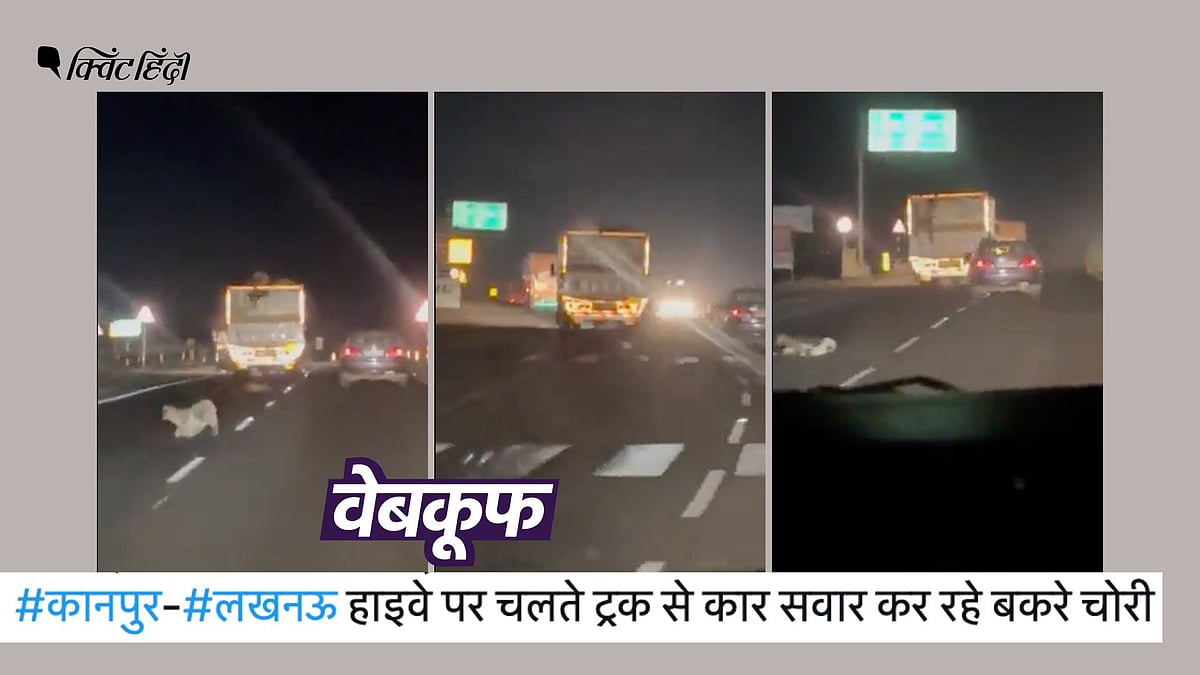
यूपी में कानपुर-उन्नाव हाईवे में चलते ट्रक से बकरे फेंकने का वीडियो
Publisher’s rating: FALSE

పాకిస్థాన్లో ఆడపిల్లలు చనిపోతే మృతదేహాలపై అత్యాచారాలు జరగకూడదని ఇనుప గేటు వేసి, సమాధికి తాళం వేసిన ఫోటో
Publisher’s rating: MISLEADING
उत्तर प्रदेश में आगरा के पास रोड पर नमाज पढ़ने के बाद पुलिस सजा तौर पर 6 घंटे तक मुर्गा डांस करवाया और वार्निंग देकर छोर दीया
Publisher’s rating: False