PeakMetrics / Fact Checks
War & conflict fact checks
Explore claims publishers have checked about war & conflict. Read their original ratings and follow the evidence.
Search fact checks
Search by text or image5,848 published reviews in this topic


Existen pruebas que involucran a Marruecos, ETA y el PSOE en el 11M
Publisher’s rating: Falso


China blocked the blacklisting of Masood Azhar saying that how can they believe him to be a terrorist when opposition parties in India themselves do not consider him as a terrorist
Publisher’s rating: FALSE
The claim concerns the stated reason China gave for blocking a UN Security Council bid to blacklist Masood Azhar: that Indian opposition parties did not regard him as a terrorist. FACTLY’s review says China instead asked for more time to examine the sanctions and kept a “technical hold” on the bid. It reports that the cited explanation made no mention of Indian opposition parties. To check the claim, the review says it searched for reporting using the query “China delays UN bid to blacklist Masood” and found an Al Jazeera article. According to FACTLY’s account of that article, China told the Security Council it needed time to examine the sanctions. The review also says it searched for support by Indian political parties for Masood Azhar and found no specific news. On that evidence, it concludes that China did not cite opposition parties’ views when blocking the sanctions.

As the U.S. bombed Japan in 1945, Japanese citizens do not buy even a needle from the U.S. today. This is called real patriotism and unity.
Publisher’s rating: FALSE
The post asserts that Japanese citizens will not buy even a needle made in the United States, attributing this supposed boycott to the U.S. bombing of Japan in 1945 and calling it patriotism and unity. FACTLY checked the claim against trade figures, rather than evidence about individual consumers or a documented nationwide boycott. Its review reports that Japan was the fourth-largest U.S. export market in 2017 and that trade between the countries was about US$280 billion that year.

A video is going viral on social media with claims that a Pakistani Colonel has accepted the death of 200 militants in Balakot. But the claims are factually incorrect. In our research, we found that the Pakistani Army officer in the video does not accept the death of 200 militants in the Balakot attack.
Publisher’s rating: False

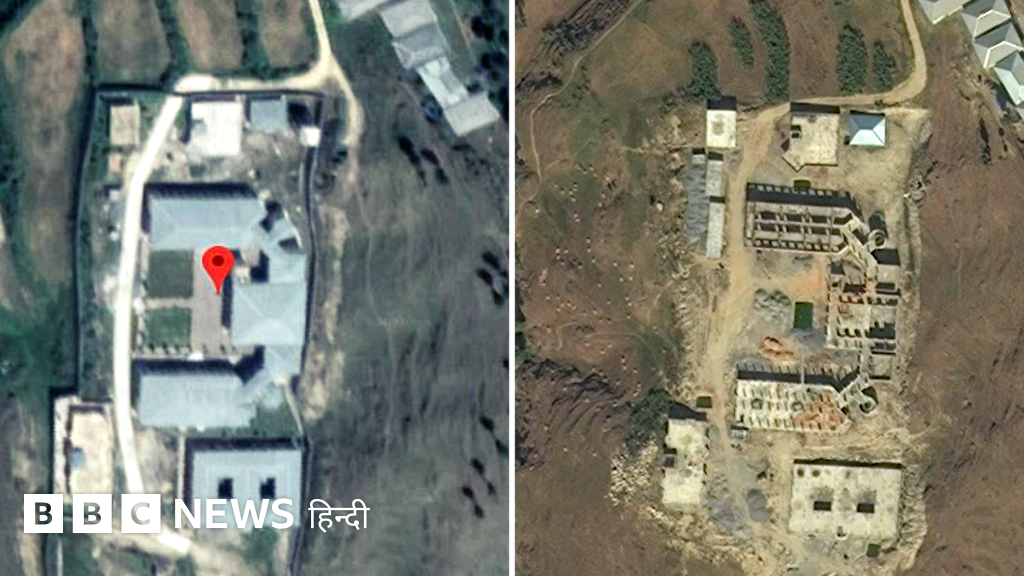
The image shows the proof of Indian Air Force conducting an air strike in Balakot in Pakistan.
Publisher’s rating: FALSE
The claim concerns pictures presented as proof of the Indian Air Force’s air strike in Balakot, Pakistan. The Quint reports that the pictures were circulated on messaging platforms and included images of dead bodies and a burial site, as well as a satellite-image comparison. Its investigation concluded that the pictures did not show the strike: “The Quint could establish that the images are old and nowhere related to the Balakot air strike.” The review describes a reverse image search as the method used to trace the pictures. It found that they were from a 2015 heat wave in Pakistan, which caused several deaths. The first picture had appeared in a report by Pakistan Ka Khuda Hafiz, and The Guardian had used the fourth picture in its heat-wave reporting. These traces support the finding that those pictures were old, not documentation of the Balakot attack. The review distinguishes those photographs from the satellite image, whose source it could not locate. It also notes that the government or Air Force had not officially confirmed any of the satellite images, and that media reports differed on the extent of damage at the strike site. Thus, the investigation’s identification of the heat-wave photographs does not establish the provenance of the satellite image or independently settle the damage claims.
पुलवामा हमले में मारे गए शहीद जवान की पत्नी को पीएम मोदी ने फोन पर दिया आश्वासन
Publisher’s rating: False

The video shows Pakistan army admitting to around 200 casualties in the Balakot strike.
Publisher’s rating: FALSE

పుల్వామా దాడి వెనకాల బీ.జే.పీ నాయకుల హస్తం. కావాలంటే ఫోన్ సంభాషణని వినండి
Publisher’s rating: FALSE
పుల్వామా దాడి వెనకాల బీ.జే.పీ నాయకుల హస్తం. కావాలంటే ఫోన్ సంభాషణని వినండి.
Publisher’s rating: FALSE
“Brüssel bəyan edir: Qarabağ məsələsinin tənzimlənməsi yalnız Azərbaycanın ərazi bütövlüyü çərçivəsində mümkündür”
Publisher’s rating: Faktlarla manipulyasiya

A claim warns that Yorubas will be attacked in the South South and South East.
Publisher’s rating: This clam is misleading.

தமிழக மீனவர்கள் நிலை இன்று 2019 : தமிழக மீனவர்கள் இலங்கை கடற்படையினரின் பயமின்றி மகிழ்ச்சியாக வாழ்கின்றனர்.
Publisher’s rating: Fake

An alleged photograph of Rajiv Gandhi was viral on social media that Rajiv Gandhi left country with family while 1971 India-Pakistan War
Publisher’s rating: At the time Indian-Pakistan War Rajiv Gandhi was in India.

Old Photos From Pak Shared as Damage Done by IAF Across LoC
Publisher’s rating: FALSE

The image of a military uniform belonged to Wing Commander Abhinandan and has been kept at a Pakistani museum as “war trophy.”
Publisher’s rating: FALSE
The claim concerns a photograph of a military uniform circulated as belonging to Wing Commander Abhinandan Varthaman and supposedly displayed in a Pakistani museum as a “war trophy.” The Quint’s investigation directly examined that image and reported that the uniform did not belong to Abhinandan. The review describes a reverse image search as the key check. It says the search located at least two tweets featuring the same image, posted before Abhinandan was captured on 27 February. That chronology matters: those posts predate the event invoked to connect the uniform to him. The review identifies the original tweets as posts by Pakistani national Sheikh Saleem Ahmed. According to the account reported by The Quint, the posts attributed the uniform to Israeli pilot Captain Lutz. They linked it to a Mirage flown by Lutz that was shot down by Pakistani pilot Abdus Sattar Alvi in an air combat in April 1974. The review also says one image in the tweets supported that account. Together, the earlier appearance of the image and its stated attribution to another pilot undercut the claim that the uniform belonged to Abhinandan and was kept in a Pakistani museum as his trophy.