PeakMetrics / Fact Checks
War & conflict fact checks
Explore claims publishers have checked about war & conflict. Read their original ratings and follow the evidence.
Search fact checks
Search by text or image5,848 published reviews in this topic

Doctor Vandana Tiwari died after Islamic Jihadis attacked her in Uttar Pradesh
Publisher’s rating: FALSE
The viral message claimed that Dr Vandana Tiwari had gone to a village in Uttar Pradesh for coronavirus testing, was attacked there by “Islamic Jihadists,” and later died of her injuries. The review identifies her instead as a pharmacist and caretaker at the Girls Hostel at Shivpuri Medical College, in Madhya Pradesh. It reports that her death was being attributed online to an attack, while the evidence it gathered pointed to a different cause. To check the account, the journalist searched for reports using “Dr Vandana Tiwari Death,” consulted a News18 Hindi report, and contacted Shivpuri’s Superintendent of Police Rajesh Singh Chandel. The review quotes Chandel saying Tiwari’s health deteriorated on 31 March, she was referred to Birla Hospital in Gwalior on 1 April, and she died there on 7 April from a brain haemorrhage. He also said she “was never sent to UP for any coronavirus-related test.” The review says a report filed by Shivpuri’s Chief Medical Health Officer corroborated those details. It also quotes Birla Hospital doctor Abhishek Chauhan, who said Tiwari was admitted unconscious on 1 April and died of a brain haemorrhage; her blood sample tested negative for COVID-19. Finally, the review reports that Uttar Pradesh Police said the incident concerned Madhya Pradesh and that no such case had come to light in Uttar Pradesh. Together, these accounts contradict the message’s location, attack, and cause-of-death claims.


Images of Rohingyas attacks on Hindus and Hindu temples in West Bengal’
Publisher’s rating: FALSE
The post described in the review claimed that images showed Rohingyas attacking Hindus and Hindu temples in West Bengal. FACTLY says it checked the images using reverse image searches and found them connected to incidents in Bangladesh, rather than West Bengal. This finding directly challenges the claimed location and attribution of the images. [Supported by: “Few photos are being widely shared on social media with the claim that they show Rohingyas attacks on Hindus and Hindu temples in West Bengal”; “When the images were subjected to reverse image search, they were found to be related to the incidents in Bangladesh.”] The review identifies three images and gives separate accounts of their reported origins. It says the first shows Goddess Mansi Devi temple in Jessore district, damaged in January 2019. The second is described as the remains of a Hindu home after an arson attack on Hindu families’ homes in Thakurgaon in December 2018. The review says the third relates to Bariagram, Natore, where the body of a local grocery trader’s son who had gone missing was found at a crematorium. [Supported by: “the image is that of Goddess Mansi Devi temple destroyed in Jessore district of Bangladesh in January 2019”; “in December 2018, there was an arson attack on the homes of Hindu families in Thakurgaon”; “The image shows the remains of a Hindu home in the aftermath of the arson attack”; “the dead body of a local grocery trader’s son, who had earlier gone missing, was found at a crematorium in Bariagram under mysterious conditions.”] Taken together, the image-by-image descriptions point to events in Bangladesh—not the claimed attacks in West Bengal—as the context for the photographs. The review’s conclusion is based on tracing the images to those reported events; the excerpt does not provide image-search results or links to the underlying reports in enough detail to independently assess those materials here. [Supported by: “The images are related to incidents that took place in Bangladesh. So, they aren’t related to West Bengal”; “As per a news blog article”; “The same information can also be seen in the report of another news website that covered the incident.”]
In the last six years not a single incident of blast has taken place
Publisher’s rating: FALSE



【錯誤】網傳影片搭配標題宣稱「3月 6 日,中南海軍事內鬥,出逃的戰機在天津武清區域被擊落,百姓遭殃」?
Publisher’s rating: 錯誤
The Taiwan FactCheck Center investigated a video shared with a claim that a fighter aircraft fleeing amid military infighting had been shot down in Tianjin’s Wuqing area on March 6, leaving civilians to suffer. Its review found that the footage did not show that alleged event: it had been taken from video of a fire at Beijing’s Laiguangying used-goods market in 2017. The review’s conclusion was that old footage had been paired with claims about a fighter jet being shot down. (S1: “網傳影片挪用自2017年北京來廣營舊貨市場大火影片。”; “因此,此傳言挪用舊影片搭配「戰機被擊落」等敘述,為「錯誤」訊息。”) To trace the clip, investigators reverse-searched screenshots and found a 1-minute-35-second video on Meipai, uploaded on March 2, 2017, without accompanying text. They compared it with the circulating clip and reported that both showed the same people escaping from vehicles and firefighters. This matching footage connected the viral video to the older fire, rather than establishing that it depicted a plane crash in Wuqing. (S1: “查找到一段上傳到中國社群平台《美拍》的影片,該影片顯示為2017年3月2日即上傳,影片長度為1分35秒,沒有搭配任何文字敘述。”; “其影片開頭也有民眾下車逃生、消防人員等畫面,皆與網傳影片相同,因此可判斷,網傳影片是擷取自此部影片的片段。”) The review also describes how it identified the location and event shown. A road sign visible around 1:30 in the Meipai video read “Laiguangying North Road”; a search for that road and a fire led investigators to a Tencent Video report whose footage was described as largely the same. They further compared the circulating clip with photographs from reports about the Laiguangying market fire, using the market sign and firefighters’ clothing to identify the event as the February 27, 2017 fire in Beijing’s Chaoyang district. (S1: “於01:30秒處,可辨識出路牌寫著「來廣營北路」”; “可由「舊貨市場」之招牌及消防人員之穿著,判斷此影片與北京朝陽來廣營舊貨市場大火為同一事件。”)
Local Media claimed the United States just offered $7m bounty on Abubakar Shekau
Publisher’s rating: Misleading

ఢిల్లీ మత ఘర్షణల్లో తమ కుటుంబికుడిని కోల్పోయిన వారి ఫోటో
Publisher’s rating: FALSE
Ein Facebook-Post behauptet, dass nach Anschlägen mit deutschen Opfern keine Trauerbeflaggung angeordnet werde. Nach dem Anschlag von Hanau seien die Flaggen auf halbmast gesetzt worden.
Publisher’s rating: Die Behauptung, dass es bei Anschlägen mit deutschen Opfern keine Trauerbeflaggung gebe, ist falsch.
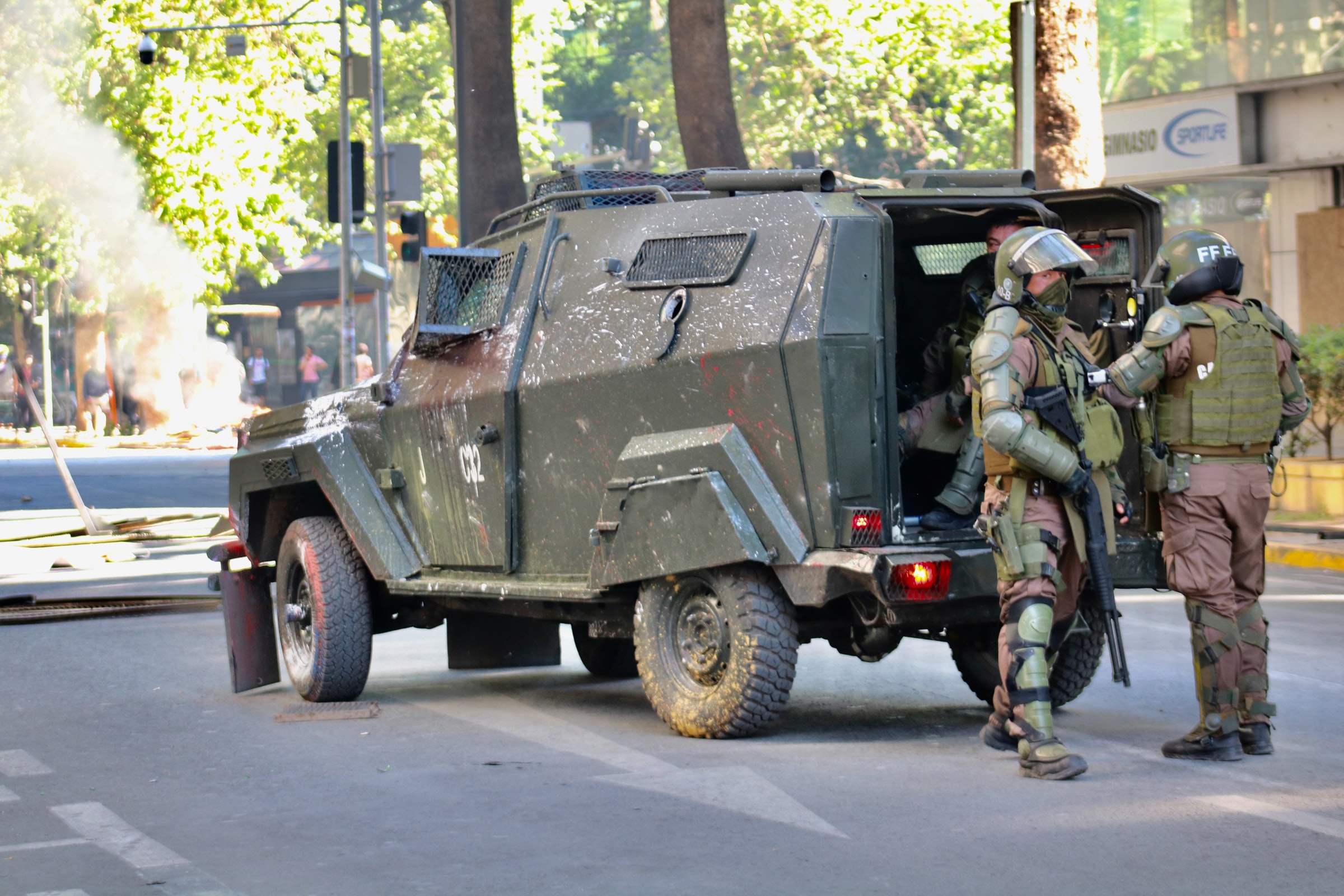
【錯誤】網傳裝甲車圖片宣稱「我有个台湾的朋友说,车里面装满尸体,太沉了,所以掉下来了...」?
Publisher’s rating: 錯誤
The claim attached to the image was that an armored vehicle fell because it was full of bodies, and that the incident was followed by a site lockdown and questioning of witnesses. The review traced the image to a different event: on February 18, 2020, an armored vehicle slid off a flatbed truck near the high-speed rail station in Wuri District, Taichung. It reports that no one was injured and that the vehicle was not carrying bodies. To establish the image’s origin, the investigators searched for news reports using the keyword “armored vehicle” and found coverage of the February 18 incident. They also located the same image in a Facebook group post from that day; its caption described encountering a vehicle that had fallen, without mentioning bodies. The review compared the circulating image with footage of the reported incident, matching a Taiwan Tourist Shuttle bus visible beside the flatbed in surveillance footage and a roadside billboard visible in news footage. The review further reports that the Sanhe police station checked the image and confirmed it showed the armored vehicle sliding from a flatbed. The station identified the location as the intersection of Zhongshan Road Section 3 and Gaotie East Road, near the Taichung high-speed rail station, and said there were no bodies aboard and nobody was injured. The image therefore depicts a real vehicle incident, but the explanation circulating with it was not supported by the investigation.

13 sniffer dogs were killed in the Pulwama attack
Publisher’s rating: FALSE
FACTLY investigated a social-media claim that 13 sniffer dogs were killed alongside soldiers in the Pulwama attack. Its review says that searches for reports of sniffer dogs killed in the attack produced no corroborating information. It also says media reports about the attack described the deaths of 40 CRPF jawans but did not report dogs being killed. The review describes two further checks. First, it cropped the circulating image to show the dogs and used reverse-image search; the image was found in a Facebook post from 2016. Since the Pulwama attack occurred in February 2019, that earlier image did not document the attack. Second, the review reports that The Quint contacted the CRPF and was told that no sniffer dogs were killed; the convoy was transporting only jawans. On the evidence described, the image and the claim it was used to support do not establish that dogs died in the Pulwama attack.

«Alerta máxima» por riesgo de atentado terrorista en Sevilla
Publisher’s rating: Falso

The man in the photo frame is a martyr in Pulwama attack (2019)
Publisher’s rating: FALSE
The review examined a social-media image showing a toddler touching a framed photograph of a man. It says the accompanying claim identified the man as someone killed in the 2019 Pulwama attack. The investigation instead identified him as Pranay Kumar, who was killed in Telangana in 2018. The review’s conclusion rests on identifying the man in the image, rather than on the image merely depicting a family member of a martyr: it states, “The man in the photo frame is Pranay Kumar. He is a victim of ‘honour-killing’ in 2018 in Nalgonda district of Telangana.” To investigate the image, the review reports using reverse image search. It found the same image in video results associated with Telugu Adda and with titles about Amrutha, Pranay, and their son Nihaan Pranay’s first birthday. The review then searched for “Amrutha Pranay” and found a Hindu article. It reports that this article described Pranay’s murder on 14 September 2018, in Nalgonda district, after he married Amrutha against her father’s wishes. The review’s text says Pranay “was murdered by people hired by his father-in-law Maruthi Rao” and identifies the killing as an honour killing. As an additional check, the review says the man pictured was not found among photographs of CRPF personnel killed in the Pulwama attack. Taken together, the image-search results and the reported identification connect the framed photograph to Pranay Kumar, not to a Pulwama casualty. The image’s family context and the review’s account of Pranay’s 2018 killing explain why the photograph could be miscaptioned as one associated with the 2019 attack.
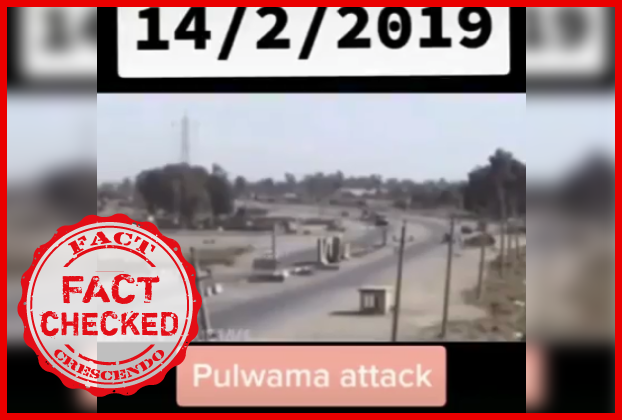
Video shows the original footage of Pulwama Attack on 14th February 2019
Publisher’s rating: FALSE: This video is old and not from India, it is originally from Iraq during an IED Blast

Video of the attack on CRPF personnel at Pulwama on 14 February 2019.
Publisher’s rating: FALSE
The review assessed a social-media video said to show the attack on CRPF personnel at Pulwama on 14 February 2019. It concluded that the footage was an older, unrelated video, not a recording of that attack. The review notes that the Pulwama attack occurred in 2019 and killed 40 Indian paramilitary personnel; the claim concerned the video’s connection to that event, not whether the attack happened. [S1]
"Why isn’t Germany paying money? Why isn’t France? Why isn’t United Kingdom paying money" to Ukraine?
Publisher’s rating: This is misleading.