PeakMetrics / Fact Checks
War & conflict fact checks
Explore claims publishers have checked about war & conflict. Read their original ratings and follow the evidence.
Search fact checks
Search by text or image5,847 published reviews in this topic

යුක්රේන ජාතික දැරියක් රුසියානු සොල්දාදුවකුට බැණ වදින අවස්ථාවක්ද ??
Publisher’s rating: False
The claim concerns a circulating image and video said to show an eight-year-old Ukrainian girl telling a Russian soldier to return to his country. Fact Crescendo Sri Lanka examined whether that footage depicted the Ukraine–Russia war. Its conclusion was that the footage did not show that event: it showed Palestinian activist Ahed Tamimi, aged 11 at the time, confronting an Israeli soldier in 2012. 【S1】 The review describes tracing the circulating material to a 14-second video uploaded to YouTube on February 27, 2022. It says that InVID-WeVerify was used to investigate the footage, and that the same segment appears in the opening seconds of a roughly six-minute video uploaded in 2012. This older version supplies the key provenance evidence against the claim that the clip showed a Ukrainian child confronting a Russian soldier. 【S1】 The review’s conclusion is specifically about the identity and setting of the footage: it identifies the child as Tamimi and the soldier as Israeli, and dates the scene to 2012. The excerpt does not provide additional detail about the location of the scene or identify the original uploader of the 2012 video, so those details cannot be established from the supplied text. 【S1】

ఉక్రెయిన్పై సైనిక దాడి చేయాలని పుతిన్ తీసుకున్న నిర్ణయాన్ని రష్యాలోని ఒక్క రాజకీయ పార్టీ కూడా వ్యతిరేకించలేదు
Publisher’s rating: FALSE

Photo showing Air India plane to be the sole plane flying above the Russia-Ukraine war zone
Publisher’s rating: MISLEADING
The post claimed that a photo showed an Air India plane as the only aircraft flying above the Russia-Ukraine war zone, and that it was going to evacuate Indians stranded in Ukraine. The image identified the aircraft as Air India flight AI121, which travels from New Delhi to Frankfurt. The review checked the claim against flight-path information and the status of Ukrainian airspace after Russia announced military operations on 24 February 2022. The review reports that flight-tracking information from Flightradar24 showed AI121’s route did not pass over Ukraine, and says the same was true on Plane Finder. It also explains that Ukraine’s airspace had been closed to all civilian air traffic, including Indian flights, since 24 February. These findings contradict the image’s implication that AI121 was flying over Ukraine; the review further notes that Russian airspace remained accessible to some countries, including India, which helps explain why an India–Frankfurt route could still appear on a tracker without crossing Ukraine. The evacuation context also differed from the post’s suggestion. The review says Operation Ganga flights were landing in Ukraine’s neighbouring countries, including Hungary, Poland and Romania, to bring stranded Indians back. Taken together, the route information, airspace closure and described evacuation arrangements do not support the claim that the pictured flight was the sole plane flying above the war zone or was entering Ukraine to evacuate people.
Video shows a Ukrainian “FA-27” jet being shot down by Russia
Publisher’s rating: False
Les Russes n'attaquent pas les civils ukrainiens.
Publisher’s rating: Entre le 24 février, deux jours après le lancement de l’offensive russe en Ukraine, et le 1er mars, l’Organisation des Nations unies (ONU) a enregistré au moins 550 victimes civiles du conflit, dont 142 morts.
The claim was made in a Facebook post asserting that Russian forces attacked only military installations and not Ukrainian civilians. The review compares that categorical assertion with civilian-casualty information available during the first days of the invasion. It reports that the UN had recorded at least 550 civilian casualties in Ukraine between February 24 and March 1, including 142 deaths. The first civilian casualties were recorded on the first day of the Russian attack, before the Facebook post was published. This evidence contradicts the claim that civilians were not being harmed in the conflict, though casualty figures alone do not establish who was responsible for every death or injury. (S1: “L’auteure du message partage un article de « RT France », daté du 24 févier.”; “entre le 24 février et le 1er mars 2022, le conflit en Ukraine a fait « au moins » 550 victimes civiles. 142 d’entre elles, dont 13 enfants, sont mortes.”; “Les premières victimes civiles ont été recensées dès le premier jour de l'attaque russe contre l'Ukraine, c'est-à-dire avant la publication sur Facebook.”) The review also reports the UN human-rights spokesperson’s account that many of the casualties resulted from explosive weapons with a wide impact area, including heavy artillery, multiple-launch rocket systems and airstrikes. It describes a specific allegation from Kharkiv’s regional governor: on March 1, Oleg Synegubov said Russian bombardments there had killed 21 people and wounded 112. The review explicitly cautions, however, that it could not determine that the Russian army bore full responsibility for all the civilian losses. The evidence therefore challenges the post’s blanket denial of civilian harm without attributing every reported casualty to Russian forces. (S1: “Elle a ajouté que la plupart des blessés et morts ont été victimes « de l'utilisation d'armes explosives ayant une large zone d'impact, notamment des tirs d'artillerie lourde et des systèmes de roquettes à lancement multiple, ainsi que de frappes aériennes ».”; “Le 1er mars, sur Facebook, Oleg Synegubov, le gouverneur régional de Kharkiv, la deuxième ville la plus importante d’Ukraine (environ 1,5 million d’habitants) après la capitale Kiev, a par exemple affirmé que 21 personnes avaient été tuées et 112 autres blessées lors de bombardements russes, sur place.”; “L’armée russe porte-t-elle l’entière responsabilité de ces pertes civiles ? Il n’y a aucune certitude.”)
रूसी सैनिक का सामना करती यूक्रेन की छोटी लड़की का वीडियो वायरल
Publisher’s rating: FALSE
Une vidéo montre des combats aériens entre forces armées russes et ukrainiennes.
Publisher’s rating: Il ne s’agit pas de vraies images de la guerre en Ukraine. La vidéo en question provient du jeu de simulation militaire Arma 3. Ces images sont donc virtuelles.
The video circulated with claims that it showed aerial combat between Russian and Ukrainian forces. The review describes footage of a military-looking aircraft attacking a site and then moving away while apparently evading fire. It identifies the same video as a roughly 30-second clip shared on Facebook, rather than relying only on a general comparison with other war-game footage. The review concludes that the images are from the military simulation game Arma 3, not real scenes from the war.
यूक्रेन में सिविलियंस की मौत का झूठ फैला रहा है ये वीडियो
Publisher’s rating: FALSE
Leni Robredo likened the Russia-Ukraine conflict to the West Philippine Sea dispute and said Ukraine is able to fight for its country with a strong relationship with its allies, insinuating that the Philippines wants to wage war against China.
Publisher’s rating: Needs context

Recent photo of Ukraine after the Russian attack
Publisher’s rating: MISLEADING
The review examines a post claiming that a photo showed Ukraine after a recent Russian attack. It identifies the pictured scene as unrelated to Ukraine: the photo was an old image from Lebanon, rather than a recent image of the Russia–Ukraine crisis. The review’s conclusion is specific to this third post, not to every image discussed in the article. To support its identification, the review says a similar photo appears on Getty Images and quotes the image description. That description places the scene in Haret Hreik, a southern suburb of Beirut, and dates it to August 20, 2006, during Israeli airstrikes in the conflict between Hezbollah and Israel. This provenance contradicts the post’s claim about the photo’s location and recency. The review therefore characterizes the claim as misleading: the image does not depict Ukraine after a Russian attack. The excerpt does not provide further details about how the reviewer established that the image in the post and the Getty image are the same, beyond noting that a similar photo can be found there.
The Philippine Navy acquired two new frigates under the Duterte administration.
Publisher’s rating: Needs context
Russische troepen dansen met Oekraïnse burgers/soldaten.
Publisher’s rating: De gedeelde beelden tonen geen soldaten bij de huidige invasie in Oekraïne door Rusland. Het is zeker voor 18 februari 2022 gefilmd. Zeer waarschijnlijk speelt de scène zich af op de Krim, na een militaire oefening van het Russische leger daar.
The review investigates a video shared with claims that Russian soldiers were dancing with Ukrainian civilians or soldiers, and that Ukrainians were welcoming the Russian army. It finds the footage does not show the invasion that began on 24 February 2022: the video was already online by 18 February. The review says the precise location could not be confirmed, but the available clues point toward Crimea and a scene following a Russian military exercise. [S1: “Soms wordt geclaimd dat de Russische soldaten dansen met Oekraïense burgers, andere keren zouden zij dansen met Oekraiënse soldaten.”; “Wat wel vaststaat is dat de scène zich voor 18 februari 2022 afspeelde.”] To trace the footage, the review describes taking screenshots and searching them with Google Lens. This led to an article on the Ukrainian site Obozrevatel, dated 18 February 2022, and to a video posted that day by the Instagram account chp.crimea. The video’s watermark and red logo identify Crimea; its location marker names Podgornoe in Bakhchysarai Raion. The review notes that these clues support a Crimean setting but do not establish the exact filming location. [S1: “Door screenshots uit de video te nemen en deze met Reverse Image Search te zoeken, is via de applicatie Google Lens een resultaat te vinden.”; “De video werd hier op 18 februari 2022, om 9.00 uur ’s ochtends (lokale tijd) geplaatst.”; “Dpa heeft – vooralsnog – geen exacte locatie van de video kunnen vinden.”] The review also reports that a Russian news website described the footage as a Caucasian dance and connected it to Russian military exercises in the region. It cites a report that Russia’s Defence Ministry announced on 16 February 2022 that training on Crimea had ended. These details offer a plausible context for the scene, but the review distinguishes them from what it could establish directly: the footage predates the invasion, while its precise location and circumstances remain unconfirmed. [S1: “Volgens de website filmden ooggetuigen deze Kaukasische dans.”; “Volgens het Turkse staatspersbureau AA zou het ministerie van Defensie op 16 februari 2022 hebben aangekondigd dat de trainingen op de Krim waren afgerond.”; “Het is dan ook niet honderd procent te bevestigen dat de beelden inderdaad op de Krim werden gemaakt.”]
Recent pictures of the Russia-Ukraine war
Publisher’s rating: MISLEADING
The claim concerns a post presenting a collection of pictures as recent images of the Russia-Ukraine war. FACTLY’s review examined that specific post and found that its pictures did not all show the current conflict: it states that “Except for the two photos in the post, the other pictures are not related to the current Russia-Ukraine crisis.” Thus, most of the images did not support the post’s framing as recent pictures of that war. The review identifies the images individually. It says the wounded girl’s photograph was from Syria, not Ukraine, and that the old woman’s photograph appeared in a 2014 article about Ukraine. It distinguishes these from the other two photos, which it describes as visuals of the current Russia-Ukraine crisis. The post therefore mixed two current-conflict images with older or unrelated pictures, making its overall claim misleading rather than wholly false.
Recent painful photos from Ukraine
Publisher’s rating: MISLEADING
FACTLY examined social-media posts presenting images as recent scenes from Ukraine or the Russia-Ukraine conflict. For the post described as “Recent painful photos from Ukraine,” the review says all three photos were from Ukraine, but dated to 2014 and were unrelated to the current crisis. It reports finding the first image on photographer Valery Melnikov’s website and the second and third in older articles. The review separately discusses two other posts. In one, a photo of a wounded girl was identified as an old image from Syria, while a photo of an elderly woman was traced to a 2014 article about Ukraine; two other images in that post were described as showing the current conflict. In another post, a photo presented as showing Ukraine after a Russian attack was identified as an old image from Lebanon. These distinctions matter: the review does not say every image in the posts came from somewhere other than Ukraine, nor that none showed the current conflict. Its conclusion is that most of the visuals discussed did not show consequences of the current Russia-Ukraine crisis. The excerpt describes image matches and prior publication but does not provide the linked articles or further verification details.
रूस से जंग के दौरान लड़ाई में जा रहे यूक्रेनी सैनिकों को अलविदा कहते बच्चों की तस्वीर वायरल
Publisher’s rating: FALSE

රුසියාව බර අවි යොදා ගනිමින් යුක්රේනයට පහර දෙන අයුරු දැක්වෙන වීඩියෝවක්ද ?
Publisher’s rating: False
The review examined a social-media video captioned as showing Russia using heavy weapons to attack Ukraine. It reports that the 30-second video was edited together from older footage, rather than depicting the claimed attack. The review says its investigators used InVID-WeVerify to examine the video’s content and provenance. [S1]

Video confirming that Modi government is going to send Indian soldiers to fight in Ukraine
Publisher’s rating: MISLEADING
The claim concerned a social-media video said to confirm that the Modi government would send Indian soldiers to fight in Ukraine. FACTLY’s review says the video did not actually make that claim: its conclusion was that “nothing was mentioned in the video about India sending its soldiers to fight in Ukraine.” The review therefore distinguishes the video’s implication from what its footage or statements said. To identify the video, the review reports conducting a reverse image search on screenshots. That search located the same video on Gnews’s official YouTube channel. Although the YouTube title suggested India would send troops to Ukraine, FACTLY says the video itself did not state that India would send soldiers to fight. The title’s mismatch with the video’s content is the central evidence behind the review’s conclusion. The review also gives context that could help explain confusion with military activity: it says India’s stated priority was the security and evacuation of Indian citizens stranded in Ukraine, and that Operation Ganga was launched to bring them home. It reports that the Indian Air Force was called in to assist with those evacuations. The review says this was not an announcement that Indian soldiers would fight in Ukraine; it also describes India as favouring diplomatic dialogue and sending humanitarian assistance at Ukraine’s ambassador’s request.
യുക്രെയ്ന് പ്രസിഡന്റ് യുദ്ധമുഖത്ത് സൈനികര്ക്കൊപ്പം നില്ക്കുന്ന ചിത്രങ്ങള്
Publisher’s rating: FALSE
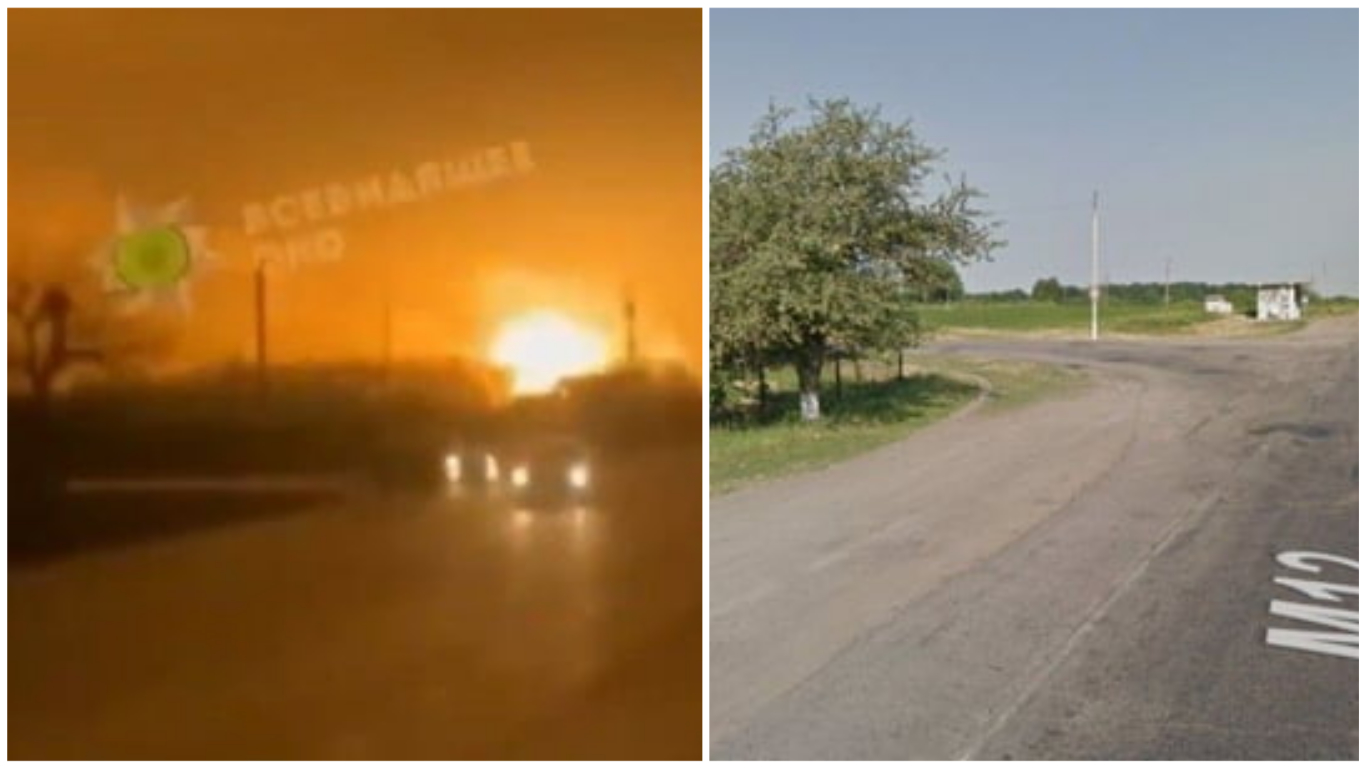
යුක්රේනයේ රුසියානු ප්රහාරයක් හේතුවෙන් අවි ගබඩාවක් පිපිරුණු අයුරු ද? (Video)
Publisher’s rating: Explainer
The review investigated a circulating video presented as showing a Russian strike blowing up a Ukrainian military ammunition store in Palanka, in the Cherkasy region. It reports that its search found no reports, at the time of the investigation, confirming a Russian attack on ammunition stores in Cherkasy. The region’s governor, Oleksandr Skichko, also described the video as false and asked people not to share false information. The review examined the video’s location and timing rather than treating its apparent setting as proof of the claim. It says open-source investigators identified a location near the 222nd Central Artillery Ammunition Base, and that satellite imagery indicated an explosion sometime between February 21 and 26. Separately, NASA fire data showed a large hot spot at the ammunition-store location on February 24; a cited satellite fire-data post records a detection there at 10:24 that day. The review cautions that these data show active fire, not what caused it. That distinction matters: Ukrainian media reported airstrikes on February 24 near a military unit and warehouses at Rozsishki, and casualties in Dubiivka and Rozsishki. But the review says foreign media had not reported an official account identifying the circulated video as footage of that attack. Its evidence therefore does not substantiate the video’s attribution to a Russian strike; it also notes that the video may have been recorded before Russia began its military operation.