PeakMetrics / Fact Checks
War & conflict fact checks
Explore claims publishers have checked about war & conflict. Read their original ratings and follow the evidence.
Search fact checks
Search by text or image5,834 published reviews in this topic

Israel Air Force Attacked The Re’im Music Festival And Killed Israelis!(Video)
Publisher’s rating: Misleading
i24News reporter Nicole Zedeck claimed that Hamas insurgents beheaded babies
Publisher’s rating: Claim of i24News reporter Nicole Zedeck that the Hamas insurgents beheaded babies was thoroughly investigated and rejected, including from the spokesperson of Israeli army.
The supplied excerpt directly concerns Nicole Zedeck’s i24News report about alleged beheaded babies in Kfar Aza on October 7, 2023. It says the livestream was titled “Beheaded Babies and Women Found in Kfar Aza” and quotes Zedeck reporting that a commander said at least 40 babies were killed, “some of them … their heads cut off.” The excerpt also says Israeli Prime Minister Benjamin Netanyahu’s spokesperson Tal Heinrich told media that babies and toddlers had been found with their heads decapitated. This material establishes what the report and later statements said, but it does not describe a thorough investigation of the beheading claim or show that the claim was rejected. Nor does the supplied text include a statement from an Israeli army spokesperson rejecting it. It therefore cannot substantiate the full conclusion in the publisher rating; the excerpt ends before the article’s discussion is complete.

حماس تدمر دبابات إسرائيلية في قطاع غزة
Publisher’s rating: خبر كاذب - الفيديو عبارة عن مقطع من لعبة تسمى Arma 3، وهي إحدى أشهر ألعاب الفيديو الحربية

วิดีโอปลอมเป็นศพของกลุ่มฮามาส
Publisher’s rating: Misleading
The review investigated videos circulating with claims that they showed fake corpses staged by Hamas amid the Israel–Hamas conflict. It examined two videos and concluded that neither depicted the claimed events: one originated in Malaysia and the other showed a protest in Egypt in 2013. The review says it used reverse image search to trace the first video and checked the second video’s history. For the first video, the review reports that BBC Verify journalist Shayan Sardarizadeh identified it as footage filmed during a presentation at a mosque in Malaysia and posted to TikTok in August. The review describes the clip as being recirculated with a claim that a supposedly dead person opened his eyes. Its account therefore places the video’s origin before the conflict-related claim and in a different setting. The second video was identified as footage from an October 2013 event at Al-Azhar University in Egypt. The review says Reuters and the BBC had also reported on that event. Taken together, the reported origins show that the two videos used to support the claim came from unrelated settings, rather than the Israel–Hamas conflict.

Une Une de The Independent montre les pays qui soutiennent un cessez-le-feu immédiat dans la bande de Gaza, et ceux qui s'y opposent.
Publisher’s rating: Non. Cette Une date de 2006 et n'a aucun lien avec le conflit actuel entre le Hamas et Israël.
The claim concerns a The Independent front page shared as if it showed which countries backed an immediate ceasefire in Gaza and which opposed one. The review says the image was traced using a reverse-image search and identifies the cover as one published on 21 July 2006—not a depiction of the current Hamas-Israel conflict. The cover related instead to the 2006 conflict between Israel and Hezbollah in Lebanon. At that time, UN Secretary-General Kofi Annan had called for hostilities to stop and proposed an action plan to the Security Council. The review reports that the United States and the United Kingdom were reluctant to support a ceasefire, a position criticized by The Independent. In August 2006, the Security Council unanimously adopted a resolution calling for the fighting to end. The review contrasts that history with the UN General Assembly vote in late October 2023 on a non-binding resolution calling for an immediate humanitarian truce in Gaza. It reports 120 votes in favour, 14 against—including the United States—and 45 abstentions, including the United Kingdom. Those figures do not match the supposed cover’s implication that the UK was among the countries opposing the Gaza ceasefire. The cover’s date and Lebanon context show why it cannot establish how countries voted on Gaza in 2023.
صد پزشک اسرائیلی بیانیهای در حمایت از بمباران بیمارستانهای غزه امضا کردند.
Publisher’s rating: غیرقابل اثبات

Die "Time"-Titelseite zeigt eine Ruine in Gaza, auf der eine ukrainische Flagge liegt.
Publisher’s rating: Es handelt sich nicht um eine Flagge, sondern um ein Trümmerteil - nämlich ein Polster, dessen Füllung und Bezug farblich an die ukrainische Flagge erinnern.
The claim concerns a Time cover photograph from Gaza that appeared to show a Ukrainian flag among rubble. The review identifies the pictured location as Khan Younis in the southern Gaza Strip and says the image was taken on October 30. The magazine had posted the cover online ahead of the print issue, which was due to appear on November 20. To check what was on the rubble, the review consulted additional Getty Images photographs from the same destruction site, taken on the same date. Those images show a destroyed cushion or mattress rather than a flag: its filling is yellow and its covering is blue. The review notes that those colors may initially evoke Ukraine’s national colors, but says the object is noticeably thicker than a flag. The additional photographs therefore address the specific object in the cover image and provide the decisive comparison: the apparent blue-and-yellow flag is a piece of damaged upholstery. The review also places the photograph in the setting of Israeli airstrikes on buildings in Khan Younis after the October 7 Hamas attack on Israel; that broader context does not change the identification of the object.
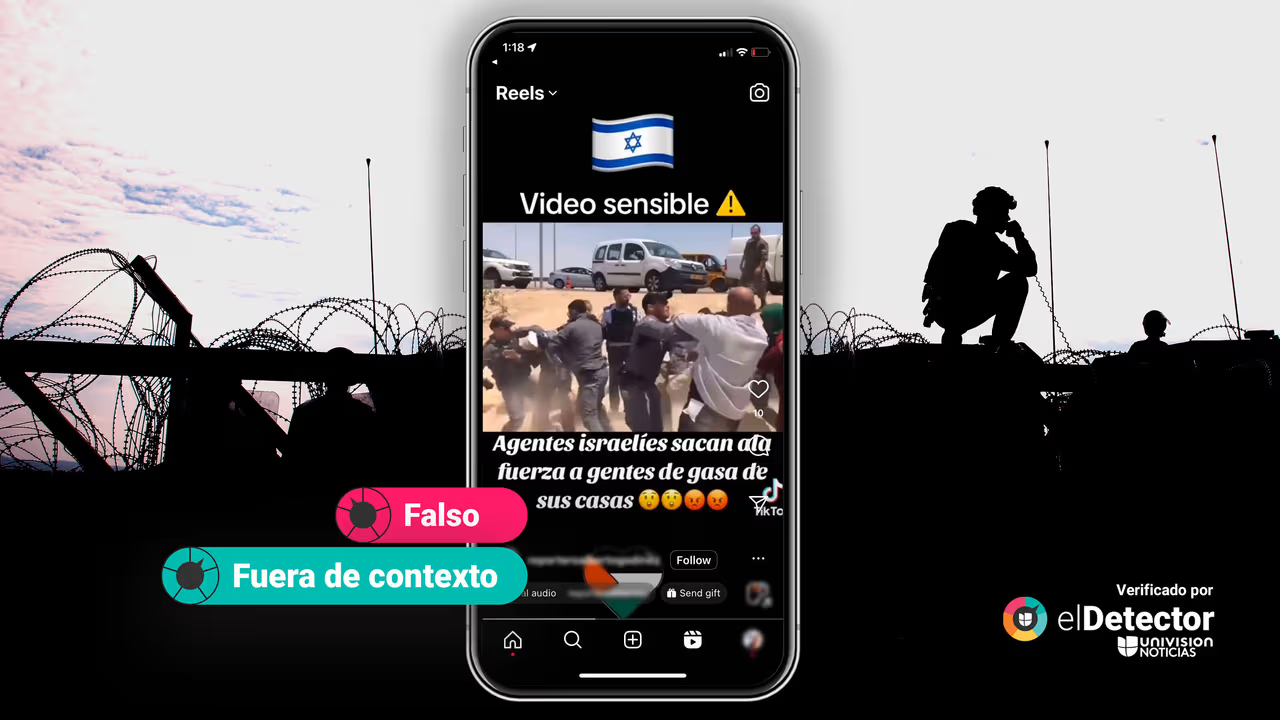
Este video muestra a agentes israelíes que sacan a la fuerza a gente de sus casas en Gaza.
Publisher’s rating: Falso / Fuera de contexto
This video shows dead Palestinians in body bags on the streets of Gaza.
Publisher’s rating: Misleading

Videos zeigen dieselben Frauen, einmal als Hamas-Terroristinnen, einmal als Zivilistinnen bzw. Bombenopfer verkleidet.
Publisher’s rating: Zwei der Frauen stammen aus dem Westjordanland, zwei aus dem Gazastreifen.

Hier sind Inszenierungen durch Palästinenser im Zusammenhang mit dem Gaza-Krieg zu sehen.
Publisher’s rating: Im vorliegenden Fall gibt es keinen Beleg dafür, dass die Videos von palästinensischer Seite aus in die Welt gesetzt wurden oder es sich bei den abgebildeten Menschen um Schauspieler handelt.
“China has the largest naval fleet in the world. They have 350 ships. They’ll have 400 ships in two years. We won’t even have 350 ships in two decades.”
Publisher’s rating: Lacks context
यह फुटेज गाजा के एक अस्पताल में हाल ही में हुए बमबारी हमले का है
Publisher’s rating: False

Deze video toont Palestijnse crisisacteurs die lijken spelen.
Publisher’s rating: Deze video toont een cursus in islamitische begrafenisrituelen in Maleisië. De video staat al sinds augustus online en kan dus ook niets met het huidige conflict in Gaza te maken hebben.
The claim concerns a video of a person in a burial shroud opening their eyes, presented on social media as evidence of Palestinian “crisis actors.” The review distinguishes what the footage shows from the claim about its setting: it says the video had already appeared on TikTok in August, before the current Israel–Hamas conflict, and that its Malay-language caption and comments refer to “Pengurusan Jenazah,” or funeral management. Those clues point to instruction in Islamic funeral rites, rather than footage of staged victims in Gaza. (S1: “De beelden werden al in augustus op TikTok geplaatst en kunnen dus niets te maken hebben met het huidige conflict in Gaza. Het onderschrift bij de video en de commentaren zijn allen in het Maleisisch, en wat te zien zou zijn is wat in het Maleisisch 'Pengurusan Jenazah' heet.”) The investigation also describes how it checked the location. Dpa used a separate video from the same TikTok account to identify a motorcycle’s registration as belonging to Pahang, Malaysia. It then followed references in comments to an IKM institute or mosque, located a mosque by a training institute in Pekan, and compared photographs on the institute’s Facebook page with the mosque in the video. The review says those photographs established the match. (S1: “In een andere video van hetzelfde TikTok-account is via de nummerplaat te zien dat de eigenaar een bromfiets heeft die geregistreerd is in de staat Pahang.”; “Op de Facebookpagina van dit instituut zijn meteen foto's terug te vinden die met zekerheid laten zien dat het hier om de moskee uit de video gaat.”) A second video from the same mosque, posted one day after the first, offered further comparison points: the review notes the same apparent instructor in a pink polo shirt and participants wearing matching green cards. It concludes that the footage shows a funeral-training course in Pekan, which took place by 20 August. In that setting, the people in shrouds were demonstrations of how to handle bodies, not people pretending to be victims. (S1: “Zo is in beide video's een man met roze polo te herkennen, die de docent lijkt, en dragen verschillende deelnemers hetzelfde groene kaartje rond hun nek.”; “De beelden tonen dus een begrafeniscursus in de Maleisische stad Pekan, die alvast voor 20 augustus plaatsvond. De mensen in lijkdoeken pretenderen op geen enkele manier slachtoffers te zijn, maar worden gebruikt als voorbeeld voor hoe je met lijken moet omgaan.”)
यह वीडियो इराक का है। वहाँ मुस्लिम आतंकवादी ईसाई लोगों की इस तरह हत्या कर रहे है।
Publisher’s rating: False

السعودية تعترض طريق صاروخ يمني متجه نحو إسرائيل
Publisher’s rating: خبر كاذب - منشور بتاريخ 25 مارس 2018، ويعود لاعتراض صاروخ أثناء مروره فوق العاصمة السعودية الرياض.

Video of Israel army eliminating two Hezbollah snipers at the Israel-Lebanon border
Publisher’s rating: FALSE
गाजावासी इजराइल-फिलिस्तीन संघर्ष में अपनी मौत का नाटक करते नजर आ रहे हैं।
Publisher’s rating: False

Deze video toont hoe Hamas acteurs voorbereid om Palestijnse slachtoffers te spelen.
Publisher’s rating: De beelden komen uit een reportage over een Palestijnse make-upartieste in de filmindustrie uit 2017. De bewering dat deze valse slachtoffers zouden worden voorgesteld als echt is nergens op gebaseerd.
The video was shared with the allegation that Hamas prepares actors to pose as Palestinian victims and make Israel appear responsible. The review says the footage does show artificial blood and wounds, but traces it to a 2017 report about Mariam Salah, a makeup artist working in the Palestinian film industry—not to evidence of Hamas staging real-world victims. The review describes the footage as showing a professional makeup team creating realistic-looking injuries for film work. To identify the footage, the publisher says it used reverse image searches on screenshots and found a Snopes fact-check concerning the same video. It then traced the clips to a report posted on YouTube by The Gaza Post in February 2017. According to the review, the social-media version cuts out parts of that report that make the professional context clear. The review also points to a 2017 English-language TRT report about Salah, where the makeup work is likewise discussed openly. The evidence supports a narrower conclusion than that no staged injuries appear: the footage depicts staged makeup, but the review found no indication that the people were meant to be passed off as genuine victims. It notes that a camera crew filmed the preparations and that the material was publicly posted. The review says the claim that the footage shows fabricated victims being presented as real is unsupported.

“ඉස්ලාම් අන්තවාදී ත්රස්තයන්ගේ මීළඟ ප්රහාරය” යනුවෙන් පළ වූ සටහන් වල ඇත්ත කතාව!
Publisher’s rating: False