
Live Nation's Released Messages Confirm Fans' Suspicions
Live Nation Slack messages sparked backlash. Here’s how the narrative spread online—and why outrage overtook the legal story.
Published
In March 2026, unsealed federal court documents revealed private Slack messages between two Live Nation regional ticketing directors. The messages were blunt: fans were called "so stupid," there was internal boasting about "gouging" extra prices, and one director bragged that Live Nation is "robbing them blind." These messages date from 2021 to 2023.
Live Nation tried to keep the messages out of trial. The Justice Department argued they contradicted the customer-first image the company presented in its opening statements. A federal judge ordered their release in full.
The context
Ticketmaster controls about 80% of major U.S. venue ticketing and made over $25 billion last year. The proposed federal settlement would require $280 million in damages and a 15% cap on service fees at amphitheaters. That amount represents around four days of revenue. More than 26 states, including New York, Massachusetts, and California, have rejected the terms and promised to continue independent litigation.
Live Nation's Response
A spokesperson called it a "Slack exchange from one junior staffer to a friend" that "does not reflect our values or how we operate."
How PeakMetrics Tracked the Narrative
To track how this story spread online, PeakMetrics used its AI-powered Smart Categories to segment the conversation around Live Nation and the trial. Instead of relying on keyword flags or manual tagging, Smart Categories use large language models to read each post in context and assign it to the relevant theme. This approach reflects what people were genuinely discussing online.
Across thousands of posts from March 12th, the day the messages were released, through March 13th, as brand backlash began to build and the story moved from courtroom to culture, six distinct narrative themes emerged. Here's how they broke down.
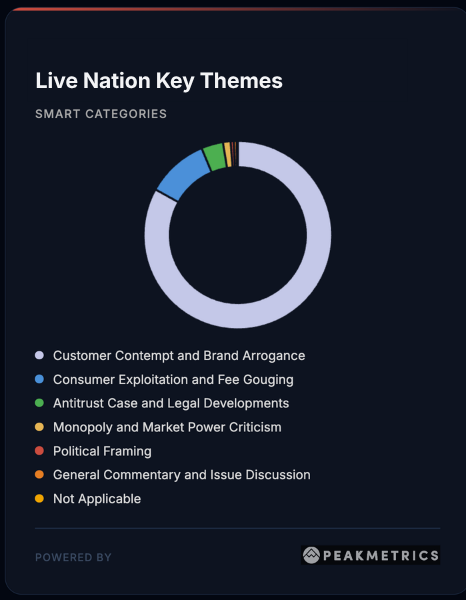
What the Conversation Actually Looked Like
Customer Contempt and Brand Arrogance dominated at 83.1% of the conversation. The leaked comments hit harder than a legal filing or a pricing complaint. Calling your own customers "so stupid" and laughing about it signals a character issue, not a policy problem. Audiences reacted accordingly; the phrase became the story.
Consumer Exploitation and Fee Gouging made up 10.6% of the conversation. The specific charges in the messages, including $250 for parking, $199 for VIP club access, and fees set higher than what customers knowingly agreed to, gave people clear numbers to attach their frustration to.
Antitrust Case and Legal Developments accounted for only 3.7%. Despite this being an important federal trial with a DOJ settlement and active state coalitions, the legal aspect barely registered. The policy story was real, but the outrage story was louder.
Monopoly and Market Power Criticism came in at 1.3%, followed by Political Framing and General Commentary at 0.5% each, and Not Applicable at 0.2%.
Notably, in the week prior to the messages being released, 91% of the conversation around Live Nation and the lawsuit was focused on political framing, antitrust developments, and monopoly discussions. The moment the Slack exchanges became public, that changed entirely. The release of the messages moved the story from a legal dispute to a personal one.
This breakdown tells a clear story about how reputational crises spread. Legal exposure creates the conditions, but it is the human moment, expressed in plain language, that turns a lawsuit into a cultural flashpoint.
One More Layer: Bots Were in the Room
The numbers above reflect the overall conversation, but there is an important asterisk. In the 48 hours after the story broke on March 12th and 13th, nearly one in three posts, or 30.9%, was generated by bots.
Most of these were retweets, and 82% of the bot-driven conversation clustered around the same top topic as the human conversation: Customer Contempt and Brand Arrogance. This alignment is worth noting. Bots did not create the outrage or redirect it; they amplified an existing signal.
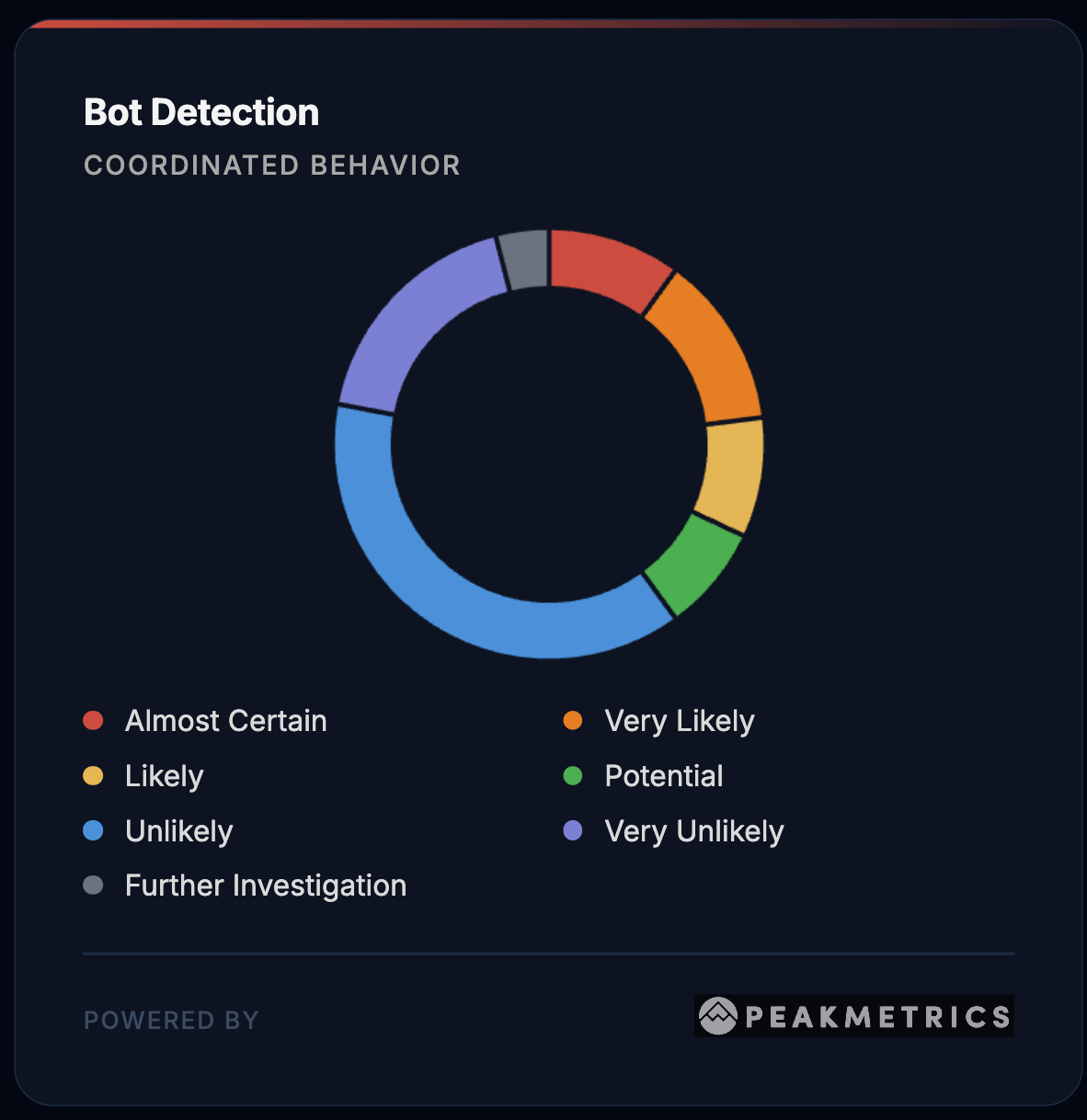
Whether this amplification was an algorithmically-driven pile-on or a coordinated effort is a separate question, but the effect was the same: a story that was already dominating the conversation gained more momentum in a highly emotional way.
For brands and communicators observing this in real time, this distinction matters. The contempt narrative was not fabricated. It was real, widespread, and had its own momentum before automation affected it. The bots simply added fuel to a fire that was already burning.
Sign up for our newsletter
Get the latest updates and publishings from the PeakMetrics investigations team.
Loading the newsletter sign-up form…