
How the Internet Judged the Vrabel-Russini Affair Scandal
PeakMetrics analyzed the online conversation around the Vrabel-Russini affair scandal. Here's what the data reveals
Published
Reports emerged of a romantic relationship between Mike Vrabel, who joined the New England Patriots as head coach in 2025 and led the team to the Super Bowl this year, and Dianna Russini, a prominent NFL insider for The Athletic. Russini, widely regarded as one of the most plugged-in voices in football media, had previously covered Vrabel during his tenure as head coach of the Tennessee Titans.
The pairing sparked immediate scrutiny. Russini had reported on personnel decisions, free agent signings, and coaching moves involving teams Vrabel was associated with. The question of whether a romantic relationship between a head coach and a beat reporter constituted a conflict of interest consumed sports media for weeks. ESPN and The Athletic each faced questions about internal policies governing reporter-source relationships.
To better understand how the internet was actually discussing this moment, PeakMetrics analyzed the conversation using its Smart Categories feature. Smart Categories use AI prompts to organize large volumes of online posts into structured intelligence based on themes, tones, and signals within the conversation. Instead of relying on traditional metrics like mention volume or overall sentiment, this approach breaks the conversation into the specific types of discussion actually happening around a topic — surfacing not just how much people are talking, but what they are saying and why it matters.
Across X, TikTok, Instagram, Facebook, Reddit, and Bluesky from April 7 through April 30, the data revealed three clear dimensions of the Vrabel-Russini conversation: who the internet blamed, who it wanted to see face consequences, and how gender shaped how each figure was discussed.
Who Got Blamed
Nearly 60% of posts placed blame on one or more parties. The remaining 40.2% treated the affair as news without assigning responsibility.
Among posts that did assign blame:
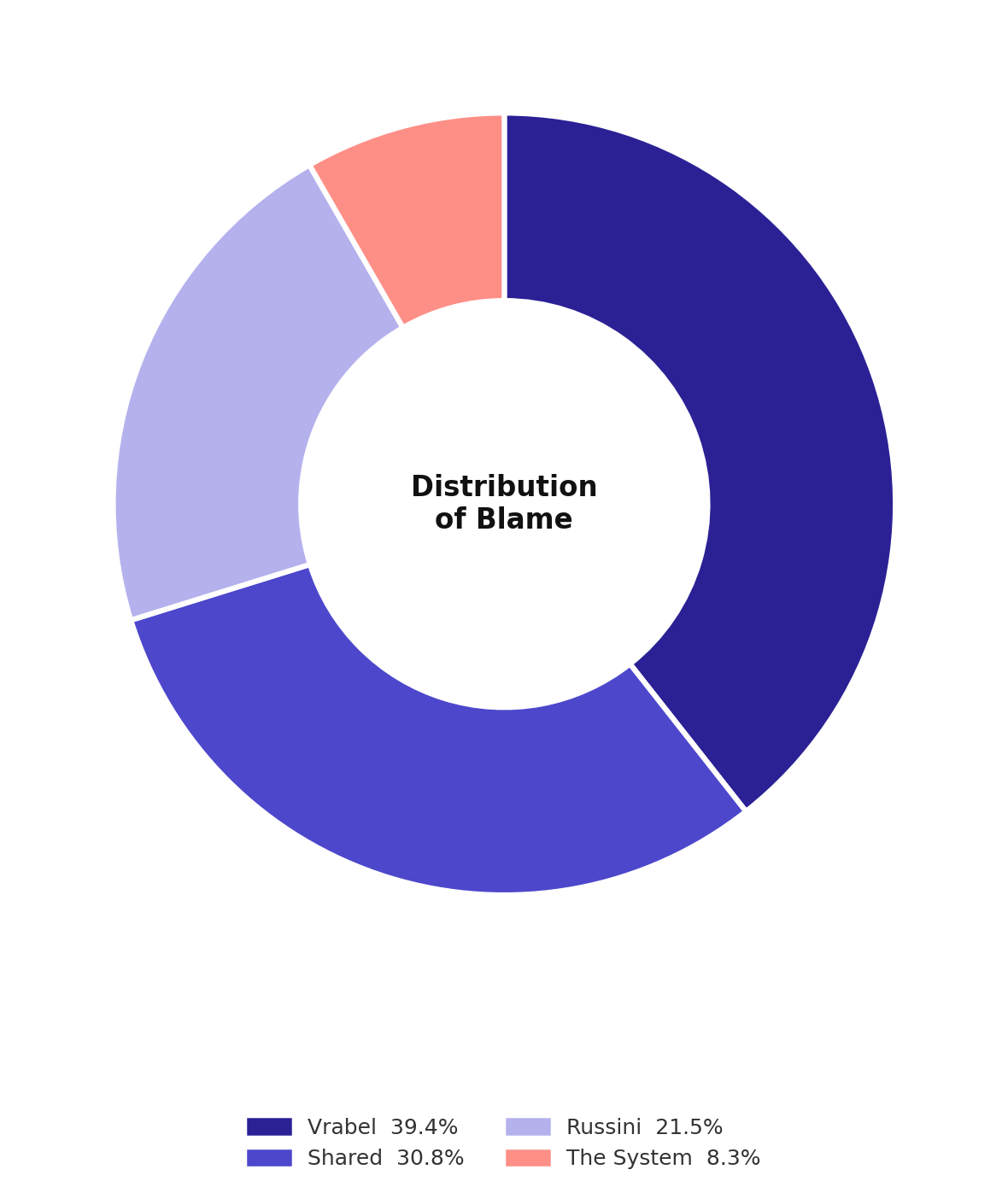
Vrabel (39.4%) — Discussions focused on reputational stakes, family impact, and professional ethics, but the tone was frequently sympathetic. Posts debated potential consequences to his credibility and leadership image rather than issuing moral condemnation.
Shared Blame (30.8%) — A significant share acknowledged that both individuals made choices affecting their professional roles, with conversations centering on conflicts of interest and the need for higher ethical standards across sports and media.
Russini (21.5%) — Posts blaming Russini were more likely to question whether her professional accomplishments were self-made, suggesting her access and reporting were shaped by personal relationships rather than journalism skill.
The System (8.3%) — A small but notable share pointed to institutional failures, calling for better oversight and ethical governance within the NFL and media organizations.
Who Faced Calls for Consequences
About one in four posts went beyond blame to demand some form of professional or institutional consequences.
Among those posts:
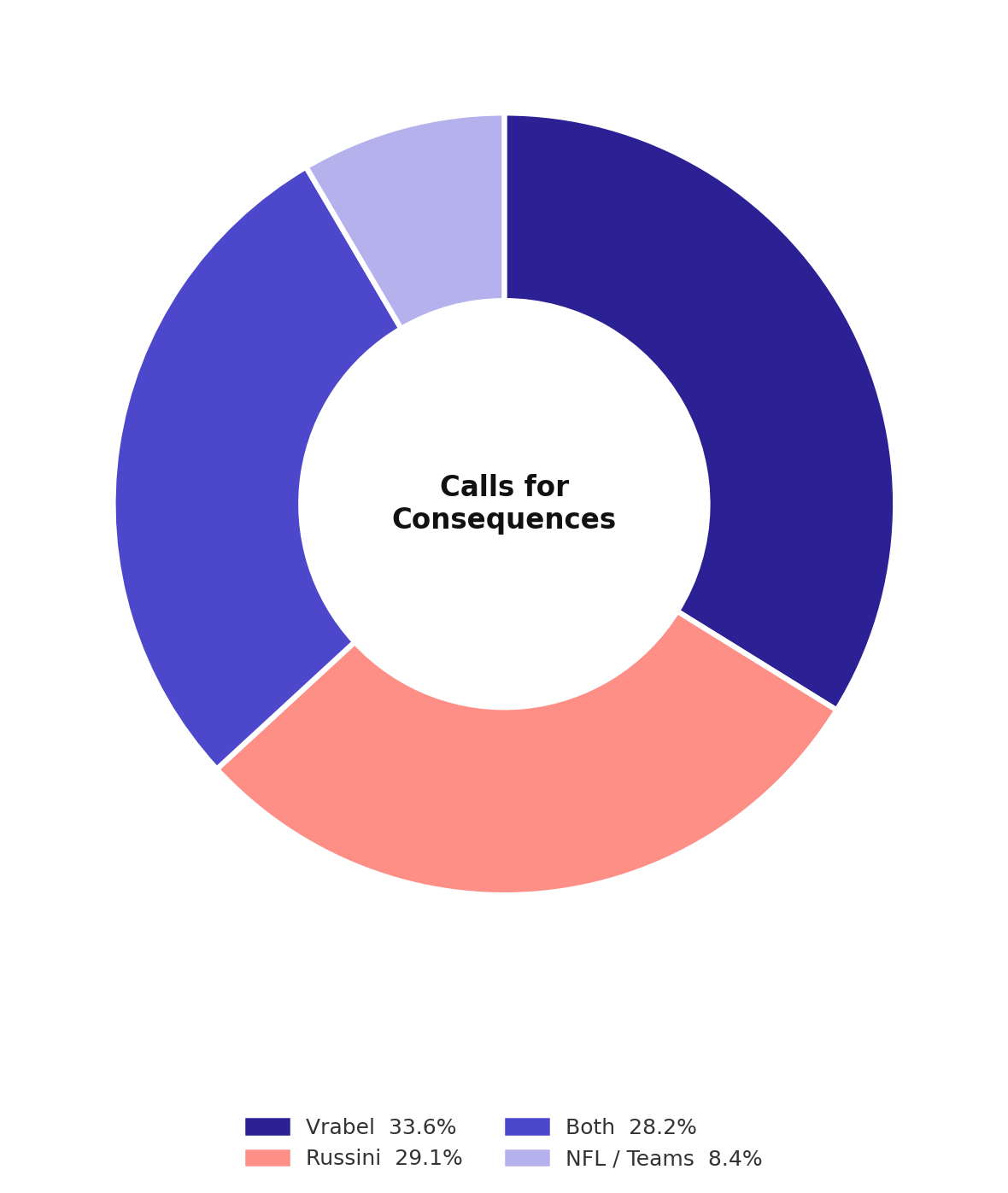
- 33.6% called for consequences against Vrabel
- 29.1% called for consequences against Russini
- 28.2% called for consequences against both
- 8.4% directed consequences at the NFL or individual teams
The nature of those consequences differed sharply. Posts targeting Vrabel generally debated reputational damage and whether his leadership image would recover. Posts targeting Russini went further, speculating that her media career was essentially over and pointing to specific outcomes: losing network contracts, being shut out of major sports outlets, pivoting to an independent podcast.
The Gender Dimension
This is where the data becomes most striking.
While 42.1% of posts made no reference to gender, the remaining 57.9% revealed a pronounced imbalance. Russini was framed through an explicitly gendered lens in 17.8% of all posts. Vrabel appeared in gendered framing in just 8.5%. She was more than twice as likely to be discussed in terms of her identity as a woman as he was as a man.
The pattern within each category reinforced the asymmetry. When Russini was gendered, posts invoked tropes about women trading on personal relationships. When Vrabel was gendered, the framing emphasized his family obligations and positioned masculine professional identity as more durable against personal scandal.
Over a quarter of gender-engaged posts explicitly named that double standard. The internet wasn't just participating in a disparity. A meaningful share of it was actively calling one out.
How the Internet Judged the Vrabel-Russini Affair
Two people made the same decision. The internet processed it very differently.
The data does not show uniform condemnation of either party. It does show a consistent pattern: While more blame was placed on Vrabel, Russini's professional identity was treated as more fragile, her accomplishments more suspect, and the consequences for her more permanent.
For organizations or people monitoring narrative risk, the story is instructive. Personal scandals do not land the same way for all individuals. Gender, institutional role, and public perception history all shape how blame and consequence are assigned online.
Analysis covers online posts across Reddit, Twitter/X, and sports media commentary platforms. PeakMetrics Narrative Intelligence.
Sign up for our newsletter
Get the latest updates and publishings from the PeakMetrics investigations team.
Loading the newsletter sign-up form…